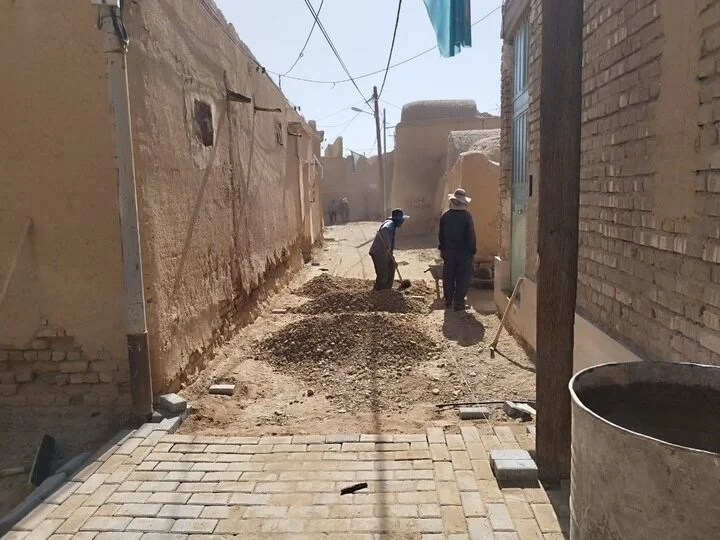
Restoration of historical alleyways begins in Abarkuh
TEHRAN - Restoration and rehabilitation of alleyways and urban spaces in the historical district of Abarkuh has begun under a cooperation agreement between the local Cultural Heritage, Tourism and Handicrafts Department and Abarkuh Municipality, an official said.
Abbas Qadirian, head of the Abarkuh Cultural Heritage, Tourism and Handicrafts Department, said the project follows the signing of an agreement between the two sides to organize and rehabilitate the historical district.
He said the 183-hectare historical fabric of Abarkuh is listed on Iran’s National Heritage List, adding that the municipality’s attention to cultural heritage, particularly the historical district, had helped put the rehabilitation of its streets and alleyways on the agenda.
Qadirian said the rehabilitation program had been divided into several phases based on the urgency of repairs, existing needs and the aim of improving services for residents whose presence contributes to the vitality of the centuries-old district.
The first phase covers an ancient route between the Aghazadeh House and Mostowfi House, a passage also known as the Culture and Art Route, he said. Other streets and alleyways will subsequently be rehabilitated as the necessary funding is allocated.
Qadirian also praised Abarkuh mayor for his cooperation and said collaboration between the municipality and the local cultural heritage authorities in the historical district had been satisfactory. He also thanked residents of the Darvazeh Meydan neighborhood for their cooperation.
Abarkuh, also known as Abarqu, is an ancient city in Yazd province located along the Yazd–Eqlid–Yasuj route. Situated between the historical cities of Yazd, Isfahan and Shiraz, the city is known for its old earthen architecture and cultural heritage.
Among its best-known landmarks is Sarv-e Abarkuh, an ancient cypress tree that has become a symbol of the city. Experts have variously estimated the tree’s age at between 4,000 and 5,000 years, although some estimates put it at as much as 8,000 years old.
AM