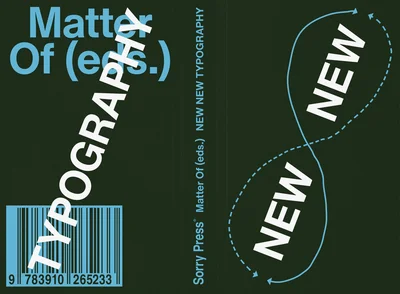
It’s a smorgasbord of collaborators, nearly 100 of them, such as: Adel Faure, Bye Bye Binary, Dinamo, Farah Fayyad, Man Ray, Source Type, TienMin Liao, Words of Type, Workbyworks and more, with work dating back as far as illustrated typefaces from 1602 to type design created through models that scan the shape of the body and turn it into text. The book educates on Renaissance-era design ideals, as well as taking us back to 1925 by quoting László Moholy-Nagy: “The emphasis must be on pure clarity since this distinguishes the character of our own writing from that of ancient pictographic forms,” – meaning, old old writing prioritised beauty and old writing centred legibility. Perhaps new writing is all about malleability or style…so what is new new?
Described as a messy and unstable anti-manual for typography, 243 figures and six theoretical proposals present an overview of the impossibility of an overview on typography – it’s adventurously speculative, blending high design theory with a modern irony and cheekiness. What if the modern typographer isn’t just a typographer, but an active negotiator of political systems? Nevertheless, it isn’t a book about delivering an answer. Nowadays, just daring to imagine the future is enough.