Latin America’s most powerful criminal groups have expanded beyond the drug trade – and have become more resilient as a result. That’s what my colleagues and I discovered while researching for a new study on the structural transformation of organized crime across Latin America and the Caribbean.
Criminal networks now draw revenue from illicit and legal sources alike. Many of them police neighborhoods and influence local politics. Others invest in legitimate businesses and exploit global transport and financial systems, using shell companies and digital payment platforms to conceal the origins of their money.
Their businesses extend into ostensibly legitimate sectors ranging from mining to fuel. This diversification shields criminal groups from “enforcement shocks,” such as crackdowns on drug smuggling. It can also help them buy protection from compromised officials and allow organizations to embed themselves more deeply in local economies. The struggle is increasingly over who sets the rules and who can enforce them.
A criminal economy goes corporate
Brazil is one place where these trends are on display.
On Aug. 28, 2025, more than 1,400 Brazilian law enforcement agents fanned out across eight states in what officials called the largest operation against organized crime in the country’s history. Their targets included more than a thousand gas stations, four ethanol plants, a trucking fleet, a port terminal, investment funds and offices on Avenida Faria Lima, the center of São Paulo’s financial district.
The investigation, known as Operation Hidden Carbon, exposed an alleged money laundering system tied to Brazil’s most powerful criminal organization, First Capital Command, or PCC. Investigators allege that the network used gas stations and other fuel businesses to launder illicit proceeds, channeling them through payment companies and investment vehicles that obscured their origins and ultimate ownership.
The scheme reportedly moved billions of dollars through the motor-fuel sector and a web of payment companies and investment vehicles, with some fintechs allegedly functioning as unlicensed banks. Authorities initially seized about R$1.2 billion, or roughly US$220 million, in assets.
Operation Hidden Carbon illustrates a broader shift in organized crime across the Americas. Several of the region’s largest organizations now combine drug trafficking with illegal gold mining, fuel theft, migrant smuggling and the manipulation of digital payment systems. Others have also moved into logistics, finance, real estate and municipal services.
Many also assume functions typically associated with government, from enforcing local rules to delivering basic services. A 2025 survey across 18 countries found that 13% of respondents — equivalent to nearly 80 million people — said that local criminal groups provided order or reduced crime in their communities.
How criminal networks diversified
Criminal diversification did not happen all at once. Latin American groups built international trafficking alliances in the 1980s and 1990s, but the shift toward multi-market networks became more pronounced in the mid-2010s. As drug trafficking grew riskier, groups moved into migrant smuggling and illegal mining.
Cybercrime opened new revenue streams, while cryptocurrencies made it easier to conceal proceeds. The pandemic accelerated the trend by weakening state institutions and expanding informal economies.
Diversification boosts profits and spreads risk, reducing dependence on any single commodity or corridor.
Cocaine remains highly lucrative, so few organizations abandon it. Instead, they add new illegal activities to territories and logistical systems they already control. The same infrastructure and intermediaries can support several criminal markets at once.
The organizational structures have changed too. Rigid hierarchies have given way to looser networks of transporters and financial specialists operating through front companies. Money and personnel can move between activities as enforcement pressure and market conditions change. Real estate and commercial businesses conceal proceeds, while digital assets make transfers easier. That wealth can then be converted into political influence.
This adaptability complicates enforcement. Police and regulatory agencies are generally organized by crime type and national jurisdiction, while the networks they are attempting to shut down operate across markets and borders. Pressure on drug trafficking may push a group toward gold or extortion without destroying its finances. Raids may temporarily remove leaders but leave corrupt relationships and financial machinery intact, allowing the organization to regenerate.
Why force remains attractive
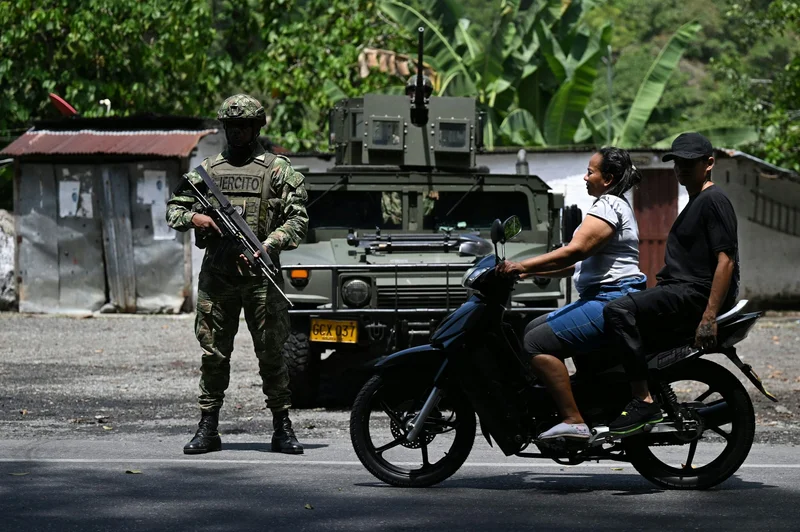
As my new study argues, political leaders across much of Latin America and the Caribbean are still judged primarily by how visibly they confront crime. People living with daily extortion and victimization want relief quickly. Soldiers on street corners and prisoners paraded before cameras offer immediate proof that a government is acting.
Financial investigations and judicial reform, by contrast, produce slower results and offer fewer immediate political rewards.
These political incentives help explain the enduring appeal of “mano dura,” or iron-fist security. El Salvador’s state of exception became the regional reference point after the official homicide rate fell from roughly 105 per 100,000 in 2015 to 1.3 by 2025. By June 2026, more than 92,000 people were imprisoned. But the crackdown also suspended constitutional protections, leading to mass detention without due process and hundreds of deaths in custody.
Since El Salvador imposed its state of exception in 2022, governments in Argentina, Belize, Brazil, Chile, Colombia, Costa Rica, the Dominican Republic, Ecuador, Guatemala, Haiti, Honduras, Jamaica, Mexico, Panama, Paraguay and Trinidad and Tobago have adopted hard-line security measures inspired by or resembling mano dura. Peru’s newly inaugurated president, Keiko Fujimori, has promised a tougher security strategy, including a greater role for the armed forces in areas under states of emergency.
The limits of mano dura
Crackdowns that neglect financial and corruption investigations may suppress some forms of violence without dismantling the economic structures or political protection that sustain criminal power.
Ecuador shows how quickly those gains can unravel. After declaring an internal armed conflict in January 2024, the government sent troops into prisons and violent cities. Homicides initially fell before surging past 9,000 in 2025, the highest level in the country’s modern history.
The gangs survived because their power extended far beyond the streets. They retained control over prison networks and access to the ports that move cocaine through Guayaquil. Their relationships with corrupt officials also endured. Military pressure disrupted the gangs, but it also caused fragmentation and intensified rivalry between the resulting factions.
Washington raises the stakes
Across Latin America, right-leaning political candidates have gained ground by putting public order at the center of their campaigns. The resulting turn toward more punitive security policies makes slower institutional reform harder to sustain.
Washington is reinforcing this trend. The United States has expanded its use of foreign terrorism designations against criminal organizations. In May 2026, the State Department announced terrorism designations for the PCC and the Red Command, or CV, another major Brazilian faction, as foreign terrorist organizations. The designations took effect on June 5.
By July 2026, U.S. forces had carried out at least 67 strikes against suspected drug trafficking vessels in the Caribbean and eastern Pacific, killing more than 220 people. Yet the campaign appears to have done little to constrain cocaine supply. Traffickers have shifted routes in response to the strikes, and available evidence suggests no clear tightening of the U.S. market.
In August, Washington announced plans for a $1 billion security package for Colombia, as the country’s new government prepares to pursue a more militarized campaign against drug traffickers.
Military pressure, however, addresses only part of what makes criminal groups resilient. Their staying power depends on relationships with public officials and access to financial systems. Control of legitimate companies allows them to conceal ownership and launder criminal proceeds.
American financial intelligence and asset-recovery tools could help dismantle that infrastructure, depriving these organizations of the resources they use to expand.
Following the money
Brazil’s Operation Hidden Carbon points toward a more effective response. Investigators traced proceeds from gas stations through fintechs and investment funds, exposing the corporate structures and intermediaries behind them. They treated organized crime as a system embedded in the economy rather than solely as an armed threat on the street.
Such work lacks the immediate public impact of an armed raid, but its effects can be far greater. Asset freezes can deprive criminal groups of the capital they use to buy political protection and expand into legal and illegal markets alike. That is why investigators must go after the money and companies, not just the gunmen.