Ukrinform reports this, citing Reuters and the Omani government.
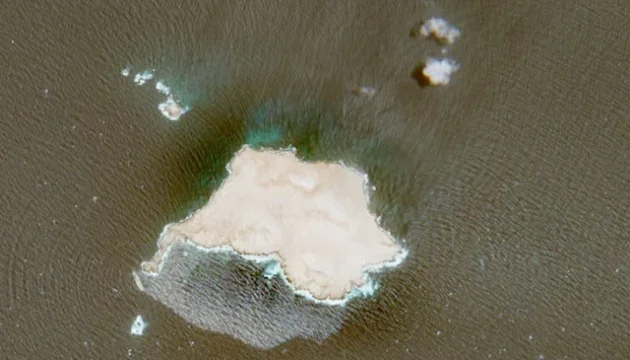
On Monday, in its first public disclosure of details about the environmental impact, Oman said it was working to address the oil leak in its waters near the Hallaniyat Islands.
The Omani Environment Authority said that, based on its latest analysis, which included satellite imagery, the oil slick currently covers approximately 390 square kilometers.
The slick is spreading northeast from the islands toward the mainland and, at its closest point, has been detected approximately 7 kilometers from the coast.
An independent analysis of satellite imagery and data from shipping specialists conducted by the agency showed that the spill from the 274-meter tanker Caroline Bezengi was still spreading as of the end of last month, raising concerns about possible environmental damage.
Read also:Unmanned Systems Forces strike 12 more vessels of Russia’s shadow fleet in Black Sea and Sea of Azov
The cause of the vessel’s damage remains unclear, and Oman has provided no explanation.
According to maritime security sources, the crew of the Caroline Bezengi, while near the southern Yemeni port of Mukalla, first reported difficulties on June 8, allegedly involving an explosion on board.
Shipping data showed that the Caroline Bezengi had been loaded with Russian crude oil before the voyage. The vessel last transmitted a signal through the public AIS tracking system on June 11 off the coast of Yemen.
The European Union and the United Kingdom have imposed sanctions on the Caroline Bezengi for its involvement in transporting Russian energy products.
It is noted that Russia uses old, often poorly maintained tankers in its so-called shadow fleet to circumvent Western sanctions on Russian oil exports.
As Ukrinform previously reported, on July 18, information emerged that a sanctioned Russian shadow-fleet tanker was leaking oil in a marine protected area off the coast of Oman.
Photo: EUROPEAN UNION/COPERNICUS SENTINEL-2