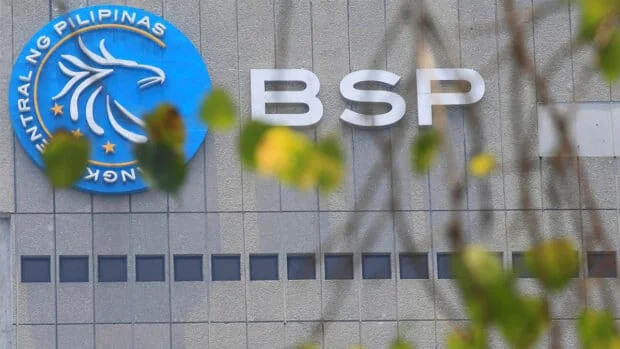
FDI sinks to over decade low amid investor jitters
MANILA, Philippines — Foreign direct investment (FDI) flowing into the Philippines fell to its lowest level in more than a decade in May, underscoring growing investor unease as the economy faces mounting headwinds at home and abroad.
Net FDI inflow totaled $210 million in May, according to data released by the Bangko Sentral ng Pilipinas (BSP), as inflows continued to outpace withdrawals. Even so, the figure was 64.7-percent lower than a year earlier and marked the smallest monthly net inflow since March 2015, when the country recorded $200 million in net FDI.
READ: Net FDI inflow plunged to 10-year low in April
Article continues after this advertisement
The weak May performance brought cumulative net FDI inflow in the first five months of the year to $2.2 billion, down 33.4 percent from the same period last year. The amount represented about 31 percent of the BSP’s full-year projection of $7 billion in net inflow.
Unlike foreign portfolio investments, which can vanish at the first sign of trouble, FDI tends to represent longer-term commitments that create jobs and support industrial growth. That said, the government has been working both to attract new investment and retain those already in the country.
“Globally, investors remain cautious amid heightened geopolitical tensions, trade uncertainties, and volatile financial markets, leading many firms to delay or scale back investment decisions,” said Jonathan Ravelas, senior adviser at Reyes Tacandong & Co.
“Domestically, while the Philippines continues to post respectable growth, investors are looking for clearer signals on policy execution, infrastructure rollout, power costs, and the overall ease of doing business,” he added.
Broken down, equity capital placements, a measure of new FDIs, reached $87 million in May, while investments that headed for the exit stood at $10 million. This yielded a net equity capital inflow of $77 million, a four-month low.
Article continues after this advertisement
Reinvestment of earnings, which accounted for the bulk of FDIs during the month, rose 5.7 percent to $98 million. But intercompany borrowings between foreign firms and their Philippine subsidiaries plummeted 92.1 percent to $35 million.
READ: FDIs fell to 4-month low in Jan on geopolitical risks
Article continues after this advertisement
“This is compounded by structural drags: elevated borrowing costs, the flood-control corruption scandal’s chilling effect on investor confidence and lingering geopolitical uncertainty—all layered on top of the demand-side weakness,” said Leonardo Lanzona, economist at Ateneo de Manila University.
Looking ahead, Ruben Carlo Asuncion, chief economist at UnionBank of the Philippines, said persistent headwinds would likely keep foreign investors on the sidelines. “While one month does not make a trend, the weakness in FDI suggests that attracting fresh long-term capital remains a challenge in the current environment,” he added. INQ