Christopher Nolan’s interpretation of The Odyssey – the film that’s drawn millions to cinemas around the world since its release in July – is missing some of the poem’s really interesting women, and its sexiness, according to Classicist Mary Beard. “It’s de-feminised it,” she says. “And turned it into a kind of battle scene.”
The UK-based writer, podcaster and former professor of Classics at Cambridge University is concerned people will walk away from the movie thinking that what Homer wrote in around the eighth century BC was an aggressive, tough story. “Actually, The Odyssey is one of the least macho works of ancient Greek literature,” she says.
“I feel pretty strongly that this is an Odyssey rewritten for contemporary 21st-century American, slightly masculinist culture.”
For Beard, one of the key themes of Odysseus’ homecoming to his wife is the rival sexual encounters on the way. “So there is Calypso, who keeps him as a kind of sex toy for about seven years and that is featured in the movie. But also you have Circe, this enticing witch, who – at least in the poem of The Odyssey – turns his men into pigs,” she says. “Now, the point of Circe in the poem is that she too is keeping Odysseus there to be her lover. Now, she’s not doing that in Nolan[’s film]; she’s a rather wonderful character ... but she’s not the same.”
The film has entirely erased Princess Nausicaa, who lives with her parents on the island of Scheria. In the poem, says Beard, Nausicaa is just coming to marriageable age and is thinking about getting a husband when Odysseus washes up on her island, naked. There are these “quasi-erotic encounters” between them, she says.
“They’ve downgraded the sex ... and so you’ve got a rather different feel to the whole thing. For me, The Odyssey is wonderfully domestic, wonderfully ironic. Sex is always at the margins – who’s going to entrap Odysseus next, or who is Odysseus going to decide to go off with next? And that has gone.”
The Odyssey isn’t the only Nolan film to largely do away with sex. From Memento to The Dark Knight, most of the British director’s movies omit any kind of extended sexual encounter, earning him something of a reputation for creating “sexless” titles. One of the few outliers is Oppenheimer (2023), which contains brief scenes of partial nudity.
The editor of Classics at The London Review of Books, Beard has made ancient Rome and the Classics her speciality over five decades. She points to the fact Homer’s poem was considered so female that in the 19th century, Samuel Butler wrote a book called The Authoress of the Odyssey claiming that it had to have been written by a woman.
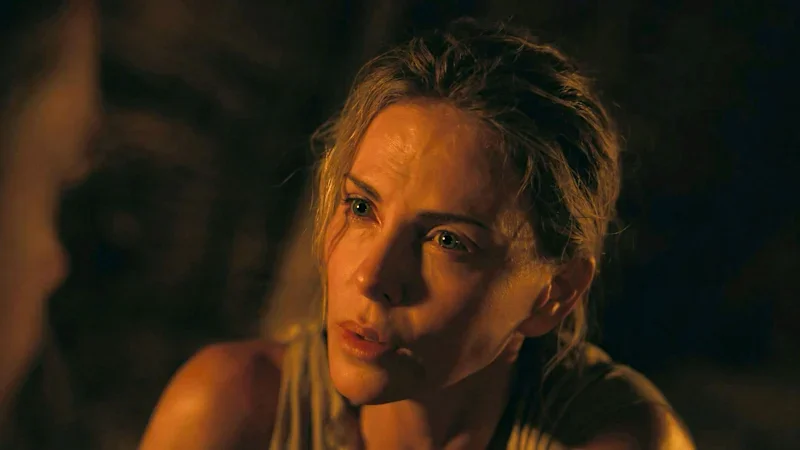
In Nolan’s take, Calypso (Charlize Theron) is the main woman other than Odysseus’ wife Penelope, played by Anne Hathaway, yet she appears in about 10 minutes of the three-hour film.
Beard also argues that Nolan has introduced an entire theme that is absent from Homer’s original text, again perhaps inspired by our contemporary reality. “It is this sense we’re a civilisation on the brink of collapse, that there are threats coming to us ... Now, that is very much a contemporary American anxiety, a contemporary Western anxiety. In the original Odyssey, I don’t see a thing about civilisation coming to an end. Actually, it’s quite confident, [with] perhaps a misplaced confidence.”
She is aware that the original poem is a lengthy beast and that Nolan had to make decisions about what would stay and what would go. “I’m not a pedant and these works are there for every age to do what they want with,” Beard says. “My job is to say maybe we’ve lost more than we’ve gained here. That’s all.
“As the critiques have gone on and become rather more ferocious, I have become more sympathetic to him.”
To Beard’s mind, The Odyssey is one of the most approachable works of ancient literature, “rich and complicated”.
Recent interpretations include Caribbean writer Derek Walcott’s play of the same name and his poem Omeros, James Joyce’s novel Ulysses and the 2000 Coen Brothers film O Brother, Where Art Thou? The questions Homer asked are questions that we still ask, she says, so “there’s no surprise that The Odyssey has been so central in literature”.
Regardless of her thoughts on his film, Beard does credit Nolan with inviting a whole new audience to discover this remarkable work, and for that she is grateful: “You’ve seen the film, now read the book.”
An evening with Mary Beard: Talking Classics tours Australia from November 20.
The Booklist is a weekly newsletter for book lovers from Jason Steger. Get it delivered every Friday.