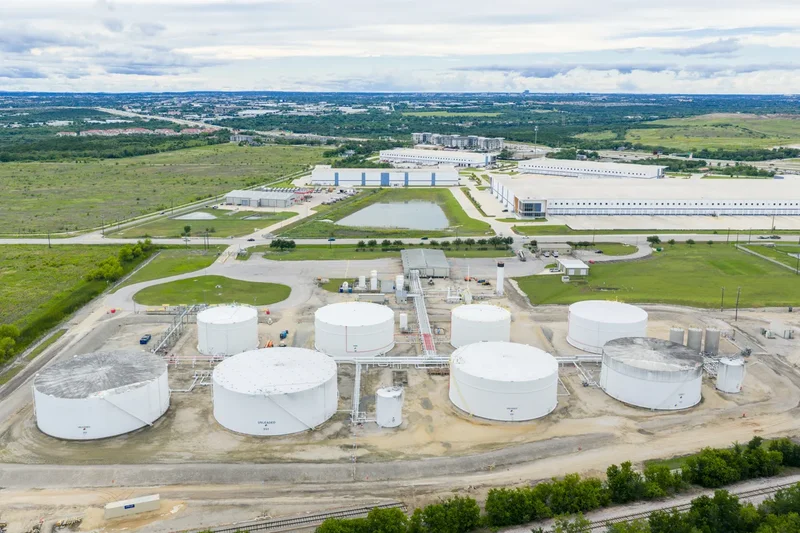
The U.S.’s Strategic Petroleum Reserve has fallen to its lowest point since the 1980s, according to new data from the Energy Department.
The SPR was at 298.7 million barrels as of Friday, according to the department.
The last time the reserve dropped below the 300 million barrel mark was in the early 1980s, when the U.S. was rapidly increasing its reserve storage in response to an oil embargo on the U.S. put in place by Arab members of OPEC in the 1970s.
The Trump administration forecast the drop when it announced in March that it planned to release 182 million barrels from the reserve over the course of 120 days. The release was authorized as disruptions to the oil market were expected due to President Donald Trump’s war in Iran, which began at the end of February.
The war has caused gas prices to explode over the last several months, with no sign of significant reductions on the horizon.
It's not the first time in recent history that the federal government has released oil from the reserve. In 2022, President Joe Biden authorized the release of 180 million barrels after Russia invaded Ukraine. The invasion spiked oil prices worldwide.
Patrick De Haan, the head of petroleum analysis at GasBuddy, said in an X post that declines in the SPR were likely going to continue "for a few more weeks before the authorized release is complete."
An Energy Department spokesperson told CNBC in July that the minimum amount of oil needed to safely operate the SPR is approximately 70 million barrels.
David Goldwyn, who served as a State Department special envoy for international energy affairs during former President Barack Obama's administration, said he was not concerned that the oil reserves were under threat of depletion.
“I’m not worried about the stability of the reserve or our ability to do another drawdown, if we needed to,” he said at the time.
Prior to the U.S. and Israel's war in Iran, the SPR contained approximately 415 million barrels of oil.
The SPR's ability to operate is reportedly at risk from its aging infrastructure, according to a report released in May from the Government Accountability Office.
More than quarter of the SPR's oil inventory is reportedly "not available for drawdown due to a combination of construction outages and cavern outages," as of December 2025, the agency determined.
That means that a portion of the oil in the reserve — a minimum of 103 million barrels, according to a Rapidan Energy analysis published in July — can't be accessed at the moment.
“The SPR’s drawdown, distribution and fill capabilities are currently limited and are at risk going forward due to longstanding issues with aging infrastructure compounded with ongoing major construction intended to address them,” the GAO said in its report.
Meanwhile, U.S. oil prices have continued to climb as confidence that Washington can reach a deal with Tehran ending the war dwindles.
West Texas Intermediate crude oil prices rose 5.1 percent to $82.13 on Monday, while Brent Crude — a global benchmark for oil prices — jumped 5 percent to $87.72 per barrel the same day, the New York Post reports.
The jump came after Trump told Axios on Sunday that the U.S. is only "semi-negotiating" with Iran.
“We are low-keying it,” he said. We are only semi-negotiating with them. We are just watching Iran with its huge inflation and the fact they have no money.”
On Monday, the national average for gas was $4.0091 per gallon, according to AAA. That price is down slightly from yesterday when the national average was at $4.0121, but still far higher than a month ago, when the national average was $3.8835 and a year ago when it was $3.1394.