In short:
Australian badminton clubs are paying a premium for equipment as bird flu drives up the price of goose feathers.
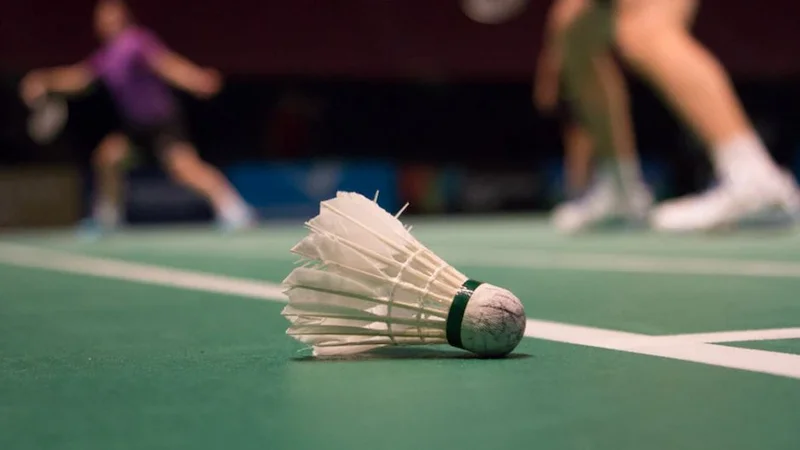
Goose or duck feathers are used to craft shuttlecocks, the projectile central to the game.
What's next?
Clubs and players are switching to synthetic shuttlecocks to manage costs, but players are adamant they are a poor quality substitute for the real thing.
While bird flu has only landed on Australian shores in the last few months, a group of sportsmen and women have been feeling its impact for years.
The deadly strain of H5 avian influenza has riddled wild and domesticated avian species across the world, with the total number of dead birds in the hundreds of millions.
While the spread of the disease has Australians across science and agriculture increasingly concerned, the nation's badminton players have long counted its costs.
The mass culling of flocks of geese and poultry across east and central Asia in recent years has massively cut the global supply of feathers critical to making the shuttlecocks needed for any game of the racquet sport to go ahead.
Shuttlecock shock
The impact has seen equipment costs skyrocket for badminton clubs across the country.
A high-quality shuttlecock uses 16 feathers from the left wing of either a duck or a goose, though each bird can only supply two to three feathers that meet specifications.
China is home to most of the world's poultry farms where the specific feathers are harvested, leaving the product exposed to major price fluctuations pinned to the health of the birds.
Badminton Australia chief executive Tjitte Weistra says even a mid-range shuttle, such as the Yonex AS-30, has become near-unaffordable for most players and clubs.
"A decade ago a tube of a dozen AS-30s would sit from $30 to $35. That's now well over $70,"he said.
"This means the cost of hosting a tournament or even club play can get very, very expensive."
Great Southern Badminton Association chair Michelle Watson said her organisation spends $3,000 on shuttles every four to six months.
Nightly fees have had to rise to maintain quality equipment with synthetic alternatives not an option.
"Feathers are what the game should be played with and are far superior," she said.
"Players that understand the game and play more than at a social level expect quality shuttles.
"I believe synthetics will be the way of the future due to feathers being unsustainable [but] they are currently not close to where they need to be to be an appropriate option."
WA players particularly hard-hit
Metamorph Shuttle director Ryan Zengyuan said WA's near-total reliance on imported equipment left local players even more exposed.
"An agricultural supply crash in Asia instantly triggers inventory shortages and doubles prices for local players," Mr Zengyuan said.
"[As a result] local sport retailers have been forced to increase retail prices by 30 to 50 per cent over the last few years to cover the skyrocketing cost of raw feathers and international freight."
While bird flu has decimated the global feather market, freight costs, oil prices and competition for the cork used in the head of the shuttle are additional factors in the rising prices.
Seeking alternatives
Mr Weistra said local clubs are starting to look at alternative options to curb the price rise, including players making peace with synthetic shuttles.
"They're trying to get cheaper feather shuttles which don't have the same characteristics," he said.
"In the past, they just weren't open to it because the crisis wasn't big enough. But now the cost is becoming really prohibitive."
"I guess they are inclined to look at alternative options and accept that maybe they're not perfect, but it will do for now."