Brazil · Politics
Key Facts
—Accusation source: Workers’ Party (PT) federal deputy Gleisi Hoffmann
—Tariff level: 25% on a wide range of Brazilian products
—US justification: Brazil’s Pix system allegedly restricts American commerce
—Evidence status: Hoffmann provided no documentary proof of lobbying
—Bolsonaro response: Senator Flávio Bolsonaro denied the allegations
Bolsonaro family US tariffs lobbying has been alleged by a senior figure in Brazil’s governing Workers’ Party (PT), who accused the family of former President Jair Bolsonaro of actively encouraging Washington to impose a 25% levy on Brazilian goods.
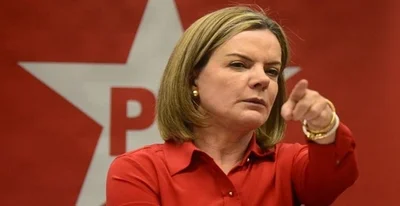
Gleisi Hoffmann is a leading figure in Brazil’s governing Workers’ Party (PT). (Photo internet reproduction)
One-stop reference
Company Intelligence
Every listed company in Latin America — financials, ownership and structure for 1,450+ companies across 26 exchanges, in one place.
RTAsk Rio TimesWhat this means, and what's next›
The Accusation from the Governing Party
Gleisi Hoffmann, a federal deputy and former Minister of Institutional Relations for President Luiz Inácio Lula da Silva, made the claim in early July 2026. She stated the Bolsonaro family acted as “traitors to the nation” in a video posted on social media.
Hoffmann directly linked the family’s actions to US objections over Brazil’s Pix instant payment system. She argued that American digital payment firms view Pix as a competitive threat.
The accusation marks a sharp escalation in the long-running political feud between Lula’s left-wing Workers’ Party and the right-wing Bolsonaro camp. Hoffmann framed the alleged lobbying not just as a policy dispute but as a direct attack on Brazilian sovereignty.
For foreign observers, Pix is Brazil’s wildly popular central bank-run instant payment platform, used by over 150 million people. It has dramatically reduced the dominance of traditional card networks and US-based payment processors in the country.
No Concrete Evidence Provided
Hoffmann did not present documentary proof or specific transcripts of lobbying meetings to support her accusation. She instead called for an investigation into the relationship between allies of the former president and US authorities.
Her argument relied on the timing of a visit to Washington by Bolsonaro’s sons, Flávio and Eduardo, in late May 2026. They met President Donald Trump shortly before the US Trade Representative (USTR) recommended the tariff.
The absence of hard evidence has drawn criticism from opposition figures, who characterize the claim as a political maneuver. Still, the call for an investigation keeps the narrative alive in Brasília’s heated political environment.
For investors, unsubstantiated accusations of this magnitude can inject short-term uncertainty into Brazil’s already complex political risk calculus. The dispute highlights how domestic rivalries can spill into international trade policy.
Why the Bolsonaro family US tariffs Link Was Made
The USTR officially recommended a 25% tariff on a wide range of Brazilian products, citing Pix as an “unreasonable” policy that “onerates or restricts” US commerce. The US argues the system harms American electronic payment companies.
President Lula’s office also blamed the Bolsonaro family. It stated the tariff resulted from “pressure exerted on the White House” and a “narrative constructed with the active collaboration” of the former president’s family.
The USTR’s formal recommendation, released in early June 2026, gave Brazil and affected companies until July 15 to respond before potential implementation. This tight deadline has added urgency to the political firestorm.
Brazil’s Pix system has been a target of US trade scrutiny before, with American officials arguing its state-backed structure creates an uneven playing field. The Bolsonaro family’s known closeness to Trump has made them an easy target for the Lula administration’s blame.
The Bolsonaro Camp’s Denial
Senator Flávio Bolsonaro, a presidential candidate, denied the allegations on social media. He stated he “urged Trump not to impose tariffs on Brazilian goods” during their meeting.
Federal deputy Eduardo Bolsonaro had previously warned of “additional tariffs” if Brazilian authorities did not alter their conduct. However, he did not directly address Hoffmann’s specific lobbying claim.
The Bolsonaro camp has not issued a unified formal rebuttal to the July 2026 accusation. Flávio’s individual denial remains the primary counter-claim, leaving room for continued speculation.
The family’s long-standing alliance with Trump’s political movement is well-documented, with Eduardo Bolsonaro often described as the family’s chief liaison to Washington. This history provides the backdrop against which the current accusations are being judged.
What This Means for Expats and Investors
If the 25% tariff is implemented, it could raise prices on a wide range of Brazilian exports to the US, potentially affecting everything from manufactured goods to agricultural products. This could ripple through supply chains and consumer costs in both countries.
For expats living in Brazil, the political instability surrounding the accusation could influence currency fluctuations. The Brazilian real has historically been sensitive to both trade disputes and domestic political scandals.
Investors with exposure to Brazilian equities or payment sector companies should monitor the July 15 deadline closely. Any actual imposition of tariffs could hurt Brazilian exporters, while the political noise alone may increase market volatility.
The dispute also underscores the strategic importance of Brazil’s Pix system, which has revolutionized financial inclusion in the country. Any US action targeting Pix could have unintended consequences for the millions of Brazilians who rely on it daily.
What Happens Next
The immediate focus is on the July 15 deadline for Brazil to formally respond to the USTR recommendation. Diplomatic channels between Brasília and Washington are expected to be active in the coming days.
Domestically, pressure is mounting for a formal congressional inquiry into the Bolsonaro family’s Washington connections. Whether such an investigation materializes depends on the political calculations of Brazil’s fragmented legislature.
The accusation has also energized Lula’s base, providing a rallying point against the opposition ahead of the 2026 presidential election. Expect the “traitors to the nation” narrative to feature prominently in PT campaign messaging.
For the international community, this episode serves as a reminder of how deeply Brazil’s internal political divisions can impact its foreign economic relations. The outcome of this dispute could set a precedent for how future administrations handle the intersection of domestic politics and trade policy.
Frequently Asked Questions
What did Gleisi Hoffmann accuse the Bolsonaro family of doing?
She accused them of lobbying the US government to impose a 25% tariff on Brazilian products, specifically linking the move to US objections over Brazil’s Pix payment system. She called them “traitors to the nation” and said their actions threatened Brazilian sovereignty.
Did Gleisi Hoffmann provide evidence for her accusation?
No, she did not present documentary proof. She called for an investigation into the relationship between Bolsonaro allies and US officials, citing the timing of their Washington visit in late May 2026, which coincided with the USTR’s tariff recommendation.
What was the Bolsonaro family’s response to the accusation?
Senator Flávio Bolsonaro denied the allegations, stating he urged President Trump not to impose tariffs on Brazilian goods during their meeting in late May 2026. The family has not issued a collective formal rebuttal to Hoffmann’s specific July 2026 claim.