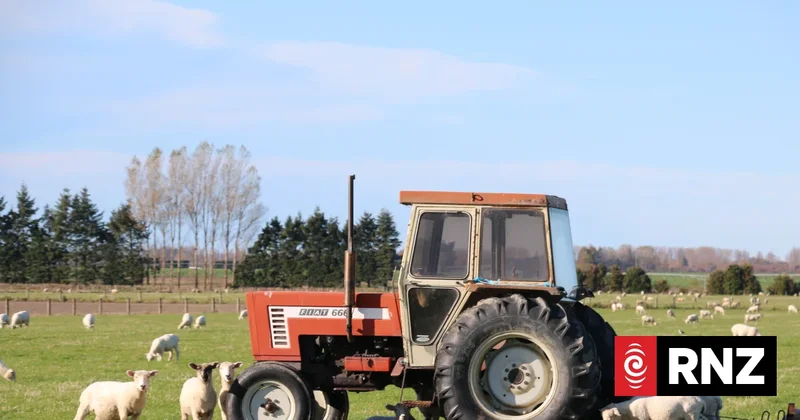
Many farmers are getting close to pension age and contemplating what to do with the family farm, especially if it is in sheep or beef.
But there appears to be a positive turn to the issue of succession with renewed interest in beef and sheep farms by young farmers.
The interest has been accompanied by a greater willingness for banks to lend based on market conditions - strong demand for meat and good prices.
A Rabobank report last year found that 17,000 farms and orchard owners were reaching pensionable age in the next decade and it is likely there will be a $150 billion intergenerational transfer of wealth.
The Rabobank report showed the average age of farmers in the sheep and beef sector was around 50, but with a significant number reaching retirement age.
Federated Farmers meat and wool chairman Richard Dawkins told Nine to Noon the key challenge had been that land values did not align with the productive capacity of farms.
"So basically the next generation really struggle to buy their way in but look the industry's profitable again, there's a real change of mood in the sector and some real confidence about."
That meant that young people could now see a future in farming, he said.
"If you think about a family farm, you know Mum and Dad may be reaching retirement age and now the children can actually see a vibrant profitable sector so they're really keen to come home and take over."
There were some very challenging years post the Covid-19 pandemic where the majority of sheep and beef farmers were not profitable, he said.
Farmers managed their way through that downturn by reducing their spending and doing things that could include putting loans on interest-only, reducing fertiliser use or deferring some maintenance, he said.
But there was now a unique situation with conditions that potentially only occurred once in a generation, he said.
"When you consider the returns for sheep meat, beef, even wool, interest rates are reasonably favourable, we've got a good policy environment from the government, the climate is playing ball by and large and we've got all of this new technology coming onto farm as well, so just across the board a hell of a lot of positivity."
Loss of farms due to carbon forestry 'tragic' - Dawkins
In his opinion, Dawkins said it was tragic that around 400,000 hectares of sheep and beef land had been converted into carbon forestry in the past.
"Future generations are going to look at these vast areas of land, you know good food producing land that supports our rural communities and the New Zealand economy, to see that planted in what is often permanent pine, it really is tragic."
The current government had slowed those conversions on certain land use classes, but carbon farms were continuing to be planted - just at a slower rate, he said.
"The industry is more profitable, which is also helping, however that artificial subsidy of the emissions trading scheme really makes it challenging to compete with for the sheep and beef sector."
It was very discouraging for New Zealand which prided itself on its unsubsidised farming sector, he said.
Removing agricultural subsidies in the 1980s had lead to innovation and development, he said.
"We really are put on a pedestal by other countries when they look at our agricultural systems because we are mostly profitable and so productive. So when you have this artificial market come along, created by the government, and see these vast areas planted in permanent pines - it's not good for the country and it's not good for the sector."
Land price and lifestyle values
Choosing whether to go into farming was not just a matter of land price and economics, he said.
Lifestyle values were often also considered and "bringing your children up on a sheep and beef farm, it is a privilege", he said.
It could be very challenging for young people to find the money to buy their way into a sheep and beef farm, but the main issue was often debt servicing, he said.
"But with this renewed confidence in the sector and the favourable conditions across the board that is becoming more and more possible and we are seeing banks with more appetite to compete for that rural part of the market."
Dawkins said he was hearing that bank lending conditions, particularly for younger people, were becoming more favourable.
But it still wasn't easy, he said.
"You do have those competing interests, you do have carbon farming, you do have corporates buying up land, I mean we are seeing the next generation manage to make their way onto the farm but I tell you it is a really difficult road to navigate."