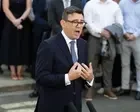
Electricity bills will be reduced by an average of £45 a year from October, after Andy Burnham announced the government would remove VAT from them.
The new prime minister said on Tuesday he was implementing an immediate tax cut to help ease cost of living pressures for households in Britain.
The move comes a day after Burnham became prime minister, promising to give voters “some breathing space” on living costs with a series of policy interventions.
Burnham said in a statement: “I said I wanted to give people breathing space, and that’s what I’m announcing on my second day as prime minister. We’re taking immediate action to cut taxes on energy bills, put more money in people’s pockets and bring back hope.”
It would be funded, officials said, by Burnham’s decision to scrap the digital ID scheme.
However, less than an hour after the move was announced, Darren Jones, who was sacked as chief secretary to the prime minister in Burnham’s reshuffle, raised doubts over the funding.
He said the digital ID project was unfunded and questioned how the VAT cut would be paid for. In a post on X, he said: “Good news that VAT will be cut on electricity bills. It’s a simple way for families to save a few quid, and to mechanically help to keep inflation that little bit lower.
“But the DigitalID program was unfunded. The government will have to set out how it will pay for its new policies at the budget.”
Allow content provided by a third party?
This article includes content hosted on platform.x.com. We ask for your permission before anything is loaded, as the provider may be using cookies and other technologies. To view this content, click 'Allow and continue'.
The chancellor, John Healey, said: “Today’s energy tax cut will give families some breathing room on bills, and provide some reassurance this winter.”
Burnham became prime minister on Monday with a pledge to “bring back hope” to Westminster politics by easing the cost of living, de-privatising utilities and ending rough sleeping.
He surprised many in Westminster with his choice of Healey as chancellor after intense lobbying from allies of Ed Miliband and Shabana Mahmood.
On Tuesday, Burnham is expected to set out further detail on his cost of living plans, including the electricity bill tax cut. Downing Street said the move would remove about £45 from the annual price-capped electricity bill at a cost of £850m in 2026-27.
Ending the ID scheme is due to save £1.8bn over three years.
skip past newsletter promotion
Free newsletter \| Every weekday
Sign up to First Edition
Our morning email breaks down the key stories of the day, telling you what’s happening and why it matters
after newsletter promotion
Appearing on BBC Radio 4’s Today programme, Burnham’s newly appointed business secretary, Jonathan Reynolds, said the cut to VAT on electricity bills was “a statement of priorities”.
Responding to Jones’s claim that the cut remained unfunded, Reynolds said: “They are part of the government’s pressure, it is a legitimate decision to remove that pressure and instead use the allocation of resources … It’s a straightforward switch spend, it’s the right decision to make, and one that will be made by the British people.”
Healey will set out detailed costings of the plan, and more long-term action to bring down living costs, at the budget later this year. Burnham’s allies have talked about reducing the cap on bus fares and even temporarily freezing rents in the private sector.
As well as bringing down bills, the move will help encourage consumers to replace gas boilers with electric heat pumps, given the gap between gas and electricity prices will now be reduced.
In Northern Ireland, consumers will continue to pay VAT, as they are bound by commitments to adhere to EU tax laws. However, the government said it would give the Northern Ireland executive an equivalent amount of funding to spend on its own cost of living package.