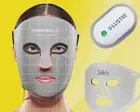
LED face masks are booming in popularity – despite being one of the most expensive at-home beauty products to hit the market. They claim to either reduce the appearance of fine lines, stop spots or calm redness, with some even combining different types of light to enhance the benefits.
The Guardian’s journalism is independent. We will earn a commission if you buy something through an affiliate link. Learn more.
However, it’s wise to be sceptical about new treatments that are costly and non-invasive, and to do your research before you buy. With this in mind, I interviewed doctors and dermatologists to find out whether these light therapy devices work.
They’re not a miracle cure for deep-set wrinkles, but experts say the best light therapy masks can promote collagen production, improve elasticity and help smooth skin with sustained use. And while it may seem like a new technology, research from the 1990s shows the efficacy of light therapy in wound healing, acne treatment and skin rejuvenation.
Red and infrared light are safe to use on all skin types, but be warned that blue light can worsen hyperpigmentation on darker skin tones.
I’ve tested some of the most popular devices on the market – including infrared masks – to narrow down my favourite LED face masks for treating a range of skin concerns.
At a glance
£499.99 at CurrentBody£98.77 at Lookfantastic£257.99 at SharkNinja£50 at Lustre£465 at Cult Beauty£259 at Lookfantastic
Why you should trust me
I’ve been reviewing health and beauty tech for the past four years. During this time I’ve witnessed many beauty fads come and go. Naturally tight-fisted and a sceptic, I was initially struck by the cost of these masks. How on earth can an elaborate LED light strip set you back more than £300?
But after testing multiple light therapy masks, I’ve come to understand the technology behind them – and, sadly, you won’t be able to engineer your own light therapy system with a costume mask and a set of LED string lights.
I don’t have many fine lines or wrinkles to test on, but I can comment on how blue light treatment affects acne because I’ve suffered from it since I was a teenager – despite my mum’s assurances that it would clear up after puberty. The experts I spoke to agreed on the efficacy of red and infrared light for anti-ageing.
Are LED face masks worth it?
Light therapy masks are fantastic additions to a skincare routine, helping to smooth, firm and reduce blemishes. Since I started using one more than a year ago, my skin is calmer, less prone to redness, and has a more even tone.
However, LED masks can be expensive, and if you’re not disciplined enough to use one regularly, you won’t see results. Before you splash up to £500, keep in mind that light therapy masks are most effective when paired with a good skincare routine. It’s crucial to make sure skin is properly cleansed before treatment and protected from sun damage afterwards.
If you don’t already have a skincare routine nailed down, don’t buy a light therapy mask just yet. Consider starting out using a gentle cleanser and moisturiser, with an SPF for daytime. You could also incorporate targeted skincare serums, such as retinol and vitamin C, to help firm and brighten the skin without the need for an expensive light therapy mask.
How I tested
‘I tested the fit, comfort levels and usability of 15 of the most popular light therapy masks.’ Photograph: Sarah Matthews/The Guardian
Since LED treatments take a while to show visible results, it’s difficult to test multiple light therapy masks at once (at least, without spending a few years testing them), so I enlisted the help of dermatologists who were familiar with light therapy treatments long before they were commercially available.
I spoke to Dr Barbara Kubicka, an expert in aesthetic medicine; Dr Derrick Phillips, a consultant dermatologist and spokesperson for the British Skin Foundation; and aesthetic doctor Dr Priya Verma, an authority on the science of skin ageing.
I asked these experts to identify which features of a light therapy mask – such as bulb quality and quantity, light wavelength and treatment time – matter the most, to inform my choices. They also outlined the suitability of light therapy for different skin types and its associated risks.
Armed with their advice, I tested the fit, comfort levels and usability of 15 of the most popular light therapy masks and other targeted LED devices. Getting hands on with the masks allowed me to pinpoint any of the key features the experts recommended, as well as features I found helpful as a consumer.
I’ve been using a light therapy mask regularly for the past 18 months, so I can identify a good mask from a bad one. My tests also included monitoring results after four nightly sessions, with the obvious caveat that only very minimal changes could be observed after such a short-term treatment. I then tested my favourite masks over several months, too, helping me to verify any unique treatment claims – as well as giving me plenty of opportunities to scare my boyfriend by sneaking up on him wearing each one.
Only masks that use the brightest, flicker-free bulbs, fit comfortably and are easy to use made the final cut. After testing, I returned the masks sourced for this article to the manufacturers. Where that wasn’t possible, I cleaned the masks and donated them to the Redbridge Reach Out service, a charity that supports anyone experiencing domestic abuse.
The best LED face masks in 2026
Versatile treatments and broad light coverage earned the CurrentBody Multi Light Therapy LED mask the top spot. Photograph: Sarah Matthews/The Guardian
Best LED mask overall: CurrentBody Multi Light Therapy LED mask
CurrentBody
Multi Light Therapy LED mask
£499.99
What we love
Powerful anti-ageing with treatments for other skin concerns
What we don’t love
Its gobsmacking price
Photograph: Sarah Matthews
This is a relatively new addition to the CurrentBody LED mask lineup, and it easily beats my previous top choice, the Series 2. It uses identical anti-ageing tech, including deep near-infrared lights, but packs in four more light settings to treat blemishes, sensitivity, pigmentation, or everything at once using a clever “complete” mode. For £100 extra, this is a significant upgrade that should see you through all of life’s ups and downs.
Why we love itI used this mask for three months, and I was glad to see that its red-light anti-ageing mode, which uses red, near-infrared and deep near-infrared light, was just as effective as the Series 2 mask. These deeply penetrating light frequencies help to counteract deeper fine lines and wrinkles, while boosting skin healing for a more even skin tone. When using the blue light mode, I noticed a significant reduction in my breakouts, even in the stubborn forehead area.
While I found the restoring and brightening modes effective, I found I could get the benefits of both using the complete mode, which combines – deep breath – red, near-infrared, deep near-infrared, yellow and green lights. Instead of switching between the colours with reckless abandon, the lights are strategically positioned around the face to provide the benefits where they’re needed most. This was a clever treatment that I preferred using over the blue light mode on days when my skin needed a general boost.
Like the Series 2 mask, I found this incredibly comfortable. Its straps wrap around and over the head, keeping the mask firmly in place, whether I was running around doing chores or flopped out on the sofa. Its light coverage is brilliant, bolstered by an extra chin strap that covers under the jaw, and its eye guards block out light brilliantly.
The controller was simple to use. It has one button to scroll through the settings, and a timer pops up telling you how long you have left of treatment and the mask’s battery life – a small upgrade from CurrentBody’s other masks that made a huge difference for usability. Each treatment is 10 minutes long, so it’s easy to incorporate into your daily routine. If you can afford it – and there’s no denying that it’s the price of a short holiday – it’s a brilliant choice.
It’s a shame that … it’s incredibly expensive. While it’s the only mask I’ve tested that offers this versatility alongside such powerful anti-ageing and the best results, cheaper masks can help with lighter-touch anti-ageing and blemishes for less. Or, if you’re in it for anti-ageing alone, you could save £100 and buy the CurrentBody Series 2 mask instead.
Number of LEDs: 566 at 110 light points
Number of settings: five
Treatment time: 10mins
Light frequencies: red (633nm), near-infrared (830nm), deep near-infrared (1,072nm), blue (415nm), green (532nm), yellow (590nm)
Timer countdown: yes
CurrentBody
Multi Light Therapy LED mask
£499.99
What we love
Powerful anti-ageing with treatments for other skin concerns
What we don’t love
Its gobsmacking price
Best budget LED face mask: Silk’n LED face mask 100
Silk’n
LED face mask 100
from £98.77
What we love
Comfortable to use; good colour choices; accessible price
What we don’t love
Fewer bulbs than higher-end models and no near-infrared
Photograph: Sarah Matthews/The Guardian
£98.77 at Lookfantastic£119 at Boots
If you want to try light therapy without remortgaging the house, the Silk’n LED face mask 100 is a good choice. It has 100 LED bulbs with good facial coverage, is comfortable to wear, and offers a good range of light colours. It doesn’t have near-infrared lights like the pricier options, but it covers the basics at a decent price.
Why we love itThis mask offers four colour modes: red, blue, yellow and purple. Red light helps stimulate collagen to reduce the appearance of fine lines, while blue light helps to soothe breakouts. The purple light comes from mixing the aforementioned blue and red lights, combining the effects of both to boost the skin’s overall evenness.
Although less widely researched (and with limited clinical evidence to suggest efficacy), the experts I spoke to said the yellow light treatment could help improve hydration levels in the skin. I didn’t notice a huge hydration hit when testing this feature, so if your skin is crying out for hydration, I recommend using the other light settings alongside a hydrating serum.
Each colour can be selected individually for a 10-minute targeted session, or you can select automatic mode, which cycles through the colours over 15 minutes to provide all the benefits at once.
I found the Silk’n light therapy mask simple to use and comfortable to wear. Its flexible silicone build didn’t feel quite as sturdy as more expensive options, but I didn’t really notice this when using the mask. The built-in eye shields weren’t as bulky as others, but they still blocked out the light and protected my eyes well.
The automatic mode left my skin feeling completely comfortable, with a slightly glowier finish than usual – just what I’d expect from an entry-level mask such as this one.
It’s a shame that … there’s no timer and it has fewer than a fifth of the bulbs of the CurrentBody, with no near-infrared light treatment for effective collagen stimulation deeper in the skin. This means it’s better for light-touch anti-ageing, and for soothing, acne-busting blue light treatments.
Number of LEDs: 100 Number of settings: 5 Treatment time: 10 or 15mins Light frequencies: red (633nm), purple (463-633nm), blue (463nm), yellow (592nm) Timer countdown: no
Silk’n
LED face mask 100
from £98.77
What we love
Comfortable to use; good colour choices; accessible price
What we don’t love
Fewer bulbs than higher-end models and no near-infrared
Best LED mask for fine lines and blemishes: Shark CryoGlow
Shark
CryoGlow
from £257.99
What we love
Intuitive to use; targeted treatments; undereye cooling
What we don’t love
Heavy mask that presses into the undereyes when reclining
Photograph: Sarah Matthews/The Guardian
From £257.99 at SharkNinjaFrom £299 at John Lewis
Many will be familiar with Shark’s vacuum cleaners and hair-styling gadgets, but the brand’s latest venture is in skincare. The Shark CryoGlow is the only LED face mask to offer built-in undereye cooling alongside targeted light therapy for anti-ageing and acne repair.
Why we love itThe CryoGlow offers three different wavelengths of light: blue, red and deep-infrared. It has three presets for “better ageing”, “blemish repair” and “skin sustain”. If these aren’t clear enough, the control screen explains exactly what each mode is designed to do, making it really user-friendly.
I found the lights incredibly bright during my tests – although for safety, they automatically dim when you remove the mask from your face – but I was happy with how the mask shielded my eyes.
During every treatment, you can choose to switch on the cooling undereye patches, which aim to de-puff and soothe your skin. The cooling can also be used on its own, without the LEDs. There are three levels, the coolest of which felt startlingly cold at first but did a great job of calming down my eyes on a particularly bad hay fever day. Likewise, the blemish mode did a brilliant job of calming spots and redness with sustained use. I also liked using the skin sustain mode for a quick pick-me-up to brighten skin before a night out.
As you might imagine, using the cooling feature on full blast drains the battery more quickly. I performed two battery-rundown tests on the CryoGlow without cooling, and it managed 17 treatments. With maximum cooling enabled, however, this dropped to just seven. That’s still a decent number of treatments in between charges, but it’s something to bear in mind.
It’s a shame that … since it’s made of plastic, it’s noticeably heavier than its silicone competitors. Thankfully, Shark has made the mask fit comfortably by using cushioned inserts at the forehead, brow and nose area.
That’s when you’re sitting up, at least; when lying down, the metal cooling patches pressed into the delicate area under my eyes. Another unfortunate side-effect of the cooling is the whirring noise it makes – inaudible from far away, but pretty noisy when pressed on to your face.
Number of LEDs: 160
Number of settings: four
Treatment time: 4-8mins light therapy; 5-15mins undereye cooling
Light frequencies: red (630nm), infrared light (830nm), blue light (415nm)
Timer countdown: yes
Shark
CryoGlow
from £257.99
What we love
Intuitive to use; targeted treatments; undereye cooling
What we don’t love
Heavy mask that presses into the undereyes when reclining
Best LED device for acne-prone skin: Lustre Solo
What we love
Targeted blemish treatments in a portable package
What we don’t love
Leech-like appearance and extra running cost
Photograph: Sarah Matthews/The Guardian
Acne can be a real pain, and many cosmetic treatments that target it leave skin feeling irritated, dry and flaky. These nifty adhesive LED patches from Lustre use blue light, which the company claims reduces acne-causing bacteria.
Why we love itEach Solo patch has 15 pure blue LEDs at the proven wavelength for treating acne, 415nm. The patches cover a targeted area of skin about 2.5 x 5cm, which is perfect for treating problem areas such as the chin, cheeks and forehead. Since they’re rechargeable and far smaller than a typical LED face mask, they’re highly portable, making it easy to stick to a treatment routine.
I found the targeted treatments very effective for minimising breakouts in my chin area – somewhere I often struggle with spots. Continued treatments saw fewer breakouts and faster healing.
The patches come with a supply of double-sided adhesive to fix each one to your skin, allowing you to move around freely during treatment. This also means, unlike typical light therapy masks, they can be safely fixed anywhere on the body.
If you’re worried that the adhesive will feel uncomfortable or be tricky to remove from breakouts, don’t be. The patches are so lightweight that the adhesive doesn’t need to be very strong. I found it easy and comfortable to peel off the patches after the recommended 20-minute treatment time.
It’s a shame that … you need to buy the sticky patches when they run out. These cost £18 for a pack of 60, or 30p each. They also look a bit like leeches – only you can decide if that’s more palatable than the Hannibal Lecter look of the full-face LED masks.
Number of LEDs: 15
Number of settings: one
Treatment time: 20mins
Light frequencies: blue (415nm)
Timer countdown: no
What we love
Targeted blemish treatments in a portable package
What we don’t love
Leech-like appearance and extra running cost
Best LED mask for quick treatments: Dr Dennis Gross SpectraLite FaceWare Pro
Dr Dennis Gross
SpectraLite LED FaceWare Pro
from £465
What we love
Comfortable fit; wireless controls; fast treatments
What we don’t love
Imperfect eye shielding and fiddly straps
Photograph: Sarah Matthews /The Guardian
£465 at Space NK£465 at Cult Beauty
Most LED masks recommend 10- to 15-minute daily treatments for best results. If you’re short on time but still want to invest in a reliable face mask, the SpectraLite FaceWare Pro is my recommendation. It offers anti-ageing, anti-blemish and a combination of both treatments, with daily sessions taking just three minutes. That’s something even the most time-poor can commit to, and consistency is what gets you results.
Why we love itThis is the most comfortable hard-shell LED mask I’ve tested. It’s lined with a thick, flexible but sturdy-feeling layer of silicone that provides cushioning on every part of the face. During use, it evenly distributed the mask’s weight across my nose, forehead and cheekbones, no matter if I was lying flat or sitting up.
I was surprised by this, since the mask’s battery is built into the forehead rather than in a separate remote – the Lustre Renew Pro Facewear reviewed below has a similar design but is less comfortable to wear. The SpectraLite FaceWare Pro perfects the hands-free design, making it comfortable, breathable and easy to control with one button. Mercifully, there’s no useless app.
In the mask, you’ll find 100 red LEDs (including red, near-infrared and amber) and 62 blue LEDs distributed over 80 light points on the face. These have been strategically positioned so that the blue lights cover the nose, forehead, chin and lower cheeks (oily areas where acne-causing bacteria thrive), while the red light is more evenly dispersed. There are separate red anti-ageing and blue acne-fighting modes, but I used the combination mode in my tests and was pleasantly surprised by how well the mask reduced blemishes while easing redness across my face.
The keen-eyed among you may notice that the three-minute treatments are significantly shorter than the 10- to 20-minute treatment times recommended by the experts I spoke with. However, according to the brand, its clinical studies have seen results from red light treatments within 10 weeks of daily use, and blue light within two weeks. In my weeks testing this mask, my skin did appear smoother, brighter and clearer. If you’re hunting for a quick, comfortable mask without fancy features, such as app connectivity and additional colour options, this is a strong bet.
It’s a shame that … its straps aren’t the easiest to adjust, and the mask doesn’t shield the eyes as effectively as others. If you have sensitive eyes, opt for something that has built-in eye guards instead. It also doesn’t have a remote or a countdown, but the treatments are so quick that this isn’t much of an issue.
Number of LEDs: 162
Number of settings: three
Treatment time: 3mins
Light frequencies: red (633nm), amber (605nm), near-infrared (880nm), blue (415nm)
Timer countdown: no
Dr Dennis Gross
SpectraLite LED FaceWare Pro
from £465
What we love
Comfortable fit; wireless controls; fast treatments
What we don’t love
Imperfect eye shielding and fiddly straps
Best LED mask for travel: Silk’n LED face mask Pro
Silk’n
LED face mask Pro
from £259
What we love
Deep NIR light at a sensible price, with a handy travel case
What we don’t love
Confusing settings and a finicky fit
Photograph: Sarah Matthews/The Guardian
£259 at Lookfantastic£259 at Currys
For a long time, deep near-infrared light was reserved for the most expensive LED masks. So, when the Silk’n LED face mask Pro launched earlier this year, with 20 deep near-infrared lights included on the forehead and around the eyes and mouth, I was keen to try it. Even more so when I learned of its comparatively reasonable price.
While its treatments aren’t quite as streamlined as the CurrentBody Multi Light Therapy mask above, it offers similar versatility and light coverage at half the cost. So, if you want a great value mask, or travel often and need a mask that packs down well, this is my recommendation.
Why we love itThis mask packs in seven treatment options, which combine five wavelengths of light. A few of these treatments felt a little surplus to requirements, such as the stand-alone red- or amber-light treatments – I can’t fathom why you wouldn’t want to use the setting that includes near-infrared and deep near-infrared as well. But the treatments I used most often were effective. The red-light settings had a good calming effect on my skin, and when I paired this with a few minutes of the blue light, I noticed my blemishes reduced and healed faster.
All the controls for this mask are built into a small battery pack, which magnetically attaches to the front of the mask. While this means you don’t get to see a countdown or a screen displaying setting time, there are no wires to mess around with. The battery is incredibly lightweight and can last through a whole week of treatments without recharging.
I also liked this mask’s flexible straps and its adjustable chin strap. The Silk’n Pro packs down completely flat or folds into its carry case, not much larger than a box of tissues, for travel. This is incredibly useful if you’re frequently away from home.
It’s a shame that … the chin strap hangs away from the chin slightly, and I found the eye guards pressed hard into the bridge of my nose. I also found it confusing to select different treatments because the various configurations of red-toned light were indistinguishable from each other. Its blue-light treatment didn’t automatically combine blue and red light, which is recommended for reducing acne inflammation and speeding up healing. Timing blue and red light treatments manually wasn’t ideal.
Number of LEDs: 480 at 120 light points
Number of settings: seven
Treatment time: 10mins
Light frequencies: red (633nm), near-infrared (830nm), deep near-infrared (1,072nm), blue (463nm), amber (605nm)
Timer countdown: no
Silk’n
LED face mask Pro
from £259
What we love
Deep NIR light at a sensible price, with a handy travel case
What we don’t love
Confusing settings and a finicky fit
The best of the rest
‘An incredibly comfortable, effective mask’: the Currentbody Series 2. Photograph: Sarah Matthews/The Guardian
CurrentBody Series 2
CurrentBody
Series 2
from £399.99
What we love
Excellent coverage; comfortable; deep near-infrared lights
What we don’t love
Only one treatment mode; no screen to display treatment time
Photograph: Sarah Matthews/The Guardian
£399.99 at CurrentBody£399.99 at Amazon
Best for: anti-ageing
If the multiple settings in the CurrentBody Multi Light Therapy mask above offer more versatility than you’ll use, and you’re mainly hoping to achieve anti-ageing results, choose this mask. The CurrentBody Series 2 mask was my top choice on this page for a long time, and it’s still an incredibly comfortable, effective mask that offers red, near-infrared and deep near-infrared lights.
The deep near-infrared lights penetrate deeper than the other two types of light, CurrentBody claims. This leads to more effective treatment where it’s needed most – the deep near-infrared bulbs are positioned under the eyes and around the lips to better target areas where ageing is more pronounced. This targets fine lines and wrinkles better than most masks on this page.
I used this mask for three months, and was pleased to notice my skin looking calmer and more even-toned than usual, with less undereye inflammation. As it’s a red-light mask, it didn’t have much effect on my acne, but it did help to reduce redness.
It didn’t make the final cut because … as someone with temperamental skin, I think spending the extra £100 on the multiuse mask is worth it. This mask offers only one treatment setting, and there isn’t a screen displaying the treatment time. Neither is a dealbreaker, but it’s nice to be able to choose different treatments, and at this price I’d expect a countdown timer.
Number of LEDs: 236; number of settings: one; treatment time: 10mins; light frequencies: red (633nm), near-infrared (830nm), deep near-infrared (1,072nm); timer countdown: no
CurrentBody
Series 2
from £399.99
What we love
Excellent coverage; comfortable; deep near-infrared lights
What we don’t love
Only one treatment mode; no screen to display treatment time
Stylpro Wavelength Pro 5-in-1
Stylpro
Wavelength Pro 5-in-1
from £249
What we love
Adjustable design and versatile settings
What we don’t love
Less close contact with the chin area
Photograph: Sarah Matthews/The Guardian
Best for: treating multiple areas
The neck and decollete are often the first places to show signs of ageing, as the skin is thinner in those areas. Consequently, expensive neck light therapy masks have started to flood the market – but rather than requiring additional expensive kit, this Stylpro mask can be adjusted to treat multiple areas including the back, neck, scalp and face.
It’s incredibly versatile. It has red, deep red, near-infrared and blue light, which all combine into 11 programs to target different areas of concern on your body. The remote control has a huge screen, making it easy to select the desired program and treatment zone. This also displays the mask’s battery life and treatment time.
In my tests, the straps did a great job of keeping the flexible silicone mask in place. Its eye shields were also brilliant at blocking out light, and the snap fasteners made it easy to adjust the mask between different treatment areas. To treat the back and neck area, I found you needed to lie down or sit up very straight to prevent it from slipping, but it was great to have the versatility.
It didn’t make the final cut because … when used in face mode, the mask hangs a few inches away from the chin area, which means the light has less direct contact there. Its eye guards also tended to gently pinch the bridge of my nose.
Number of LEDs: 137; number of settings: 11; treatment time: 12-15mins; light frequencies: red (633nm), deep red (655nm), near-infrared (830nm), blue (415nm); timer countdown: yes
Stylpro
Wavelength Pro 5-in-1
from £249
What we love
Adjustable design and versatile settings
What we don’t love
Less close contact with the chin area
Flikeze PhotonMask Quint
Flikeze
PhotonMask Quint
£189.99
What we love
Comfortable to wear and a good range of colours
What we don’t love
No nose coverage
Photograph: Sarah Matthews/The Guardian
Best for: a comfortable fit
The Flikeze light therapy mask offers a wide range of light colours: red, near-infrared, blue, green and yellow. Its settings include anti-ageing (red light), repair (yellow), brightening (green) and acne care (blue and red), and you can choose to do a 10- or 15-minute treatment. These all use near-infrared rather than deep infrared light.
The best thing about this mask is how comfortable it is. It has two straps that wrap around the top and bottom of your head, holding it to your face without the mask ever feeling weighty or digging in. Its eye shades fit like diving goggles and kept my eyes completely shaded from light during treatment (you can see how little light leakage there is in the haunting photograph from testing).
It didn’t make the final cut because … for the cost, it has fewer bulbs than average and the bulbs don’t cover the bridge of your nose – not a likely problem area for wrinkles, but spots can be a problem there. It also looks particularly disconcerting when worn.
Number of LEDs: 92;number of settings: four;treatment time: 10-15mins; light frequencies: red (660nm), near-infrared (850nm), blue (415nm), green (532nm), yellow (590nm); timer countdown: yes
Flikeze
PhotonMask Quint
£189.99
What we love
Comfortable to wear and a good range of colours
What we don’t love
No nose coverage
Lustre Renew Pro Facewear
Lustre
Renew Pro Facewear
from £249
What we love
App control for personalised treatments
What we don’t love
Less comfortable to wear
Photograph: Sarah Matthews/The Guardian
Best for: wireless controls and customised treatment
Most light treatment masks have wired controls. That doesn’t mean you need to remain tethered to a single spot, but it does mean there’s a remote that you have to carry around with you. This mask from Lustre, on the other hand, is controlled via a mobile app.
It has two programs, called Energise and Revitalise, and uses blue, red and near-infrared light. Unusually, you can choose which kind of light you want to use in four areas of your face: forehead, eyes, nose, and cheeks and chin. In my tests, I liked being able to treat spots on my chin with blue light while using red light on the rest of my face.
It didn’t make the final cut because … it’s not very comfortable. Since the battery is on the mask itself, it’s a little top heavy, and the eye protectors don’t do a great job of shielding your eyes.
Also, I hate having lots of apps on my phone – it’s up to you whether the wireless freedom is worth the app installation.
Number of LEDs: 80; number of settings: two presets, with in-app personalisation options across five facial zones; treatment time: 10mins; light frequencies: red light (630nm), near-infrared light (830nm), blue light (415nm); timer countdown: yes
Lustre
Renew Pro Facewear
from £249
What we love
App control for personalised treatments
What we don’t love
Less comfortable to wear
Silk’n LumiLips LED lip mask
Silk’n
LumiLips LED lip mask
from £67
What we love
Deep near-infrared light and concentrated treatment
What we don’t love
Less comfortable to wear than a mask
Photograph: Sarah Matthews/The Guardian
£67 at Currys£79 at Lookfantastic
Best for: targeted lip treatments
If your main area of concern is the lip area, you might not need to buy a full mask. The Silk’n LumiLips has 30 LEDsconcentrated in the lip area, covering smile lines and the chin. It has five light frequencies – amber, red, dark red, near-infrared and deep near-infrared. The only other masks in this roundup offering deep near-infrared light are over £250, which gives you a good idea of how much value it offers.
The mask has two modes, both of which use dark red, near-infrared and deep near-infrared light. The red-light mode claims to promote lip volume and firmness, while the second mode adds in amber light to reduce pigmentation and redness. I love that the mask requires only a five-minute daily treatment, making its less-than-comfortable mouthpiece slightly more bearable.
It didn’t make the final cut because … it’s built like an adult pacifier and feels like one too. You have to bite down on the mouthpiece to keep it in place, which is far less comfortable than just wearing a mask with a strap around your head.
Number of LEDs: 30;number of settings: two; treatment time: 5mins; light frequencies: amber (605nm), red (633nm), dark red (660nm), near-infrared (830nm), deep near-infrared (1,072nm); timer countdown: no
Silk’n
LumiLips LED lip mask
from £67
What we love
Deep near-infrared light and concentrated treatment
What we don’t love
Less comfortable to wear than a mask
Peep Club heated eye wand LED+
Peep Club
Heated eye wand LED+
from £85
What we love
Dedicated, soothing treatment for eye area
What we don’t love
Small LED light coverage
Photograph: Sarah Matthews/The Guardian
£85 at Peep Club£85 at Victoria Health
Best for: reviving and soothing the undereyes
LED face masks usually arrive with guards to protect your eyes from the light, which means they neglect to treat the delicate skin around the eyes – an area particularly prone to fine lines, wrinkles and discoloration.
The Peep Club heated eye wand is a nifty little gadget that was designed in collaboration with optometrists, primarily as a hot compress to help with dry, tired eyes. The LED+ model includes a small LED light, which glows red to reduce fine lines and amber to decrease the visible blood vessels that cause dark circles. There’s also green light for soothing inflammation, although the evidence around green light is shaky.
During testing, I found it soothed my irritated eyes after long days staring at a screen. The amber light setting seemed to reduce my dark circles, too, after a few weeks of consistent use. As recommended, I used it with the Peep Club coconut eye balm to give the wand a bit of slip, which avoided irritating the delicate skin under my eyes.
It didn’t make the final cut because … it’s not as convenient to use as a dedicated mask, since you have to glide it over the skin. Its LED light is small, so you need to dedicate a lot of time to treatment to get the best results. While I love using the coconut eye balm and a 40ml tub lasts a long time, it leaves an oily slip on the skin after treatment, and the need for this extra running cost may be off-putting.
Number of LEDs: not listed; number of settings: five, three with LED; treatment time: 5mins; light frequencies: amber (605nm), red (633nm), green (525nm); timer countdown: yes
Peep Club
Heated eye wand LED+
from £85
What we love
Dedicated, soothing treatment for eye area
What we don’t love
Small LED light coverage
The rest of the test
I’ve tested many more LED devices than can fit on this page, and while I don’t usually draw attention to bad products, I came across so many poorly designed models that I feel it necessary to shed light on the LED masks that overpromise and underdeliver.
First, we have the Revolution Pro Miracle LED face mask, which costs just £59.99 at full price. Believe me, I wanted this mask to be a winner, but its solid plastic structure, with no eye shielding or padding, made it so wildly uncomfortable to wear that it was an almost instant write-off. The straps are another problem; they come together around the bottom part of your head, causing the mask to constantly fall. It also seems built for very small faces, so it constantly slipped down my face, pinching my nose and making it difficult to breathe properly – even if I used it without the straps and lay flat during treatment. Throw in fewer LED bulbs than average and dim lights, and this mask is impossible to recommend.
A high price tag doesn’t guarantee how good the mask is either, as evidenced by the £719 Foreo FAQ 202 LED mask. Its lightweight and comfort level, along with an array of treatment options via its app-based controls, meant it impressed initially. However, its silicone design felt incredibly flimsy, and after a week of use, it had already started peeling away from the central battery pack.
This might be forgivable if Foreo offered a full warranty and repair service. There’s a two-year warranty covering defects and faulty workmanship, but this does not cover “cosmetic deterioration caused by fair wear and tear, or damage caused by accident, misuse or neglect”. To access accidental damage coverage, you have to pay Foreo’s £9.99/month subscription. Even if you’re happy to risk it, you still have to shell out £4.99/month to access the mask’s full suite of preset treatments. Add to this the scale of advertising you’re bombarded with in the app – some of it unskippable. When you consider its price, this brazen money-grabbing leaves a very bad taste.
Through testing this family of devices, I had also been hoping to find an undereye brightening LED patch to usurp the Peep Club wand, which requires constant movement across the eye area. I had hoped that the Lustre GoGlow brightening and de-puffing patches would fit the bill. They come in a handy headphone-like charging case and have a clever wireless design. However, when positioned under the eyes as advertised, the light was incredibly bright, which made it tricky to see. The sticky pads, although small, were uncomfortable to remove, and my skin was left feeling irritated for a day afterwards. The search for the perfect undereye LED patch continues …
What you need to know
Red light is just one of several LED wavelengths used to target different skin concerns. Photograph: Sarah Matthews/The Guardian
What is LED therapy, and how does it work?
“LED (light-emitting diode) therapy is a non-invasive treatment that uses specific wavelengths of light to stimulate various cellular processes in the skin,” says aesthetic medicine expert Kubicka. “Depending on the colour or wavelength, LED light can target inflammation, promote collagen production, accelerate healing and even kill bacteria.”
Light therapy is a great addition to your skincare routine – for me, it’s helped reduce breakouts, improve healing and reduce the appearance of my acne scars. LED face masks are quick, gentle and non-invasive, and suitable for most skin types (although as mentioned above, blue light can worsen hyperpigmentation on darker skin tones, according to the experts I spoke with). The masks are effective and foolproof to use, and the daily treatments also force you to take a little time for yourself – perfect for a morning pick-me-up or an evening wind-down.
Does red light help with anti-ageing?
“Red-light therapy can reduce the appearance of fine lines and wrinkles through a process called photobiomodulation,” says consultant dermatologist Phillips. “It energises mitochondria, which are the batteries of the cells, powering the production of collagen and elastin by fibroblasts, the factories of the skin.”
Elastin and collagen are “the building blocks of firm, youthful skin”, says Kubicka. Stimulating the production of these molecules can “improve skin density, elasticity and overall smoothness” as long as you complete treatments regularly.
I have yet to develop fine lines or wrinkles, but I’m keen to avoid them by using red-light therapy for “preventive ageing”. However, “most of the clinical evidencefocuses on treating visible signs of ageing or repairing damaged skin, rather than long-term prevention in younger skin,” as aesthetic doctor Verma explains.
Still, Verma reassured me my efforts wouldn’t be in vain. “Using LED light consistently and appropriately may help support overall skin health […] especially when combined with sun protection and a good skincare routine.”
What different colours of light therapy are available?
Several colours are available, with each wavelength claiming to target a different skin concern. These colours correlate to the visible light spectrum, and each can have a different effect on the skin.
Red light has a wavelength of between 630 and 700nm and is the most widely known form of light therapy, loved for its non-invasive potential anti-ageing benefits. Near-infrared light above 700nm “penetrates the skin more deeply to support tissue repair and reduce inflammation”, according to Kubicka. Blue light therapy (415nm), on the other hand, has been proven to target acne-causing bacteria, leading to a reduction in breakouts over time. Kubicka also says blue light can help regulate oil production – another common problem for those with acne.
The effects of some types of light on the skin are better researched than others. Near-infrared, red light and blue light are backed by scientific studies that identify the biological processes that each type of light triggers in the body.
Meanwhile, research into green and yellow light is more limited. One study questions the efficacy of yellow light therapy and claims that a previous study may have been influenced by the placebo effect. Similarly, a study on green light therapy suggests that more research is needed to provide a solid recommendation for use as an anti-ageing treatment.
How and when would you recommend using light therapy?
The “how” is simple: always use light therapy masks on freshly washed, dry skin, before applying serums and creams. This will give the light the most direct access to the skin.
Despite what some instruction manuals advise, don’t jump into daily treatments straight away – you may end up with slightly irritated skin. Start by introducing treatments two to three times a week, and monitoring the impact on your skin. If you don’t notice any sensitivity, you can incorporate more treatments, if permitted by the manufacturer’s guidelines.
Once your skin is used to the treatment, “home devices should be used three to five times a week, for 10-20 minutes a session,” says Phillips. Don’t expect instant results, though. If you’re hoping to treat breakouts, you should “see a reduction in redness and the frequency of acne breakouts within two to four weeks”. Those using red light for anti-ageing benefits will need to wait a little longer: “It typically takes six to eight weeks to see visible changes.”
Is light therapy safe for all skin tones?
“LED light therapy is generally very safe when used correctly,” says Verma. This is because, unlike laser hair removal, it only uses low-level, non-thermal light. “The most common side effects are mild and temporary, such as slight redness, dryness or irritation.”
“People with known photosensitive disorders or taking medications that make them more sensitive to light (eg certain antibiotics) should consult their doctor,” says Phillips. He also warns that those with darker skin tones should exercise caution when using blue light, since “some blue wavelengths have been associated with hyperpigmentation”. The Lustre Solo patches recommended above offer exclusively blue light, but the other masks on this roundup have blue-light-free settings if you do find that it causes sensitivity.
How much should I spend on an LED therapy mask?
There are hundreds of light therapy masks available at different prices, but the quality varies wildly. You may see results from a budget-friendly mask, such as the £119 Silk’n mask, but spending more will generally get you a larger quantity of bulbs that offer a greater range of wavelengths. You’re also more likely to get a mask with a better fit and coverage.
The best mask for you will depend on your skin concerns and budget. Those hoping to invest in a mask with anti-acne properties will be able to spend less, since blue light is more widely available, but if you’re looking for the best anti-ageing deep near-infrared light therapy, you will need to part with more cash.
High-end red light therapy masks can cost up to £500; if you spend that much, just make sure you use it regularly, or you won’t see results.
How to clean an LED face mask
Cleaning instructions for LED masks will differ slightly from brand to brand, based on the different materials used. As a general rule, you want to steer clear of using chemical or alcohol-based cleansers since these can damage a mask’s delicate silicone and padded components. Always check the instructions for your specific mask before jumping into cleaning.
The usual best practice is to use a non-abrasive cloth, such as microfibre, dampened with water to wipe down your mask after every use. Try not to use too much water and never submerge the mask, as doing so will damage the electrical components. Always make sure your mask is unplugged and switched off before cleaning, and wait for the mask to dry completely before storing, charging or switching it on.
For more:
The best concealers for camouflaging blemishes
The best eye creams for banishing bags, puffiness and fine lines
Shark FacialPro Glow + DePuffi review
CurrentBody Multi Light Therapy LED mask review
Sarah Matthews is a consumer journalist who specialises in health and beauty reviews. In her four years of product testing, she’s worked her way through countless hair styling tools, hair removal, light therapy and skincare innovations. She’s seen beauty trends come and go, and can sniff out a fad from a gamechanger (that doesn’t mean she’s disciplined enough to always follow her own advice, though)
This article was originally published on 19 September 2025. Reviews published in the Filter may be periodically updated to reflect new products and at the editor’s discretion. The date of an article’s most recent update can be found in the timestamp at the top of the page. This article was amended on 21 July 2026; the CurrentBody Multi Light Therapy mask and Silk’n LED face mask Pro were added after testing, one mask was removed, and prices were updated throughout.