Brazil · Business
Key Facts
—Record revenue. Brazil’s corporate travel sector earned R$13.7 billion (US$2.7 billion) in 2025, its best year ever.
—Hotel share. Hotels captured 31% of total revenue, amounting to R$4.2 billion (US$824 million).
—Air dominance. Air services accounted for 57.5% of the sector’s total revenue in 2025.
—Global ranking. Brazil now ranks as the 10th largest corporate travel market worldwide.
—2026 outlook. The industry association forecasts revenue will reach approximately R$14 billion (US$2.75 billion) in 2026.
Brazil business travel revenue soared to a record R$13.7 billion (US$2.7 billion) in 2025, marking the sector’s strongest financial performance in history.
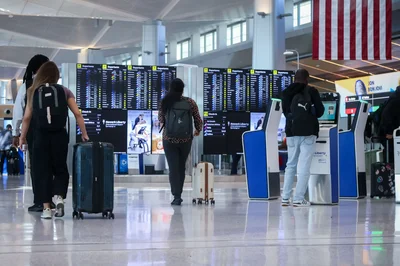
Brazil Business Travel Hits Record US$2.7 Billion. (Photo internet reproduction)
One-stop reference
Company Intelligence
Every listed company in Latin America — financials, ownership and structure for 1,450+ companies across 26 exchanges, in one place.
RTAsk Rio TimesMarkets, currencies and the economy›
RT
Ask Rio Times
Latin American markets, currencies and companies.
×
Markets todayThe currencyRates \& inflationEconomy outlook
What Drove the Record Brazil Business Travel Spending
The surge was powered by a 16.1% jump in air service revenue during the first four months of 2026, driven by higher airfares and rising demand.
A cut in Brazil’s principal interest rate also encouraged companies to loosen budgets and increase corporate travel spending.
For foreign readers unfamiliar with Brazil’s monetary policy, the benchmark Selic rate is a critical lever that influences borrowing costs across Latin America’s largest economy.
When the central bank lowers this rate, credit becomes cheaper for businesses, often unlocking capital for operational expenses like domestic and international trips.
Inflation-adjusted data shows that corporate travel spending in July 2025 was already 7.3% higher than the same month in 2024, nearing levels last seen during the 2013 commodity boom.
Hotels Emerge as a Prime Investment Target
The hotel segment alone generated R$4.2 billion (US$824 million), representing 31% of all corporate travel revenue in 2025.
That momentum continued into 2026, with hotel revenue rising 7.58% in the first quarter to R$1.04 billion (US$204 million).
In April 2026, the accommodation sector grew another 5%, reaching R$371 million in a single month.
This sustained growth positions hotels as a standout beneficiary of the corporate travel wave, even though specific international chains or local developers have not yet been named in public data.
For expat entrepreneurs and foreign investors, the hotel segment’s consistent upward trend suggests a maturing market with room for new brands, boutique concepts, and service upgrades in key business hubs like São Paulo, Rio de Janeiro, and Brasília.
A Global Player in Corporate Travel
Brazil now stands as the world’s 10th largest market for corporate travel, moving over R$135 billion (US$26.5 billion) in 2025.
Domestic air traffic rose 9.3% in January 2026, while international travel jumped 11%, showing broad-based growth.
This dual expansion matters because it reflects both internal economic vitality and Brazil’s deepening integration with global supply chains.
For tourists and business visitors, the rising international traffic often translates into more flight options and competitive pricing on long-haul routes connecting São Paulo‘s Guarulhos Airport to North America, Europe, and Asia.
Outlook for the Year Ahead
The Brazilian Corporate Travel Association (Abracorp) projects full-year 2026 revenue will reach roughly R$14 billion (US$2.75 billion).
This forecast signals stability with a small increase, extending the record-breaking streak that began in 2024.
Abracorp, the main industry body representing travel agencies focused on business clients, bases its outlook on sustained demand and stabilized airfare trends.
While the projected growth rate is modest, it confirms that the sector has not merely bounced back from pandemic-era lows but has entered a phase of structural expansion.
What This Means for Expats and Investors
For foreign professionals living in Brazil, the corporate travel boom can translate into more networking events, conferences, and business service opportunities in major cities.
Investors eyeing the hospitality sector should note that hotel revenue growth is outpacing general inflation, hinting at real profitability gains.
The absence of named hotel groups in current data does not diminish the signal: a 31% revenue share for accommodation in a record-setting year is a strong incentive for international chains to expand their Brazilian footprints.
Additionally, the interest rate environment that helped fuel this travel surge may continue to support real estate investment trusts and hospitality funds focused on Brazilian assets.
The Bigger Picture for Brazil Business Travel
The record R$13.7 billion (US$2.7 billion) figure is part of a larger economic narrative in which Brazil is reclaiming its role as a heavyweight in global commerce.
With air services commanding 57.5% of revenue, airlines like LATAM, Gol, and Azul are central to this story, though their specific corporate client strategies remain proprietary.
For readers planning business trips, the data suggests booking flexibility and early reservations will remain valuable, as rising demand keeps pressure on seat availability and room rates.
Brazil’s climb to the 10th spot globally also puts it ahead of several European markets, underscoring the country’s sheer scale and the resilience of its domestic business culture.
Frequently Asked Questions
How much did Brazil’s corporate travel sector earn in 2025?
It earned a record R$13.7 billion (US$2.7 billion), with air services and hotels as the primary revenue drivers. This total surpassed the previous high of R$13.6 billion set in 2024, confirming a sustained upward trend in business mobility across the country.
What share of Brazil business travel revenue went to hotels?
Hotels accounted for 31% of total revenue, or R$4.2 billion (US$824 million), making them a key beneficiary of the boom. In the first quarter of 2026 alone, hotel revenue grew 7.58% to R$1.04 billion (US$204 million), reinforcing the segment’s strong performance.
Is Brazil a major global market for corporate travel?
Yes, Brazil ranks as the 10th largest corporate travel market globally, moving over R$135 billion (US$26.5 billion) in 2025. This ranking places it among the world’s most significant business travel economies, driven by robust domestic demand and growing international connections.