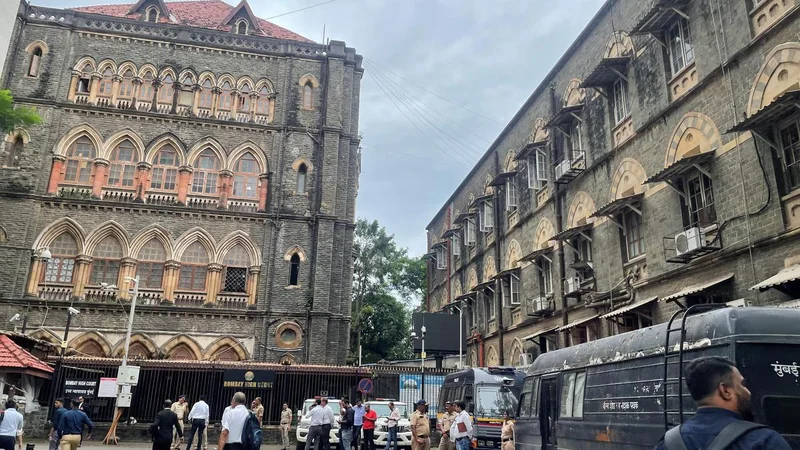
The Bombay High Court on Monday granted the Food Safety and Standards Authority of India (FSSAI) time until August 24 to file its response to petitions filed by the manufacturers of Old Monk and McDowell’s No. 1 Celebration Rum. The petitions challenged prohibition orders issued by the FSSAI against the sale of their products.
Also read | FSSAI names USL, Inbrew, others in crackdown on flavouring norms violations
A division bench of Chief Justice Ravi Varma and Justice Surya Kant dismissed the Union of India’s petition, which claimed that the food products contained artificial flavors. The court observed that the petitioners did not provide evidence to support the claim of adulteration.
The court noted the absence of evidence from the petitioners. The FSSAI had requested the court to withhold any relief to the companies until it filed its response.
The petitions were filed by United Spirits Limited, manufacturer of McDowell’s No. 1 Celebration Matured Rum, and Mohan Meakin Limited, manufacturer of Old Monk. These companies have been fined.
The FSSAI argued that relabelling of products could not be done immediately. The process would require removal of existing labels and approval of new labels from the State Excise Department. The FSSAI also stated that consumers have used its liquor for nearly five decades, and no complaint about quality has been received. The court ordered the release of balance equities in the matter.
Senior Advocate Navroz Seervai, representing Mohan Meakin, stated that no complaint about the quality of Old Monk has been received. He also stated that no instance of illness after consumption of the liquor has been reported. He noted that the company incurs losses of crores of rupees each day because of the prohibition orders from FSSAI.
The judges granted time to ASG Singh to file a response to the petitions and adjourned the hearing until August 24.
The petition by McDowell No. 1 challenged a June 29 ‘Prohibition Order’ and a July 12 ‘Conditional Prohibition Order’ issued by the Designated Officer of the FSSAI’s Western Regional Office. These orders prohibited the manufacturing and sale of their product from their licensed unit in Baramati, Pune.
The Conditional Prohibition Order permits the petitioner to clear existing identified stocks, subject to relabelling conditions. However, the prohibition on the sale of fresh stocks remains.
The FSSAI issued the orders after inspecting the petitioner’s unit in Baramati. The inspection found misleading labeling, substandard composition, and use of artificial flavoring agents.
The petition argues that the controversy involves the Food Analyst’s finding on the product’s label. The Food Analyst has not recorded that the product is unsafe for human consumption, fails to meet compositional standards for rum, or poses a risk to public health. The petition adds that the product meets the requirements of the Food Safety and Standards (Alcoholic Beverages) Regulations, 2018, and no violation of compositional standards has been recorded. The petition states that the basis of the orders does not indicate non-compliance with the product standard that would justify prohibition.
The petitioner has referred to Section 36(3)(b) of the FSS Act, which lists the functions of a Designated Officer. The petitioner states that the Act does not provide a specific mechanism for issuing prohibition orders except under Section 33 (by a competent court) and Section 34 (by the Commissioner of Food Safety in health-risk cases). The petition notes that neither of these routes was followed. The petition points out that while the Conditional Prohibition Order permits sale of existing stocks after label modification through stickers, it does not contain such a provision.
Published - August 12, 2026 12:17 pm IST