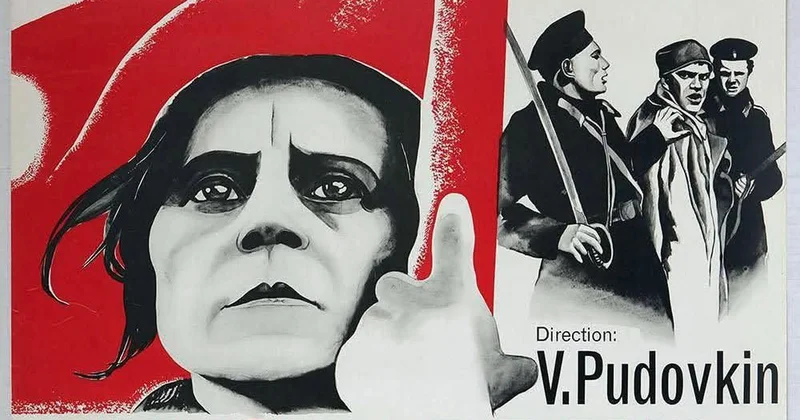
In the spring of 1968, when Kerala was given the opportunity to inaugurate a retrospective of Soviet films, the communist government led by EMS Namboodiripad seized it unreservedly. At a time when India was being courted by the Cold War superpowers, Kerala was one state that overwhelmingly leaned towards Moscow rather than Washington DC.
Nine Russian films were screened in Trivandrum and other parts of the state, beginning with Sergei Eisenstein’s 1925 silent epic Battleship Potemkin. For Kerala, the retrospective was an opportunity to showcase a cinema that was closely associated with the state’s political culture. For Moscow, it was part of a much longer effort to make Soviet cinema – and the system it represented – more attractive to Indian audiences.
The staging of the retrospective, which commemorated 50 years of Soviet cinema, was the result of years of Soviet efforts to popularise Russian films in a country where the post-colonial elite could watch and easily comprehend English films.
The Soviets were acutely aware that the Americans could reach a significant section of Indians through Hollywood since there was no language barrier, giving them an advantage in promoting Western capitalism over Russian communism.
“The USSR tried its best to convince Indians that a socialist country could be a superpower and that Indians too could achieve the same level of development if they took the Communist path,” historian Severyan Dyakonov wrote in his 2015 master’s thesis at Concordia University in Montreal, Canada.
To overcome the language barrier, and reach a wider audience, Moscow initially explored dubbing Russian films into Indian language. The Soviets hoped this would replicate the massive popularity that Indian films, particularly those directed by and starring Raj Kapoor, had achieved in the Soviet Union after being dubbed in Russian. However, the process proved to be far too expensive.
The relationship between the two film industries gained new momentum in the early 1960s, when the Sino-Soviet split damaged relations between Moscow and Beijing and the Russians made a strong attempt to expand film cooperation with India.
At the time, a special licence was required for countries to distribute their films in India. From 1960, this licence depended on the reciprocal exchange of films, according to Dyakonov. This enabled the Soviets to sell as many films as they bought from India.
“The reciprocal film exchange was a strategy of the Indian government to reach new markets for its own film industry,” Dyakonov added.
Oscar winners like Sergei Bondarchuk’s War and Peace and Destiny of a Man found their way to Indian cinemas with English subtitles. But it was in 1967 that Moscow made a more ambitious attempt to bring Soviet cinema to India: the Soviet government reached out to the National Film Archives of India in Poona to organise a Soviet film retrospective.
Cultural diplomacy
When the National Film Archives agreed to stage the festival, the Soviets initially focused on two main themes: the Second World War, or the Great Patriotic War as they called it, and socialism. One Soviet classic extolling the values of socialism was Mother, a 1926 film directed by Vsevolod Pudovkin and adapted from Maxim Gorky’s popular novel of the same name.
But the organisers in India wanted a wider picture of Soviet cinema.
When the National Film Archives shared the potential list of films with the Federation of Film Societies of India, its assistant secretary, Basu Chatterjee, who would later become an award-winning director, called for films from the various centres of production across the USSR.
“For example, Good Morning, This is I (Armenia), Contest (Turkmenia), Shadows of Forgotten Ancestors (Ukraine) and White Caravan (Georgia),” he wrote in a letter to the National Film Archives. “Only The Two from Latvia is included in the current list.”
Chatterjee also argued that films such as Bondarchuk’s Destiny of a Man, which had already been screened in India, did not need to be included. A final list of 15 films was agreed upon, and the Federation of Film Societies agreed to try to also get them screened in smaller towns, where audiences had little access to international cinema.
The logistics of moving the films across India were almost as important as the selection itself. In February 1968, the 35mm prints of the 15 chosen films were sent to Santa Cruz airport in Bombay, with the government requesting customs to clear them without collecting duties.
Once the prints were with the National Film Archives, assistant curator PK Nair wrote to the Federation of Film Societies to ensure they were not damaged while being transported across India by rail. “We have to return the prints to the Russian Archive in the same good condition,” Nair wrote in a letter. “As such, I would request you to instruct all societies to take utmost care of the prints. Every precaution has to be taken to see that the prints are not even slightly damaged.”
There was another issue to settle before the films could travel: censorship.
Satyajit Ray, who was the president of the Federation of Film Societies, successfully appealed to the government not to censor any of the films that were going to be screened at the festival.
This was significant. In the 1950s and 1960s, Indian censors had refused to clear several Soviet films, including documentary reels such as In Budapest and Aggression Against Egypt. “In Budapest was likely censored because India openly criticised the USSR for its intervention in Hungary in 1956,” Dyakonov wrote. “It is not clear why the film on the Suez Crisis of 1956 was banned because the official position of India was close to the one of the Soviet Union.”
Three films based on Gorky novels, including Pudovkin’s Mother, had also been banned by Indian censors in the 1950s for reasons that remain unclear. All three were included in the set screened across India during the 1968 retrospective.
The National Film Archives and the Federation of Film Societies decided to take the films to Maharashtra, Gujarat, Madhya Pradesh, Andhra Pradesh, Karnataka, Tamil Nadu and Kerala. The films were either dubbed in English or had English subtitles, effectively limiting their reach to the country’s educated elite.
They were initially loaned to India for a period of four months. But the response would soon persuade the National Film Archives to ask for more time.
Soft power
The retrospective came at a time when India’s cultural ties with the Soviet Union were deepening. In October 1968, a large Indian delegation was invited to the inaugural Tashkent International Film Festival, launched as the Festival of Asian and African Countries.
Since Indian films were not censored in the Soviet Union, the average Soviet citizen had a better idea of India than Indians did of the Soviet Union. Many in India believed the Soviet Union was a scientific superpower after festival screenings in 1959 of films about the Leningrad Metro, oil exploration in the Caspian Sea and the peaceful use of nuclear energy in the USSR.
Films about the Bolshevik Revolution, however, had rarely been screened in India before the 1968 retrospective. When those films finally reached Indian audiences, the response was strong outside the major cities. Films dealing with the revolution were well received in smaller towns such as Burhanpur, Quilon and Srivilliputhur. The screenings also sparked renewed interest in Gorky’s works in Kerala, generating fresh demand for Malayalam translations.
The response was strong enough for the National Film Archives to ask the Soviets to let them keep the prints in India for well over a year. Moscow was more than happy to oblige.
The films continued to travel. Alexander Dovzhenko’s 1930 film Earth, about the collectivisation of agriculture, was screened in Calicut in March 1969. In a letter to the National Film Archives, MC Ramavarma Raja, patron of the Calicut Film Society, called the film “poetry in celluloid”. He also praised the other Soviet film screened in the city, Chapaev, a 1934 film about the Russian Civil War.
Some films were screened by the Poona University Russian Association at the Ranade Institute. In November 1969, they found their way to West Bengal, where Cine Central, Calcutta, screened them as part of celebrations marking the 52nd anniversary of the Bolshevik Revolution. The rector of Patrice Lumumba Peoples’ Friendship University presided over the function.
While many Indians were disappointed with the Soviet role in mediating the Tashkent peace agreement between India and Pakistan after the 1965 war, by the end of the decade Moscow and New Delhi were moving closer diplomatically. The Indo-Soviet Treaty of Peace, Friendship and Cooperation, signed in August 1971, paved the way for closer strategic and diplomatic cooperation, including Soviet backing for India during the Bangladesh Liberation War.
Cultural ties also flourished during the peak of the Leonid Brezhnev era, with Soviet films regularly screened at festivals and on university campuses. They could never compete with the spectacle and budgets of Hollywood, but they did reach the audience Moscow had been trying to cultivate in India for decades.
Ajay Kamalakaran is a writer, primarily based in Mumbai. His latest book, Colombo: Port of Call, has been published by Penguin Random House.
We welcome your comments at letters@scroll.in.