E ver been to a museum and wondered who arranges the artefacts or who manages the place? A museum has several departments as a part of its management — prominent among them is curatorial, education and public programming, conservation and of course, administration and finance. The ancillary departments are PR and publicity, social media and digital, security and housekeeping, are also crucial ones.
The curator is the custodian of the collection, it is his/her job to ensure that the objects are documented, researched, cared for and appropriately and effectively displayed. If the object is in a delicate condition, the curator defers to the conservator, who conducts in-depth analysis of the object and attempts to arrest further deterioration and treat/restore it to the best condition.
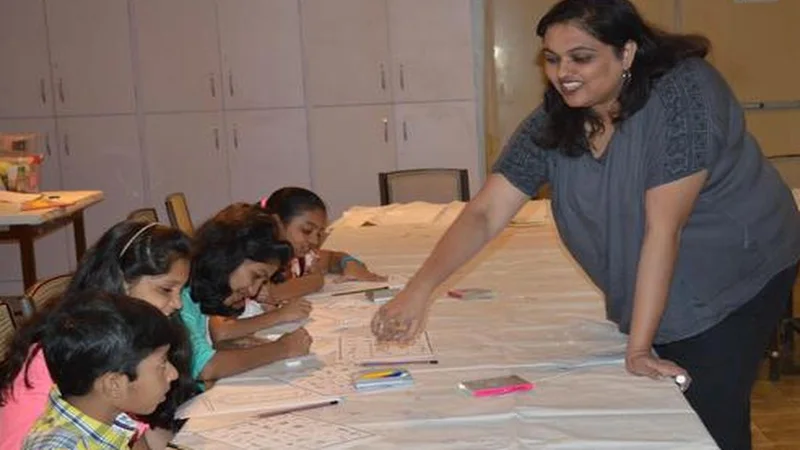
All museums also have an educator who is the connect between visitors and objects. And Bilwa Kulkarni is one such educator at The Chhatrapati Shivaji Maharaj Vastu Sangrahalaya (CSMVS) in Mumbai. “Museums have become more visitor-centric and therefore, it is important that the history of the object is effectively communicated to the visitor. The educator steps in with interpretation. We translate the objects into stories and various programmes — activities, workshops, gallery talks and tours, lectures, trails and treasure hunts that makes learning fun for visitors and encourages dialogue with the object,” she explains.
Wheels of the bus
A typical day at the museum begins at 9: 15 a.m. Bilwa begins at the gallery, taking visitors around the museum. She conducts art and craft activities related to the museum’s collection, puts up new displays and conducts enrichment workshops. “The CSMVS has a mobile museum ‘Museum on Wheels’ which carries travelling exhibitions. This bus is managed by the Education department. Since the target audience of the bus is school children, we research topics that connect with school curriculum and create exhibitions around those themes,” says Bilwa.
“My job is a challenging one and it requires interaction with visitors from a myriad of backgrounds. The satisfaction that comes from seeing scores of children enjoying activities that we conduct or visitors enjoying exhibitions that come from museums from all over the world is immense,” she says. However, for anyone interested, it is recommended to have a specialisation in your subject first. You can of course pursue the course after graduation, but it is best to complete a post-graduation before going in for a Museology course. You need to look up individual universities and criteria, as each university has differs. Museum studies is not an academic course but more of a professional training course.
The work for an educator does not end here. As an educator, one also needs to be up to date. They must read journals or newsletters. “To keep up with what museums are doing globally, you can sign up to websites of global museum organisations such International Council of Museum (ICOM),” says Bilwa.
With incentives and support from government, corporates and the public, there is a growing consciousness about heritage and culture and simultaneously a demand for jobs.
Pick one
Master’s or Post Graduate Diploma in Museology or Museum Studies or Heritage Studies or Interpretation Studies. Master’s in Museology can be done in National Museum Institute, New Delhi, Maharaja Sayajirao University, Baroda or Kolkata University. The CSMVS Museum also offers a Post-Graduate Diploma in Museology and Conservation, which is a year-long course. This course if affiliated to the Mumbai University.
Published - January 13, 2017 04:02 pm IST