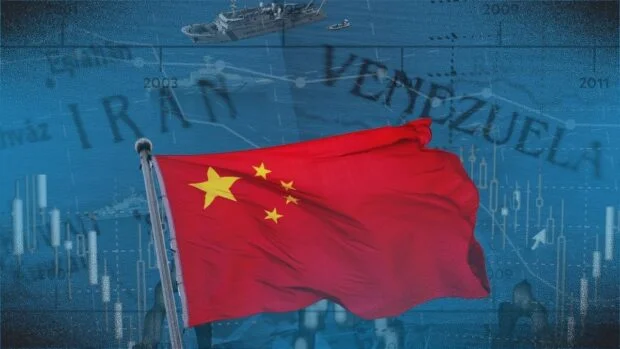
MANILA, Philippines — When Chinese military hardware failed to prevent US strikes on Venezuela and US-Israeli strikes on Iran, Beijing largely stayed silent on the equipment’s performance. While it expressed grave concern over the operations, its limited response spoke volumes.
In January, air defense systems from China and Russia deployed in Venezuela proved incapable of stopping US military operations, according to an analysis by the Indo-Pacific Defense Forum.
It stated that Beijing sold its JY-27A radar to Venezuela as capable of detecting stealth aircraft, claiming that the long-range air surveillance and guidance radar was reliable, mobile and resistant to jamming.
The radar, however, failed to detect US fighter jets and other aircraft, paving the way for Washington to fly helicopters to Caracas without resistance, said Gen. John Daniel Caine, chairman of the US Joint Chiefs of Staff.
The US strike, called “Operation Absolute Resolve,” led to the capture of ousted Venezuelan President Nicolás Maduro on Jan. 3 as the country’s air defense system failed to provide an effective response to the operation.
Meanwhile, a column published by The Hill stated that Chinese military technologies in Iran, such as surveillance, command-and-control and air defense systems, failed to intercept sustained US and Israeli airstrikes.
Ayatollah Ali Khamenei, Iran’s supreme leader since 1989, was killed on Feb. 28.
China was silent on these reported failures, but a defense analyst said this was expected. Rather than directly matching US military strength, Beijing would leverage its role in manufacturing and defense supply chains to expand its influence.
Chester Cabalza, president of the think tank International Development and Security Cooperation, said China could use economic symmetry as a strategic tool while depicting itself as a country that opposes war and portraying the US as a “warmonger.”
For the Philippines, however, China has maintained a completely different posture.
Over the years, China has sought to deepen its security ties with the Philippines by providing military and disaster response equipment while repeatedly criticizing the country’s expanding alliance with the US.
For instance, in an apparent move to further strengthen its relations with the administration of then-President Rodrigo Duterte, China donated thousands of assault rifles and ammunition to the military and police for counterterrorism operations in 2017.
It also handed over P1 billion worth of disaster response equipment to the Philippines.
READ: China donates P1B in disaster equipment to PH
At the same time, however, China has strongly opposed increased US military activities in the country, such as the planned construction of a US-funded ammunition production facility and the deployment of the Typhon midrange missile system.
It asserted that such moves by the US threaten regional peace and stability.
As Cabalza told the Inquirer, China’s contrasting approaches toward the Philippines and conflicts elsewhere could be explained through three possible strategic scenarios.
The first scenario, he said, suggests that China is deliberately avoiding direct involvement in conflicts in the Middle East and South America while carefully studying US military operations to refine its own capabilities.
According to Cabalza, China is using developments in Iran and Venezuela as opportunities to extract “strategic, tactical and economic lessons” from recent military interventions without becoming directly involved.
By remaining on the sidelines, China also seeks to strengthen its image as a more reliable and stable partner for developing countries, particularly those in the Global South, while projecting itself as a potential mediator in future security disputes.
“Despite their grey zone tactics in the SCS, China stimulates their hard, soft, smart, sharp and structural powers to Manila,” he said.
“The nature of their transactional ties with the Philippines shows their interest to cement their presence in the region and to weaken US attachment to its allies and partners,” he added.
The second scenario envisions a future in which the US reduces its direct military footprint in the region and instead adopts an “offshore balancing” strategy, acting as an over-the-horizon security guarantor while relying more heavily on allied and partner networks.
Should such a shift occur, Cabalza said China would attempt to position itself as Washington’s geopolitical equal by expanding its own influence throughout the Indo-Pacific.
While the US would likely continue helping the Philippines strengthen its maritime defense capabilities, Beijing could seek to exploit any perception of declining US commitment by creating what the analyst described as an “entrapment dilemma” for Manila — forcing it to navigate between competing major powers.
The third scenario, he said, assumes that both powers tacitly accept the current balance, with the US retaining military superiority while China focuses on consolidating its economic dominance across the region. /dm