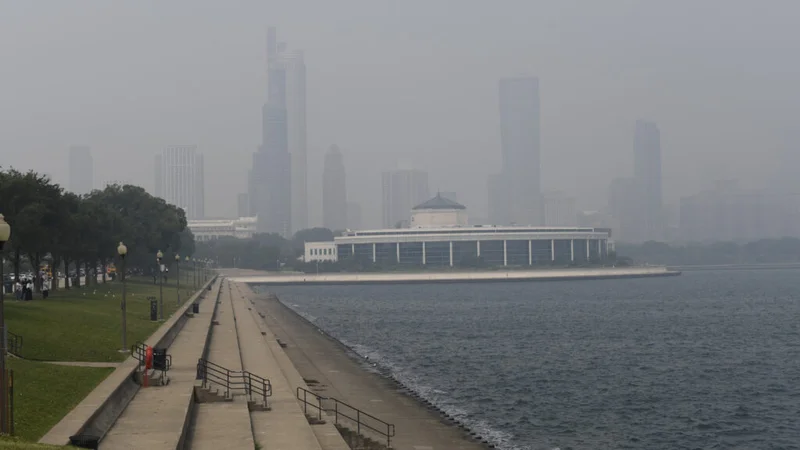
The sky was a smoky grayish-orange and trees a few hundred yards away had turned to ghostly outlines. This July marked the third summer since I’ve lived in Chicago that the city was covered in a suffocating blanket of smoke from Canadian wildfires, and the air quality was breaking records: as high as 753 on the air quality index one afternoon, earning an “extremely hazardous” warning. Even with all our windows closed and two air purifiers running in different rooms, I was still getting headaches, a sore throat, and burning eyes. And my arthritis pain was worsening.
I’ve lived with chronic illnesses for most of my adult life and have racked up six of them at this point (endometriosis, psoriatic arthritis, Celiac disease, Graves and Hashimoto’s diseases, and interstitial cystitis). I know that my joints hurt more in cool, wet weather, that I’m prone to overheating when the temperature spikes above the 90s. I’m not alone: I’ve talked to dozens of people with different chronic conditions about how the weather affects them. Those with lupus need to avoid the sun, while some with psoriasis get relief from it; storms can trigger migraines and joint pain; hot weather worsens postural orthostatic tachycardia syndrome (POTS). Everyone’s body has a unique pattern of interacting with the weather, such that it’s difficult for patients to predict what might cause a flare.
But what research can definitively tell us is that climate change is here, and it’s already making people sick.
Research shows links between smoke inhalation and rheumatic diseases, supporting my experience of exposure to wildfire smoke exacerbating joint pain. Elevated levels of particulate matter (the main pollutant of wildfire smoke) worsen symptoms for lupus patients and cause new cases of rheumatoid arthritis, as well as RA-associated interstitial lung disease. Breathing in high levels of particulate matter also may cause multiple sclerosis, Parkinson disease’s, diabetes, and asthma.
Wildfire smoke is hardly the only health risk we’re facing. The increased frequency and severity of floods produce mold spores, which can cause allergies, nausea, and the worsening of illnesses like long Covid and myalgic encephalomyelitis. Flood remediation also can bring people into contact with lead paint and asbestos. Lead exposure can cause kidney damage, high blood pressure, and ongoing cardiovascular issues in adults, while asbestos can lead to lung diseases including cancer.
The heat itself can be deadly, as Europeans saw this June. It’s now estimated that about 10,000 people died from the heat. Those with chronic conditions such as heart disease, diabetes, and thyroid disease are all at greater risk of heat illnesses, as are people taking certain medications (like beta blockers and some antidepressants).
But the heat doesn’t just exacerbate existing illnesses; new research suggests that high temperatures impair the immune system and can break down the epithelial barriers in the lungs, skin, and gut. These are the cells that offer protection from viruses, bacteria, and pathogens, and their disruption could lead to allergies, autoimmunity, and other health problems.
Warming temperatures are also expanding the range of ticks and mosquitoes that carry diseases like West Nile virus, Lyme disease, dengue, chikungunya, alpha-gal syndrome, and others. While many of these illnesses have treatments, the trick is detecting infections early in the disease process; otherwise, people can develop long-lasting symptoms.
And the cyclosporiasis outbreak that’s been in the news most of the summer? That, too, could be a product of climate change — and could have a chronic illness connection. The cyclospora parasite matures faster in warmer temperatures, and climate scientists have predicted that 2026 could be yet another new “hottest year on record.” But it’s not only the heat that helps foodborne pathogens. Sprinkler irrigation is used for most agricultural products in the U.S., creating moist conditions, but changing weather patterns are causing more incidences of drought and heavy rainfall. One study found that higher humidity is more likely to allow salmonella to survive and replicate on lettuce. Research suggests that the overall prevalence of pathogenic contamination will increase, thanks to the combined effects of rising temperatures and changing humidity patterns.
I experienced multiple bouts of food poisoning in 2019 that led to small intestinal bacterial overgrowth, a digestive condition in which an overgrowth of bacteria in the small intestine cause diarrhea, abdominal pain, weight loss, and malnutrition. It took months to identify and treat, during which I lost nearly 20 pounds unintentionally. That same time period is also when I developed widespread symptoms of psoriatic arthritis. Maybe it was a coincidence, but there’s research indicating such infections can result in Crohn’s, ulcerative colitis, Guillain-Barré syndrome, and other autoimmune diseases.
Even if we halted all greenhouse gas emissions tomorrow, these problems would be here to stay. Our atmosphere and biosphere are already irrevocably changed, and that means we’ll have to deal with the health challenges as well.
There are no magic bullets to solve these problems, but there are plenty of tools already at our disposal. Rather than dismantling public health departments like the CDC and the FDA, the government should be investing more into tracking the spread of pathogens and predicting where new diseases might emerge. The same is true of meteorological groups, like the National Oceanic and Atmospheric Administration; rather than facing funding and staff cuts, they should be receiving more support to help track changing weather patterns and major storms.
Providing access to housing, universal health care, and updated infrastructure would all be moves in the right direction. These changes would ensure that Americans are healthier overall, and that our cities and towns are resilient in the face of extreme weather events. Because resiliency is now one of our best options. The climate has changed, and our own health depends on changing with it.
Lorraine Boissoneault is the author of the award-winning book “Body Weather: Notes on Chronic Illness in the Anthropocene” and has written for a number of publications.