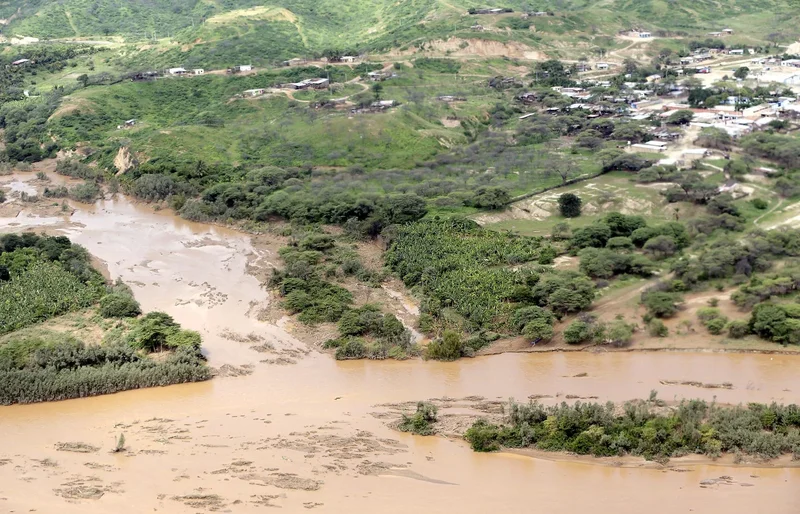
Peru Races to Prepare for El Niño With a New Risk Commission
Peru · Disaster Preparedness
Key Facts
- New commissionPeru’s government created a National Commission for El Niño Risk Management to coordinate and speed up interventions.
- 569 pointsThe government identified 569 priority critical points nationwide for intervention before the 2026 El Niño.
- Unfinished worksAnalysts and El Comercio warn that some preventive infrastructure from the earlier “Reconstrucción con Cambios” program remains incomplete.
- Legislative powersCongress was asked to delegate legislative powers covering El Niño response, alongside anti-crime measures.
- Congress queryA lawmaker requested information from the Agriculture Ministry on prevention, mitigation, and river-clearing actions.
- No specific bodyNo congressional commission specifically named “Fenómeno El Niño 2026” appears in available records.
The clock is ticking on Peru’s next big weather test. The government moves fast to coordinate.
But unfinished public works from past programs may leave gaps when rains arrive.
If you live in Peru or have money in its infrastructure, agriculture, or supply chains, the 2026 El Niño is not distant. It’s a near-term risk that the government is now scrambling to manage.
President Keiko Fujimori’s administration has set up a Peru El Niño commission to coordinate responses. But the success of that effort depends on finishing what earlier programs started.
What the new Peru El Niño commission actually does
The National Commission for El Niño Risk Management is designed to cut through bureaucratic delays. Its job is to coordinate decisions across ministries and speed up interventions before heavy rains, droughts, and related emergencies hit.
That means clearing rivers, reinforcing slopes, and pre-positioning emergency supplies in vulnerable zones.
The commission’s first big move was identifying 569 priority critical points nationwide. These are specific locations where flooding, landslides, or river overflows are most likely to disrupt communities, roads, and crops.
The list gives local and national authorities a concrete checklist. But a checklist only works if the work actually gets done.
The unfinished business of Reconstrucción con Cambios
Here’s the uncomfortable part. Peru already has a major reconstruction program — Reconstrucción con Cambios — created after the devastating 2017 coastal El Niño.
But according to an analysis by El Comercio, parts of that program’s preventive infrastructure are still not complete. That means some of the very defenses meant to protect against the next El Niño may not be ready in time.
This is not just a bureaucratic complaint. If river channels are not fully desilted, retaining walls half-built, or drainage incomplete, the 2026 event could overwhelm protected areas.
The new commission may coordinate well. But it cannot conjure up finished works overnight.
Why you should care, even if you’re not in Peru
Peru is a major exporter of copper, zinc, and agricultural goods like blueberries, avocados, and asparagus. El Niño events disrupt mining logistics, flood coastal farmland, and close roads and ports.
For investors and expats, that means potential supply chain delays, price volatility, and operational headaches across the region.
Beyond the numbers, there’s a human angle. Many of the 569 critical points are in poor, rural areas where a single flood can destroy homes and livelihoods.
The difference between a well-prepared response and a chaotic one is measured in lives and recovery time. That’s why the government’s request for delegated legislative powers from Congress matters.
It wants the ability to move money and resources faster without waiting for lengthy parliamentary debates.
What Congress is (and isn’t) doing
Congress has not created a special commission specifically named for the 2026 El Niño, at least not in records available so far. But there is activity.
One lawmaker asked the Ministry of Agrarian Development and Irrigation for detailed information on prevention, mitigation, response, and rehabilitation actions. That includes river cleaning and other hydraulic works.
That suggests oversight pressure is building.
The bigger legislative story is the request for delegated powers. The government asked Congress to let it legislate on multiple fronts, including anti-crime measures and El Niño response.
If approved, that would let the executive act quickly on emergency spending, infrastructure contracts, and resource reallocation without waiting for new laws. It’s a practical tool, but also a concentration of power.
It will be worth watching how Congress handles the trade-off between speed and oversight.
Frequently Asked Questions
What is the Peru El Niño commission?
It’s a national body created by President Keiko Fujimori’s government to coordinate and accelerate interventions ahead of the 2026 El Niño. It manages responses to heavy rains, droughts, and related emergencies.
It has identified 569 priority critical points nationwide.
Is the Reconstrucción con Cambios program finished?
No. According to an analysis by El Comercio, some preventive infrastructure from that earlier program is still incomplete. This raises concerns about whether all flood defenses will be ready before the next El Niño.
Did Congress create a special El Niño commission?
Records show no commission named “Fenómeno El Niño 2026.” Congress has received requests for prevention info. The government has also asked for delegated legislative powers to respond faster.
Connected Coverage
Sources: El Comercio, Gestión, Andina, Presidencia del Perú
This article was produced by The Rio Times’ automated newsroom system. How we use AI · Report an error