Your support helps us to tell the story
From reproductive rights to climate change to Big Tech, The Independent is on the ground when the story is developing. Whether it's investigating the financials of Elon Musk's pro-Trump PAC or producing our latest documentary, 'The A Word', which shines a light on the American women fighting for reproductive rights, we know how important it is to parse out the facts from the messaging.
At such a critical moment in US history, we need reporters on the ground. Your donation allows us to keep sending journalists to speak to both sides of the story.
The Independent is trusted by Americans across the entire political spectrum. And unlike many other quality news outlets, we choose not to lock Americans out of our reporting and analysis with paywalls. We believe quality journalism should be available to everyone, paid for by those who can afford it.
Your support makes all the difference.
Read more
Thames Water has become the latest company to announce a hosepipe ban, affecting its more than 10 million customers after the exceptionally dry hot heather and high demand.
The restriction, also known as a temporary use ban, will come into effect at 12.01am on Thursday 23 July. However, the utility firm is asking households to follow the ban immediately ahead of its official start date.
Nevil Muncaster, director of strategic water resources at Thames Water, said: “We would not be taking this step unless it was necessary to protect water supplies for everyone and the environment.
“While there is enough water for essential use, we need to reduce non-essential outdoor demand to keep taps flowing.”
It comes after South East Water extended its hosepipe ban over the weekend, from Kent-only to customers in Sussex, Surrey, Hampshire and Berkshire.
The latest ban brings the total companies enforcing restrictions up to six, affecting at least 20 million customers across the regions they serve.
Water customers across central and south-east England remain banned from using hosepipes as back-to-back heatwaves have caused a spike in water demand and fears of droughts.
South East Water said it has seen a “decline in river levels” and needs to “protect some groundwater sources” after lower than average rainfall, hot weather and high demand for water.
The first hosepipe ban has also been announced in Wales by Welsh Water. It came into effect for around 33,000 customers in Ceredigion, Pembrokeshire and Carmarthenshire from Sunday 19 July.
The bans come as central and south-east England have seen the longest unbroken spell of no recorded rainfall this century, Met Office figures suggest.
An average of zero rainfall has been measured across the organisation’s weather stations in both regions for 14 days in a row, from July 2 to July 15, according to the latest available data.
This is the longest unbroken run of days with no rain for south-east England since a 15-day spell in April 1997. For central England, it is the longest period since a 14-day run of no recorded rainfall in June 1996.
Data for July 16 has yet to be published, but could show the rain-free spells in both regions extending for even longer.
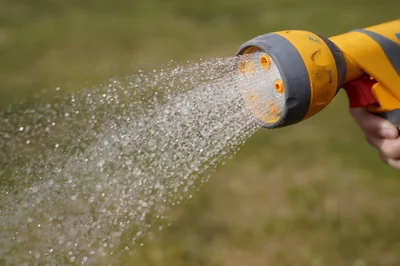
UK households have been asked to be mindful of their water usage (Getty)
June 2026 was also the hottest on record for England, the Met Office has said, with the highest temperature of 37.7C set in Lingwood, Norfolk, on 26 June. The previous record of 35.6C was set in Southampton in June 1976.
Anglian Water, which serves most of the East of England, brought in a ban on Saturday 11 July. The company has more than 5 million customers in the region, making it the UK’s largest.
Affinity Water has also introduced a hosepipe ban for most of its customers, which began Saturday 11 July. It covers large areas of Bedfordshire, Berkshire, Buckinghamshire, Hertfordshire and Surrey.
London and Essex, which are served by a number of different water companies, are also affected in some areas. Customers can check with their drinking water provider for exact details.
South East Water introduced the first official temporary hosepipe use ban to cover much of the Kent region from Friday 3 July. It came just a week after it put one in place in the county during June’s heatwave.
Southern Water has also confirmed that a hosepipe ban will be put in place for its customers in Hampshire and on the Isle of Wight from Friday 10 July.
Cambridge Water announced a temporary hosepipe ban for its 350,000 customers, marking the first time in three decades that it has introduced the restriction.
Households across the country have been advised to limit their use, with some companies asking customers to pause hosepipe activity where possible, short of a full-on ban.
A hosepipe ban is different to an advisory notice. Anyone caught breaching an official ban can be issued a fine of up to £1,000.
Others have asked customers to limit their use during the heat spikes.
Thames Water, which serves Greater London, advises: “At times, we're using water faster than we can deliver it through our network.
“Reducing your use at home, especially outdoors, will make the biggest difference. So we're asking customers not to use hosepipes or sprinklers during heatwaves.”
While July temperatures been less severe than June’s heatwave, conditions continue to present health risks and challenges for water firms which are still recovering from the event.
All households have been urged to limit their water usage during the heatwaves. National Drought Group chair and director of water at the Environment Agency, Helen Wakeham, said in June: “We enter summer in a generally favourable position, but we can never be complacent ahead of those crucial drier months.
“Heatwaves will continue to be a concern as they can drive spikes in water demand, so we need to continue to work collaboratively to use our finite water wisely.
“While many of us enjoy the hot weather, we ask everyone to be mindful of their water use. Every drop saved leaves more available for farmers, our local rivers and wildlife.”