Your support helps us to tell the story
From reproductive rights to climate change to Big Tech, The Independent is on the ground when the story is developing. Whether it's investigating the financials of Elon Musk's pro-Trump PAC or producing our latest documentary, 'The A Word', which shines a light on the American women fighting for reproductive rights, we know how important it is to parse out the facts from the messaging.
At such a critical moment in US history, we need reporters on the ground. Your donation allows us to keep sending journalists to speak to both sides of the story.
The Independent is trusted by Americans across the entire political spectrum. And unlike many other quality news outlets, we choose not to lock Americans out of our reporting and analysis with paywalls. We believe quality journalism should be available to everyone, paid for by those who can afford it.
Your support makes all the difference.
Read more
The United States’ decision to slash its foreign aid program has been devastating for scores of aid workers left jobless by the funding cuts, contributing to poverty, violence and an increased risk of HIV transmission, The Associated Press has found.
When U.S. President Donald Trump eliminated the United States Agency for International Development last year, more than 280,000 humanitarian assistance jobs were eliminated along with it.
While much has been written about the devastating impacts of USAID’s dissolution on the millions of people the agency once helped, far less is known about the impacts on the helpers themselves. In interviews with health officials, humanitarians and 15 former aid workers in Nepal who have turned to sex work to survive since the funding cuts, the AP has documented the desperation of people who devoted years of their lives to caring for society’s most vulnerable.
In a statement to The Associated Press, the U.S. State Department said the Trump administration had reinvigorated its assistance programs to focus on efficiency, effectiveness and partnership. The department also said the U.S. spends more on health and humanitarian assistance than any other country.
“The rest of the world needs to contribute more and share the burden,” the department said.
Here’s a closer look at AP’s report on the fallout from the aid cuts:
Livelihoods lost
Last year, Trump dissolved USAID — once the world’s leading donor of humanitarian assistance — after calling it a waste of money, despite the U.S. spending just 1% of its budget on foreign aid.
Of the 281,000 humanitarian jobs that were cut as a result, just 23,000 were American, says Sadie Healy, who runs a global health consulting firm and has been tracking job losses linked to the funding cuts. The rest were overseas — many of them belonging to impoverished locals living in conflict zones or economically depressed regions where other employment options are scarce. These were the outreach workers, data collectors, drivers and medics who generally worked for little pay and were on the frontlines of programs battling everything from HIV to child malnutrition.
In Nepal alone, an estimated 35,000 aid workers lost their jobs amid the USAID cuts, says NGO Federation of Nepal President Arjun Bhattarai. With the country already facing high unemployment, the fallout for these workers was particularly devastating.
Sex work or starve
For years, USAID was integral to Nepal’s HIV prevention efforts. One of those programs was run by the Blue Diamond Society, Nepal’s leading LGBTQ+ advocacy group. The society received 85% of its funding from USAID and was staffed largely by people who were themselves gender and sexual minorities. They served as counselors, health assistants and outreach workers. They ran 20 clinics across Nepal, dispensing antiretroviral medication to people with HIV along with PrEP, a medication taken by HIV-negative people to prevent infection. They offered free HIV tests along with condoms and lubricant, which reduce the risk of HIV transmission.
The funding cuts shut down the society’s services, leaving more than 1,200 clients without access to PrEP medication and 262 of the group’s 350 staffers without work.
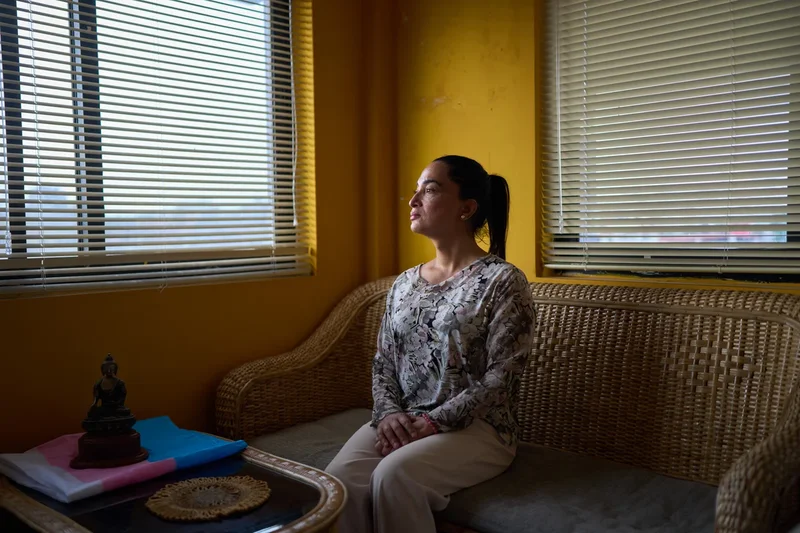
Outside of NGOs, legal work for openly transgender people in Nepal is virtually nonexistent, executive director Manisha Dhakal says. Which is why between 35% and 45% of the society’s former staffers turned to sex work, she says, walking the streets alongside the very people they once fought so hard to help.
For these former aid workers, it came down to one choice: Sex work or starve.
Public health risk
The public health implications are vast. With the U.S. funding cuts also eliminating access to PrEP in Nepal except for pregnant and lactating mothers, health experts fear a spike in HIV prevalence among the surging ranks of sex workers, as well as members of the LGBTQ+ community.
Due to discrimination, transgender people are often too afraid to go to hospitals to get antiretroviral drugs, meaning many have stopped taking them — significantly increasing their risk of transmission, Dhakal says. Lubricant and condoms are too expensive for many, so some are having unprotected sex.
And what may seem initially to be a local problem could become an international one, as diseases do not respect borders, says Dr. Sarbesh Sharma, director of Nepal’s National AIDS and STD Control Centre.
“Borders are for humans,” he says. “We have a lot of migrant workers, we have a lot of overseas students, we have an open border with India. So those make it not only a Nepal concern, it can become a global concern.”
Hunger, violence and fear
All 15 aid workers-turned-sex workers interviewed by the AP recognize the risks they are taking. One, who is HIV positive, says she lives in fear of transmitting the disease, yet still hits the streets nearly every night to stave off starvation.
Most of the workers spent months trying to find other jobs, frequently being rejected the moment the employers realized they were transgender. Many have been forced to have unprotected sex with clients. Nearly all have faced violence, including gang rape.
They generally receive just a few dollars per customer, so must land several clients a night to afford food and rent. But sometimes, they go home with nothing.
Bharati Thapa, who worked in HIV prevention as a field supervisor and peer educator before the funding cuts, says she was assaulted her first night working the streets. Two Indian tourists picked her up and took her to a guest house, where another eight men were waiting. She was physically assaulted and raped before fleeing.
“My life is at risk now,” she says softly. “I fear that I may contract HIV and sexually transmitted infections. I fear being beaten up and harassed by customers. I fear the police taking me away at night. How can I not be afraid? There is risk from all sides.”