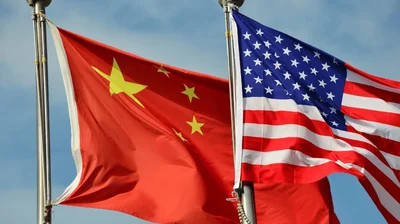
The United States and China are reportedly preparing to hold a fresh round of talks on artificial intelligence in September, according to people familiar with the planning, in what would be the clearest sign yet that the two governments want to keep a fragile line of communication on the technology open.
The reported meeting would build on a commitment the two leaders made when they discussed AI guardrails in Beijing earlier this year, although neither capital has publicly confirmed a date.
Details remain thin, and much of what has emerged is attributed to unnamed officials rather than any formal announcement.
What is clearer is the backdrop, a stretch of the year in which Washington and Beijing have circled one another over export controls, model security, and the question of who writes the rules as both sides warn against each other’s AI.
The groundwork was laid in May, when President Donald Trump visited China and the two governments agreed to pursue an intergovernmental dialogue on AI.
The 💜 of EU tech
The latest rumblings from the EU tech scene, a story from our wise ol' founder Boris, and some questionable AI art. It's free, every week, in your inbox. Sign up now!
Chinese foreign ministry spokesman Guo Jiakun said at the time that the two “leading AI powers” needed to work together to improve the governance of the technology, while Trump described the exchange as an attempt to build “guard rails” around it.
Since then, the diplomacy has moved in fits and starts. Track II discussions, the semi-official kind that one participant said give governments total deniability, have continued alongside larger gatherings such as the UN conference on AI in Geneva, where American and Chinese researchers shared a platform to talk through risks including AI-enabled cyberattacks and the danger of accidental escalation.
The September round, if it goes ahead, is expected to return to familiar ground. People briefed on the earlier exchanges suggest the agenda is likely to cover AI safety and governance, spanning shared worries about misuse by criminals and terrorists and the thornier question of how two rival states manage increasingly capable models.
Officials on both sides have privately acknowledged that a run of powerful new model releases has sharpened the case for keeping some baseline of contact, even where trust is thin.
Chip controls are almost certain to hang over the room, even if they are not formally on the agenda.
Beijing has repeatedly pressed Washington to ease restrictions on the advanced semiconductors and high-bandwidth memory that its firms need to train frontier systems, a demand that has become tangled up with wider debates over export controls and trade.
China has spent much of the year presenting itself as the more open partner. Xi Jinping told this summer’s World AI Conference that no single country should monopolise AI, and Beijing has floated a global governance body of its own.
Washington, for its part, has kept its controls firmly in place and warned Chinese developers against copying American models.
Former American officials have argued the renewed contact serves US interests regardless of whether it produces a deal.
Jeannette Chu, a former diplomat, has said such dialogue gives Washington visibility into where China is heading with AI and where its vulnerabilities lie, an argument that has helped keep the channel alive despite scepticism in both capitals.
For now, the September talks sit in the familiar territory of a story built on sources rather than statements.
The White House and the Chinese foreign ministry have not commented publicly on the reported timing, and an earlier attempt at a sustained US-China AI channel, launched under the Biden administration, faltered after a single meeting.
Whether this round proves more durable will depend on how much either side is willing to concede before officials actually sit down, if they do at all.
Analysts who have followed the process say the value of talking may lie less in any agreement than in the visibility each government gains into the other’s intentions, at a moment when neither can afford to misread the other.