Uruguay Bets on Green Power to Win an AI Data Centre
Uruguay · Technology
A small country with almost entirely clean electricity thinks that is exactly what the artificial-intelligence boom is hungry for.
Is betting that its clean grid is the perfect home for an AI data centre. Artificial intelligence runs on electricity, vast amounts of it.
Uruguay, a small country that generates almost all its power from wind and water.
Uruguay’s US$70 million AI data centre
The news came on August 11, after a meeting of the Council of Ministers led by President Yamandú Orsi. The state telecommunications company, Antel, will build a data centre specialised for artificial intelligence.
The site sits in Canelones, near the crossing of routes 5 and 48, with an announced investment of US$70 million.
What a data centre actually is
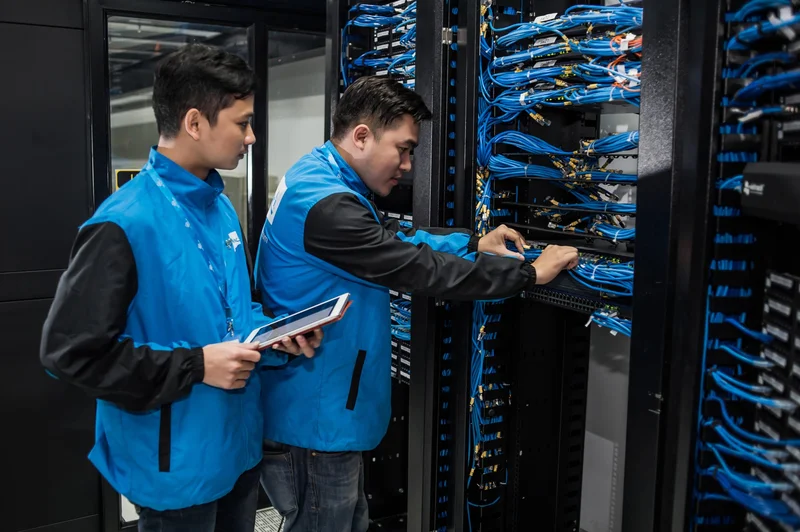
Behind every AI chatbot and cloud service sits a physical building full of computers. That building is a data centre.
Rows of powerful machines crunch data around the clock, and they need constant electricity and cooling. An AI-focused centre is a more demanding version still, packed with specialised chips that draw enormous power.
An industry desperate for electricity
The scale of AI’s power hunger is hard to overstate. Training and running large models consumes staggering amounts of energy.
Forecasters expect data-centre electricity demand to keep climbing sharply this decade. That surge is forcing companies to hunt for places where clean power is plentiful and reliable.
Uruguay is raising its hand. Cooling those machines adds yet more demand, since the heat they throw off must be constantly carried away.
Why clean power is the selling point
Here is where Uruguay’s pitch gets interesting. AI’s appetite for electricity is now a global concern.
Data centres are straining power grids from Ireland to Virginia, and much of that electricity is far from clean. Uruguay flips that worry on its head.
Its grid runs on a very high share of wind and hydropower.
A green grid as a competitive weapon
Being near-fully renewable is not just good for the planet; it is good for business. Big technology companies increasingly promise to run on clean energy.
A country that offers it by default is attractive. For Uruguay, decades of investment in wind and water power have quietly become an economic asset.
The role of Antel
That the builder is Antel, a state company, is significant. This is a public bet on digital infrastructure.
Antel already anchors much of Uruguay’s telecom backbone, giving it the networks a data centre needs. The project fits its broader push to make Uruguay a hub for advanced computing, not just a consumer of it.
What it would mean for the economy
The direct headline is jobs. The centre is expected to create about 250 direct positions once it is running.
Construction will add more work, and related technology services could ripple outward from there. For a small economy, anchoring a piece of the AI supply chain is a strategic prize beyond the raw numbers.
Connectivity matters as much as power
Electricity is only half the equation. Data centres also need fast, reliable links to the rest of the world.
Uruguay’s role in regional telecom infrastructure, including access to subsea cables, strengthens its case. Data must travel, and a well-connected location keeps that data moving quickly and cheaply.
A stable country in a volatile region
Investors weigh more than kilowatts and cables. They want predictability, and Uruguay offers it.
The country is known for steady institutions and calm politics, a contrast to some larger neighbours. For a facility meant to run for decades, that stability is a quiet but real advantage.
Riding a regional AI wave
Uruguay is not acting in isolation. Across Latin America, governments are courting data-centre investment.
Chile and Brazil, with their own power and connectivity, are chasing the same prize. The competition is real, which is why Uruguay is leaning hard on the one card it holds best: clean, cheap power.
The catch: energy is finite too
There is a tension worth naming. Even a green grid has limits, and AI centres are voracious.
Adding large new consumers raises questions about capacity, transmission and future demand. How Uruguay balances new data centres with everyday power needs will shape how far this ambition can go.
A modest project with a big idea
At US$70 million, this is not a mega-investment by global standards. Its importance is symbolic as much as financial.
It stakes a claim: that a small, green country can compete for a slice of the AI economy. If the first centre succeeds, larger ones could follow, drawn by the same clean-energy promise.
What to watch next
The near-term markers are the 2027 construction start and operations later in the decade. The deeper test is whether private, global tech firms follow Antel’s public lead into Uruguay.
Do that, and a US$70 million project becomes the first chapter of a much bigger story. For now, the message is clear enough.
Uruguay is selling sunshine and wind as much as land and tax breaks.
Frequently Asked Questions
What did Uruguay announce?
On August 11, the government said state telecom Antel will build an AI-specialised data centre in Canelones, with a US$70 million investment.
When will it be built?
Construction is expected to start in early 2027, with the facility operating from 2028 or 2029.
Why Uruguay?
Its electricity comes overwhelmingly from wind and hydropower, a clean-energy edge that appeals to power-hungry AI operations.
How many jobs will it create?
About 250 direct jobs once operational, plus construction work and related technology services.
Who is building it?
Antel, Uruguay’s state telecommunications company, making this a public bet on digital and AI infrastructure.
This article was produced by The Rio Times’ automated newsroom system. How we use AI · Report an error