Your support helps us to tell the story
From reproductive rights to climate change to Big Tech, The Independent is on the ground when the story is developing. Whether it's investigating the financials of Elon Musk's pro-Trump PAC or producing our latest documentary, 'The A Word', which shines a light on the American women fighting for reproductive rights, we know how important it is to parse out the facts from the messaging.
At such a critical moment in US history, we need reporters on the ground. Your donation allows us to keep sending journalists to speak to both sides of the story.
The Independent is trusted by Americans across the entire political spectrum. And unlike many other quality news outlets, we choose not to lock Americans out of our reporting and analysis with paywalls. We believe quality journalism should be available to everyone, paid for by those who can afford it.
Your support makes all the difference.
Read more
We are just 24 hours into an Andy Burnham premiership and the dust is settling on a major cabinet reshuffle. But, already, there is optimism that this new government may take a bolder approach to Brexit.
It is clear from the conversations that the new prime minister has had with EU leaders – and the appointments he has already made – that he has decided on a different approach to Sir Keir Starmer.
The only question is whether it will be much bolder – or just a tinker with the tinkering approach his predecessor pursued in the Brexit reset.
First of all, it is noticeable that he has dispensed with the services of the former minister for European affairs Nick Thomas-Symonds, who led the Brexit reset negotiations.
The Prime Minister took office on Monday (Chris Furlong/PA) (PA Wire)
Mr Thomas-Symonds has gone the way of all of Sir Keir’s die in the ditch allies – like Darren Jones, Steve Reed and David Lammy – in being sent to the backbenches in quick time. But his departure also marks a break in the negotiations and the chance to do something new and different.
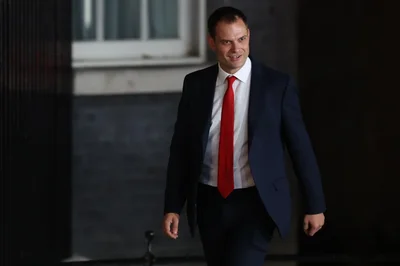
In his place comes the up and coming Hamish Falconer, son of Tony Blair’s lord chancellor, Lord Charlie Falconer.
Mr Falconer was, until recently, the Middle East and Africa minister and has built up a wealth of experience on the international stage in both that job and in his previous role as a diplomat.
While there is no strong evidence of him being a rejoiner, Mr Falconer comes with knowledge from the Foreign Office of the problems caused by the barriers erected by Brexit – and the experience to negotiate a much different deal.
Meanwhile, the steady-as-it-goes approach in the Foreign Office under Yvette Cooper is being replaced by major reform with Ed Miliband.
Mr Miliband may well focus more of his energy on climate goals and restoring international aid. But he was also an avid critic of Brexit.
The new foreign secretary is more America friendly than people realise, but there is little doubt that he prioritises the relationship with the EU.
The big question will be over the red lines which Sir Keir and his former chief of staff Morgan McSweeney imposed on themselves during the election in the manifesto. This included not to rejoin the EU, its single market or customs union.
Hamish Falconer is now in charge of negotiating Brexit (Getty)
But we know from an interview Mr Burnham gave in September that he is in favour of the UK rejoining the EU. He said it was not an issue to discuss during the Makerfield by-election – where the electorate had been strongly pro-Leave and he was up against Reform – but we know what he thinks about the ongoing problems of the UK being outside the EU.
This brings us on to what happens next.
Sir Keir was supposed to have a summit to sign his rather timid reset deal. It got postponed because of the change of leadership coming up.
Now, from the readouts on the conversations Mr Burnham had with EU leaders on his first day, it is clear there may be a rethink coming up, starting with his call with António Costa, president of the European Council.
A Downing Street spokesperson said: "The prime minister began by underlining the importance of creating a stronger Europe through a closer UK-EU relationship.
"That included working together on shared challenges such as defence and security and driving growth across the UK and Europe.
"They both agreed their respective teams would work closely towards a UK-EU summit later in the year.
"They looked forward to speaking again soon."
Ed Miliband has been given the role of foreign secretary (Getty)
With his call to EU Commission president Ursula von der Leyen, the Downing Street readout said: “Building a closer and ambitious relationship was key to delivery in both the UK and Europe, the prime minister said.
"The leaders agreed their teams should work closely towards a UK-EU Summit later in the year.”
What is noticeable from both these conversations is that there is no reference to a deal being signed. That means that the summit could be about more than a piece of paper or a stepping stone to something much bigger.
One option is “a customs union” which is bespoke, rather than joining “the Customs Union”.
The ministerial changes and conversations may not offer much of substance yet, but the mood music certainly seems to be one of a willingness to go much bolder than before.
Mr Burnham is sticking to the Labour manifesto in most areas, noticeably on tax and borrowing, so he may not wish to cross Starmer’s red lines on the EU yet. But, suddenly, the possibility that those red lines could be removed after another election seems like a much more realistic prospect.