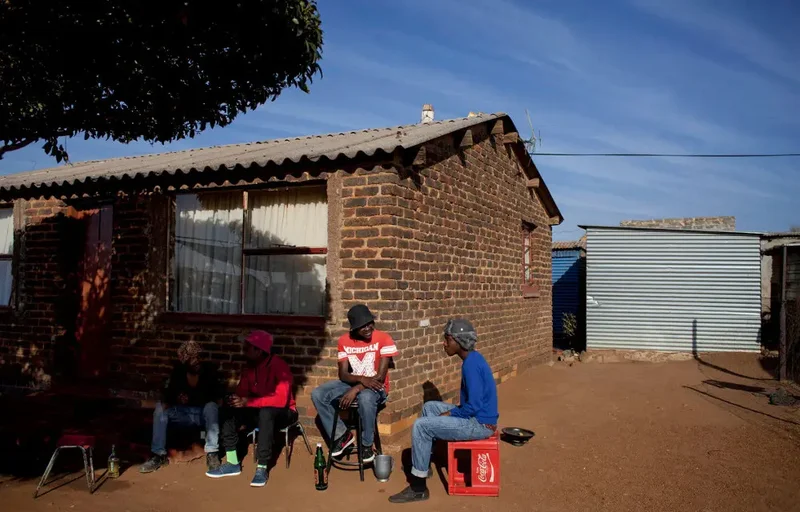
South Africa’s youth unemployment rate has risen to 47.4%, meaning almost one in every two young people in the labour force cannot find a job. The latest figures from Statistics South Africa (Stats SA) show that 5 million young people aged 15 to 34 were unemployed in the second quarter of 2026, an increase of 264 000 from the first quarter.
The figures were released on Tuesday, 11 August, as part of Stats SA’s Quarterly Labour Force Survey for the second quarter of the year. They show that the situation for young people looking for work worsened between April and June. Youth employment also fell by 40 000 to 5.6 million during the same period, resulting in an increase in the youth unemployment rate by 1.5 percentage points from the previous quarter.
The increase among young people comes as unemployment across the country has also worsened. South Africa’s official unemployment rate increased from 32.7% in the first quarter to 33.6% in the second quarter. The number of unemployed people increased by 345,000 to 8.5 million, while the number of employed people fell by 16,000 to 16.7 million. At the same time, the labour force grew by 329 000, indicating more people were seeking work, while the number of employed people declined.
Stats SA’s figures also show that unemployment is not the only problem facing people in the labour market. The country’s broader measure of labour underutilisation, known as LU4, remained at 46.3%. This measure includes unemployed people, as well as people working fewer hours than they would like and those who are available for work but are not fully connected to the labour market. The combined rate of unemployment and the potential labour force, known as LU3, also increased slightly from 43.7% in the first quarter to 43.8% in the second quarter.
The latest figures also show a decrease in the number of discouraged job-seekers, down 227 000 to 3.7 million. These are people who want to work but have stopped looking for jobs because they believe there are no suitable opportunities available. While this number decreased during the quarter, the size of the potential labour force remains an indicator of the number of people not fully engaged in the labour market.
The South African Federation of Trade Unions (SAFTU) has raised concern about the latest figures, saying South Africa is becoming too used to seeing high levels of unemployment every three months. The federation said the figures should not simply be treated as another set of statistics because unemployment affects individuals, families and communities. “These are not merely statistics. Behind every number is a human being,” SAFTU said, pointing to households that often depend on social grants, pensions, informal income or the wages of the one family member who has employment.
SAFTU said the impact of unemployment is particularly severe for young people entering the labour market after completing their education. The federation said many young people finish school, college or university only to find that there are not enough opportunities available to them. “We are producing generation after generation of young people who finish school, college or university only to encounter the locked doors of an economy incapable of absorbing them,” the federation said.
The federation also criticised the continued focus on entrepreneurship as a response to youth unemployment, even as some productive sectors of the economy are shedding jobs. SAFTU said young people need employment opportunities rather than being repeatedly encouraged to create their own jobs in an economy where many industries are under pressure. “Young people do not need endless lectures about entrepreneurship while productive sectors are shrinking. They need jobs,” the federation said.
The unemployment crisis also continues to affect different groups in different ways. SAFTU highlighted the broader LU3 measure, which stood at 48.6% among women compared with 39.4% among men. Among Black African women, the rate reached 53.1%, compared with 43.3% among Black African men. The federation said these figures highlight the continued inequalities linked to race, gender, class, age and geography in South Africa’s labour market.
Employment changes were also recorded across different industries during the second quarter. Trade recorded the biggest increase, gaining 70,000 jobs, followed by Construction with 39,000 and Finance with 11,000. However, these gains were offset by job losses in other sectors, with Community and social services recording the biggest decline at 57 000 jobs. Mining lost 26,000 jobs, while Agriculture and Manufacturing each lost 15,000 jobs.
There were also changes across the different employment sectors. Formal-sector employment decreased by 41,000, while employment in households fell by 9,000. Informal-sector employment, however, increased by 34 000 during the quarter. The figures show that while some areas of the economy are creating jobs, others continue to lose employment opportunities.
SAFTU has raised particular concern about the job losses in manufacturing, mining and agriculture, saying the decline in productive employment points to wider problems in the economy. The federation said the country is losing productive capacity, which affects communities that have traditionally depended on these industries for employment. “Factories have closed. Productive capacity has been hollowed out. Industrial supply chains have weakened. Import dependence has increased,” SAFTU said.
The provinces also experienced different changes in employment during the quarter. Mpumalanga recorded the biggest increase, with employment rising by 41,000, followed by the Eastern Cape with 13,000 and the Free State with 9,000. Employment fell by 48,000 in the Western Cape, 22,000 in Gauteng and 15,000 in North West province. These differences show that the impact of the country’s unemployment crisis varies across provinces.
SAFTU’s broader labour underutilisation figures also show significant differences between provinces. The federation reported LU3 rates of 56.0% in the North West province and 54.1% in the Eastern Cape, compared with 26.1% in the Western Cape. SAFTU said the differences reflect the unequal economic opportunities across the country and the ongoing challenges faced by communities in areas with fewer employment opportunities.
SAFTU has called for urgent action in response to the latest unemployment figures. The federation wants the country’s four trade union federations to convene a Trade Union Summit, followed by a broader Working-Class Summit that would bring together workers, unemployed people, young people, students, community organisations and other social movements. The aim would be to develop a common response to unemployment, retrenchments and job losses.
The federation said it does not want to wait for another set of quarterly unemployment figures before taking action. SAFTU said the statistics should lead to greater organisation and action, arguing that “Statistics must be converted into organisation. Anger must be converted into mobilisation. Mobilisation must be converted into working-class power.”
With 5 million young people unemployed and the youth unemployment rate now at 47.4%, the latest figures continue to show how difficult it remains for young South Africans to enter the labour market and find employment. SAFTU has warned that the country should not become so used to these figures that unemployment is treated as a normal part of everyday life, saying, “This is not the weather. This is not normal. This is not inevitable.”