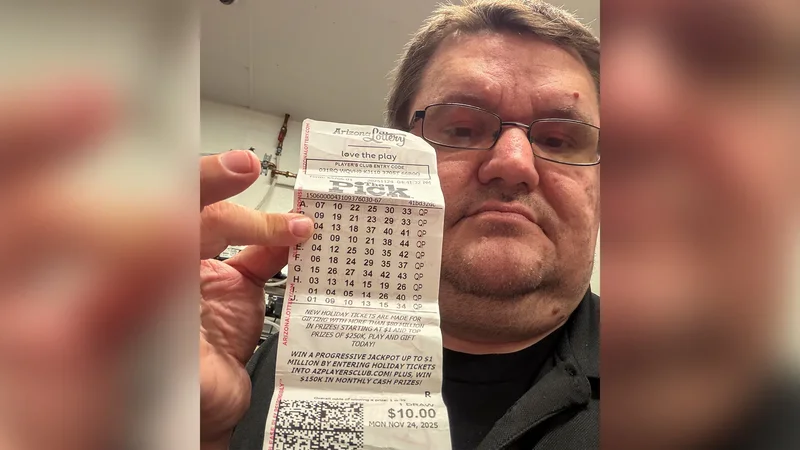
A $12.8 million lottery prize has sparked an ongoing legal battle in Arizona. On one side is convenience store chain Circle K, which says the winning ticket belongs to the company because it was printed at its register but left unsold after a customer backed out for lack of cash. On the other side are two former employees who say they bought the ticket under a controversial internal policy that allegedly forces workers to purchase accidentally printed tickets. So far no one has been able to claim the fortune. A judge must decide whether Arizona will gain two new millionaires or whether the company will end up benefiting from an unexpected stroke of luck.
The story began on November 24, 2025. That day, a customer identified in court papers as Kim asked at a Circle K store in Phoenix for $85 in The Pick tickets, the Arizona Lottery’s jackpot game. But she only had $60 in cash. Unluckily for her, among the tickets she did not take home was the one that, hours later, turned out to be the $12.8 million winner — the largest jackpot the draw had offered since 2019. The ticket sat by the cash register all night. The next morning, at the start of his shift, the store manager, Robert Gawlitza, took it and checked that it matched the six winning numbers, according to an affidavit in the case file. A news item cleared his remaining doubts: the winning ticket had been printed at that very store, located at 5601 E. Bell Road, in Scottsdale, Phoenix, according to the evidence.
Gawlitza, who had worked for the company 17 years, decided to seize the opportunity and buy the ticket. He says he acted in accordance with Circle K’s internal rules. He clocked out temporarily, took off his uniform, asked cashier Marline Ybarra to sell him the lucky ticket for $10, then walked to one of the store’s security cameras and displayed it along with the purchase receipt. He says this was a way to document that the transaction had been made legitimately. He kept the ticket and, convinced he had just become a millionaire, returned to work. “It was surreal. It’s one of those moments when you don’t know if you’re dreaming or if it’s really happening,” Gawlitza told EL PAÍS. “I bought the ticket. I was authorized to buy it and I put my name on it.”
His lawyer, Josh Kolsrud, says Gawlitza complied with Circle K’s own rules. The attorney says there is an “unofficial policy forcing its employees to purchase accidentally printed lottery tickets.” They are required to buy them when the amount exceeds $20 and, he explained, the policy aims to reduce the company’s losses. “Circle K uses it to punish its employees,” Kolsrud said, arguing that the Arizona Lottery provides that a ticket belongs to the seller until it is sold. In this case, the ticket belonged to Circle K until Robert validly purchased it, says his lawyer.
A Circle K establishment.Beata Zawrzel (NurPhoto via Getty Images)
Six former employees of the company gave affidavits backing up the claim about the company policy and said that, in some cases, they themselves had to comply by paying out of their own pockets, according to court documents. Nicholas Deliberties, who was manager of a Phoenix store, said: “I observed and participated in that practice several times, including once when I had to pay $110 for tickets I accidentally printed.” Joyce Vickers-Kien, who also worked at a company outlet in that city, recalled that on one occasion she had to buy a ticket that later won $9. But the company showed no interest in claiming that money.
“We’re not poor anymore”
On that November day, Robert Gawlitza felt like the luckiest man in the world. But before his shift ended, a supervisor approached him and demanded he hand over the winning ticket so they could review the case. Since then, he has not had it in his possession. “They asked me to let them handle the situation. I just wanted to comply with the company I worked for because I didn’t want to cause any trouble,” Gawlitza says.
He remained in charge of the store for the next two months. At the end of January he was fired, the company said, for violating internal policies by buying the ticket during his working hours. “It hurts, it feels like a betrayal,” the man laments, who learned the dispute had escalated when a reporter called to ask about the lawsuit Circle K filed against him to have a judge determine who the rightful owner of the money was. The company could not claim the prize on its own because Gawlitza had written his name on the back of the ticket.
The corporation also filed a motion to extend the Arizona Lottery’s 180-day deadline to claim prizes. In mid-May, a Maricopa County court suspended the process of awarding the money until it determines who should receive it.
Couche-Tard, the convenience store giant that owns Circle K, did not respond to a request for comment sent by EL PAÍS. The Arizona Lottery said in a brief statement that it could not comment on the case because it is “a legal matter pending in court.” Its spokeswoman, Cydeni Carter, emphasized that the determination of who owns the ticket “is a matter for the court to decide.”
Gawlitza says his former employer’s lawsuit filled him with fear and that for a time he thought he might end up in jail. Then came another blow: the difficulties of finding a new job, which he attributes to the notoriety his story has gained in the press. “It’s hard because my name is everywhere,” the man says, adding that his family has gotten by only on his wife’s salary. “I think other companies are afraid to hire me because they see this is still in litigation.”
While a judge reviews the case, Gawlitza and the cashier who sold him The Pick ticket, Marline Ybarra, agreed to split the $12.8 million equally or any amount they might obtain through a settlement, if one occurs. “Robert doesn’t want to keep all the money, he wants to do the right thing and give Marlene half. He’s not acting like a greedy person,” Kolsrud says.
Gawlitza’s requests to Circle K are not limited to receiving the million-dollar prize. He also wants his old job back. “I’m not doing this for the money. I was just doing my job. Money comes and goes. But the most important thing is my family,” the man says, his tone during the interview revealing deep concern. Gone is the joy with which he wrote to his supervisor to say he had a piece of paper worth a fortune: “I’m not quitting. It’s just that we’re not poor anymore.” That promise, for now, remains up in the air.
Sign up for our weekly newsletter to get more English-language news coverage from EL PAÍS USA Edition