An overview of Hyundai Motor Group's HTWO ENERGY Cheongju, a waste-to-hydrogen production and refueling facility in Cheongju, North Chungcheong Province / Courtesy of Hyundai Motor Group
Korean firms are reconsidering whether to proceed with the investments in Canada that they had pledged as part of Seoul's bid for Ottawa's multibillion-dollar submarine procurement project after the Korean consortium lost the competition.
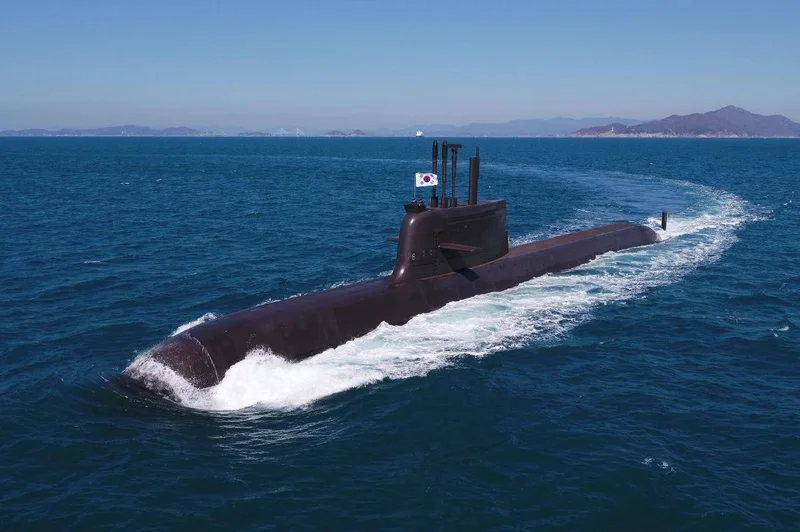
Hanwha Ocean lost to Germany's ThyssenKrupp Marine Systems (TKMS) in the roughly 60 trillion won ($39.3 billion) competition to replace the Royal Canadian Navy's aging fleet of four Victoria-class submarines with up to 12 new 3,000-ton diesel-electric vessels.
Contrary to speculation that Korean firms would abandon their Canadian investment plans following the failed bid, the companies are still weighing their next steps. The uncertainty comes even as the Canadian government continues to emphasize the importance of expanding bilateral business ties.
Hyundai Motor Group, which had proposed building a nationwide hydrogen mobility and logistics ecosystem in Canada, said that it has not decided to abandon the so-called Project Beaver and is considering its next steps.
“Our hydrogen business in Canada was part of Team Korea's package deal that was tied to the submarine project, and nothing has been determined yet,” a Hyundai official said. “For now, we are reviewing opportunities for cooperation with state governments, including Canada, and timing regarding the hydrogen businesses. The businesses will have to be localized in local markets and diverse environments.”
Hanwha Ocean said it has not decided on cancelling its investment proposals in Canada. The company’s proposals included constructing a steel mill in Canada in collaboration with local steelmaker Algoma Steel, providing shipbuilding technologies to Ontario Shipyards, establishing a training center for shipbuilding professionals for Ontario-based Mohawk College, and more.
"We are still reviewing our options. Some foreign media outlets incorrectly reported that we had pulled out of Canada after the Canadian government selected TKMS over us," a company official said.
Kang Hoon-sik, back row fifth from left, presidential chief of staff, joins a memorandum of understanding signing ceremony between Hanwha Ocean, Canada's Automotive Parts Manufacturers' Association and Algoma Steel at Martinrea International's manufacturing plant in Woodbridge, Ontario, Canada, June 1. Captured from Kang's Facebook
“Those memorandums of understanding (MOUs) we had signed with Canada were conditional. But we cannot just erase them all now. We are still looking into business potentials. We should also keep monitoring the submarine project as we are next in line behind TKMS.”
Other Korean industry giants involved in the submarine project are yet to pull the plug in Canada as well, banking on MOUs and deals they had agreed to with Canadian counterparts.
HD Hyundai, a major shipbuilder that had supported Hanwha Ocean in the submarine bid, said its research MOU with the University of British Columbia in western Canada remains in place.
HD Hyundai Oilbank, the refining affiliate of HD Hyundai, which had proposed importing more crude oil from Canada, said the trade will continue.
“We had proposed importing more oil during the bidding race. Now, despite the race’s outcome, we will keep importing from Canada, though the volume to import from now remains to be seen," its official said.
LIG D\&A, a major defense solution developer that had proposed investments in the Canadian defense industry, said the proposal had targeted “not just the submarine bidding, but also potential future projects in collaboration with Canada.” The company said it will keep seeking business opportunities in the country.
LG Energy Solution said operations at its new energy storage system battery plant in Windsor, Ontario, will continue regardless of the outcome of the submarine bid. The facility, completed in March, had been highlighted during the bidding process as a strategic Korean investment. The company, however, said Thursday that the plant was unrelated to the submarine project.
Apart from the companies, the Defense Acquisition Program Administration (DAPA), the Korean arms procurement agency that was part of the Korean consortium, said it will no longer pursue the stake in Canada that it had pledged as part of the submarine bid.
The agency had pledged to support expanded business-to-business cooperation between Korea and Canada, transfer the Republic of Korea Navy's submarine operational expertise and provide a broad range of industrial and technological benefits.
"Those commitments were contingent on winning the contract, so there is nothing to cancel. Our support was conditional from the outset," DAPA spokesperson Kim Joo-cheol said.
LG Energy Solution CEO Kim Dong-myung, fifth from left, Korean Minister of Trade, Industry and Resources Kim Jung-kwan, ninth from left, and Minister of Industry of Canada Melanie Joly, sixth from left, attend a completion ceremony for the Korean company's energy storage system battery manufacturing plant in Windsor, Ontario, Canada, March 5. Courtesy of LG Energy Solution
Canada, meanwhile, even after selecting TKMS, has expressed its commitment to further exchanges with Korea.
The Embassy of Canada in Seoul said on Wednesday that Korea “remains a critical strategic partner” and the bilateral relationship is “strong, growing and enduring, underpinned by decades of close cooperation and a shared commitment to advancing our mutual economic, security and geopolitical interests.”
“We continue to work closely together across a wide range of areas, including on security, defense, energy, critical minerals, AI (artificial intelligence) and other emerging technologies,” said Brittany Fletcher, spokesperson for the Government of Canada’s media relations office.
“Engagement remains active and ongoing at all levels, reflecting the depth and resilience of our partnership. We are committed to continuing to deepen our cooperation and engagement going forward.”
Cohere, an AI technology developer in Toronto, also confirmed its future trade with Korea remains open. Hanwha Ocean and Hanwha Systems, a defense system developer under Hanwha Group, and Cohere had agreed to collaborate on developing new AI technologies for shipbuilding and submarine operations before the Canadian government’s final decision.
“While we can’t comment on the Canadian government’s decisions, Cohere remains deeply committed to Korea and to our domestic partnerships. Korea has one of the world’s most advanced technology ecosystems, and we believe strongly in the importance of collaboration between Canadian and Korean companies, underpinned by the Canada-Korea Comprehensive Strategic Partnership,” said Cohere spokesperson Kyle Lastovica.
“We look forward to advancing secure, sovereign AI adoption across Korea and identifying areas where our technology can support innovation and competitiveness across Korea's industrial ecosystem. Our focus remains on building long‑term, trusted partnerships that contribute to Korea’s national AI ambitions.”