This article is part of the Special Coverage “Inside Venezuela’s Earthquake Disaster,” where we examine the aftermath of the earthquakes, share stories from the ground, and explore the human impact, recovery efforts, and challenges facing affected communities.
On June 24, 2026, at 6:04 p.m. local time, the earth along the northern Venezuelan coast released its tension in a seismic doublet that primarily struck La Guaira, where the country’s main port is located, and the capital, Caracas. It also affected Valencia and Morón in Carabobo state, and Boca de Aroa in Falcón state, both of which lie along the coastal corridor closest to where the earthquakes occurred.
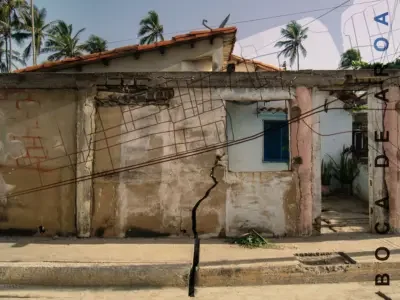
As news media and social platforms became saturated with images of rubble, rescue workers and volunteers, my project, entitled “The Sigh of the Earth,” began from the opposite premise: to build visual memory from within the lived experience of the event, rather than from its spectacularized epicenter.
La Guaira was the state that suffered the greatest devastation. Located just 30 kilometers (19 miles) from Caracas and home to approximately 400,000 people, it was declared a disaster zone by the Venezuelan government. The death toll reached into the thousands, while structural damage, according to the World Bank, was estimated at USD 19.6 billion.
Morón, on Venezuela’s central coast, is located just 21 kilometers (13 miles) east of the epicenter of the main earthquakes. Across several communities, 60 families were affected by the earthquakes, 40 of whom lost their homes entirely. Preliminary reports estimated nine fatalities following the events of June 24.
Boca de Aroa, situated on the eastern coastal strip between Morón and Tucacas, also experienced severe impacts on housing and public services. Initial reports documented 87 damaged homes and 252 displaced residents, as well as soil liquefaction, ground fissures, subsidence, and damage to electrical poles and transformers.
Despite this, international attention overwhelmingly shifted toward La Guaira, where the collapse of numerous buildings in densely populated residential and tourist districts close to Caracas and Maiquetía International Airport dominated global news coverage. As a result, many who lost everything remain absent from the public agenda.
Rather than documenting the disaster’s ground zero, the project assembles traces of the earthquake as they persist in everyday life. It brings together photographs of local destruction and housing devastation in Carabobo and Falcón, alongside screenshots of chat conversations, regional maps, and seismological records.
I then wove these materials into a single video, turning “The Sigh of the Earth: Fragments From Communities Overlooked After Venezuela's Earthquake” into an unconventional documentary project:
The video assembles photographs from affected areas outside La Guaira, including Valencia, Morón, and Boca de Aroa, and combines them with screenshots, maps, and digital visualizations created with a Python-based emulator of Chladni patterns that translated the earthquake’s frequencies into abstract visual forms.
The soundtrack is central to the piece. The film interweaves these visuals with voice messages from family members checking on my safety and an acoustic guitar melody recorded during one of Valencia’s recurring power outages. The result is the construction of a piece of visual memory that resists the overwhelming reproducibility of contemporary disaster imagery.
Venezuela is an earthquake-prone country. In 2005, Venezuelan researchers and the Japanese government warned of the risks facing the city of Caracas in the event of a major earthquake; 80 percent of the population is concentrated in areas of highest seismic risk.
However, what suffered the greatest damage in the hills of Morón, Carabobo state, was what had been built by the human species. The trees, including the flashes of flamboyant trees, remained intact. It is nature selecting what stays and what goes.
After these devastating earthquakes, Venezuela is experiencing collective grief. The entire country is cracked, and across digital platforms, genuine expressions from those experiencing this pain have grown. Telling the story over and over again seems to be a way of carrying the pain.