“Where does the real course of one’s life actually begin? At what turning point does one leave one’s boyhood behind and start on manhood? Who can say that, before that point, everything was clouded and unclear and without significance, but that everything ahead of it will be clear and meaningful? Isn’t manhood as hazy as childhood? And doesn’t that haziness go on right to the end of one’s life?”
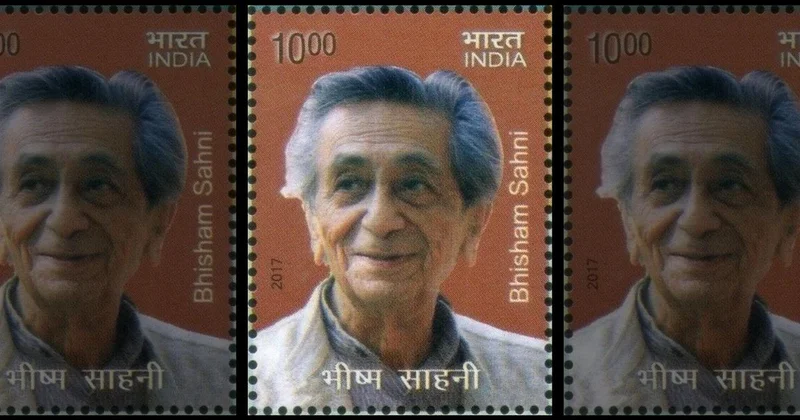
Before his Partition magnum opus, Tamas, Bhisham Sahni wrote a sensitive novel about the a young boy’s coming of age in colonial India. First published in Hindi as Jharokhe (1967), it has been aptly translated into English as Boyhood (2016) by Anna Khanna. Like a jharokha balcony opening into the world, the novel opens into the endlessly confounding journey to adulthood. Sahni, who started his literary career with Boyhood, would go on to become one of India’s most important writers ever.
Looking back
The narrative voice belongs to the protagonist’s adult self, who looks back at his childhood and narrates it as he remembers it. He assumes the role of a spectator instead of the central character, as though his childhood had simply happened, many of the events beyond his comprehension and control. Happiness is interspersed with long periods of anxiety and unknowing. The boy who lives in a nuclear family with his parents and three siblings inhabits the house with his three dead sisters, whom his mother, naturally, constantly grieves for. It is a comfortable life otherwise, but the boy is aware that he knows very little of his parents’ tribulations.
His older brother Baldev is obdurate, his sisters Vidya and Vimla are given to fits of giggles all day, his father is a man of commerce, and his mother labours at home and in the kitchen. His parents get into minor spats with some escalating to dramatic showdowns – the children suffer much anxiety because of it, but the boy has never actually seen his father treat his mother cruelly. The family belongs to the Hindu reformist sect of Arya Samaj, and has rejected idol worship. They read vedas for moral guidance. Mostly liberal in outlook, the father encourages their low-caste servant boy, Tulsi, to get an education despite the mother’s disapproval. Tulsi is taught to read in Hindi so he may read the vedas but English and Urdu, the languages of commerce, are thought unnecessary for him. In some of his happiest childhood memories, the boy remembers staging plays with Tulsi and frolicking with him.
Alongside the boy, it is Tulsi who has the most defining arc in the story. Unhappy with his position in society, Tulsi decides to put his education to use, much to the mother’s annoyance. While he may have grown up in an Arya Samajist household, the world outside tightly holds on to caste ranks, making matters impossible for Tulsi. His short stint as a quack’s right-hand man does him no good, and before long he finds himself back at his former employer’s home looking for a new line of work.
Meanwhile, the boy’s foray into adulthood is more emotionally roiling. He’s greatly troubled by the wet dreams he’s been having and keeps a meticulous tab on how often he has them. When he unthinkingly consults his mother about it, she quickly hands over the reins to his father who imposes strict discipline to put an end to such degeneracy. Much of the boy’s adolescence is wracked by extreme guilt, and never once does he suspect that perhaps what he is “suffering” from is quite natural.
Looking ahead
Unbroken by chapters, the longest “section” of the novel is about the boy’s early childhood before galloping ahead to the boy visiting home some years later. His father has retired from work, his mother has lost all her teeth, and his brother seems to have no clear plan for his future. Unlike their father, who is shown as a well-established, clear-headed family man, both brothers struggle to assume adult responsibilities. A great dissatisfaction brews in the family about its hazy future.
Sahni avoids the usual entrapments of coming-of-age stories, strictly avoiding romance and acknowledging childhood, no matter the political preconditions, as a time of great emotional turbulence. The boy’s giggling sisters appear insensitive while the boy himself is uncaring of anyone’s feelings besides his own. In addition to the parents’ sparring, the girls are traumatised when a neighbour flashes at them through the window. Sahni reminds us that the sanctuary of home can still be violated by outsiders and from afar.
The melancholic tone of the novel is undercut by wit, especially in the episodes where the boy is willing to try everything to keep wet dreams at bay. Like all of us, the adult boy has a confusing memory of his childhood, remembering in fragments the time he does not deem important while the days of torment appear longer and more frequent than they probably were. Boyhood is cognisant of the vital, painful period of transitioning into adulthood, and does not dismiss its trials as merely growing pains.
Boyhood, Bhisham Sahni, Anna Khanna, Penguin Classics.
We welcome your comments at letters@scroll.in.