- READ MORE: I was a respectable civil servant but I was hiding £20,000 of debt after binge drinking from the age of 16 - a terrifying drunken episode finally forced me to go sober, says SERENA SMITH
- See more Daily Mail on Google - save us as a Preferred Source
A psychologist has revealed the signs you were raised by a narcissistic parent - and how that could still be affecting you today.
Dr Carmen Harra explained: 'The word narcissist often conjures images of people who seem selfish, reckless, or consumed by their own importance: a corrupt politician, a relentlessly ambitious executive, or perhaps an ex-partner whose behaviour left emotional scars.
'Much less readily do we associate the word with someone who raised us.
'Yet narcissistic behaviour occurs within families, too. A parent may be loving in some moments and deeply self-focused in others. They may struggle to recognise their child's emotional needs.'
The American author of You Are What You Feel: Redefining Your Emotional Identity For Greater Intelligence, Awareness, And Understanding, explained how those patterns can leave 'imprints that last well beyond childhood'.
She added: 'Growing up with a parent who consistently made the relationship about their own needs can affect the way a child learns to understand love, achievement, boundaries, and self-worth.
'Some children become chronic people-pleasers while others learn to suppress their emotions, constantly seek approval, or that they must earn their place in relationships.'
However, it's worth noting that displaying narcissistic tendencies is not the same as having Narcissistic Personality Disorder (NPD), a fairly uncommon mental health condition that affects between one and five per cent of the UK population.
Below, Dr Carmen has shared ten questions you should ask yourself to help identify whether your mother and father had the personality traits while raising you - and how this might have impacted you...
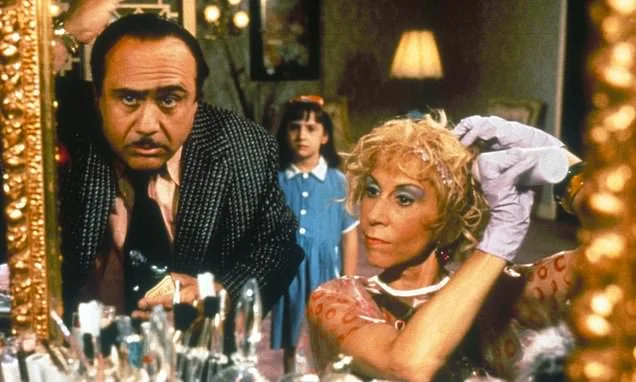
Danny De Vito, Mara Wilson and Rhea Perlman as their characters in Matilda (1996). Danny played narcissist Mr. Wormwood
- Were you taught that being ordinary meant being inferior?
Dr Carmen said: 'In some families, children learn early that simply being themselves is not enough. Achievement, status, appearance, or exceptional talent becomes the measure of worth.
'You may have been encouraged to be better than everyone else rather than to discover what genuinely interested you. A good grade was not simply something to celebrate; It was evidence that you were special.
'Winning mattered more than participating; Being admired, more than being content. Over time, a child can internalise the belief that ordinary is synonymous with inadequate, and that love or approval must be earned through distinction.'
- Did your parent overlook details that mattered to you?
The psychologist said: 'Children often experience the smallest moments as enormous. A drawing carefully coloured inside the lines, a school project completed with pride, or a new skill mastered after weeks of practice - these accomplishments may seem insignificant to an adult, but they can mean everything to a child.
'A self-focused parent may overlook such moments because they are not sufficiently impressive, useful, or relevant to the parent’s own interests.
'The child learns that attention is not given simply because something matters to them. In adulthood, this replays as a quiet question in the mind: If what matters to me doesn't matter to others, does it matter at all?'
- Were your feelings quickly invalidated?
'Children depend on caregivers not only to meet their physical needs but also to help them understand their emotional experiences,' said the expert.
'Perhaps you were told that you were too sensitive, overreacting, being dramatic, or making a problem out of nothing.
'But when sadness, anger, fear, or disappointment is repeatedly dismissed, a child may begin to distrust his own feelings.
'Rather than learning that his emotions are real and can be managed, the child learns that his emotions are a burden that should be buried.'
- Were you left feeling like you had to prove yourself to receive praise?
Dr Carmen explained: 'For some children, parental approval felt like a prize that had to be won continually.
'Praise likely arrived when you achieved something extraordinary, behaved exactly as expected, or reflected well on the family. But when you struggled, disappointed your parents, or simply failed to meet their standards, their warmth instantly dissolved.
'This can create an exhausting form of perfectionism. Instead of developing an intrinsic sense of worth, you may become dependent on external validation, always wondering what you need to accomplish next to feel good enough.'
- Were your parents preoccupied with appearances?
The psychologist said: 'Some parents place emphasis on how the family appears to outsiders.
'Material possessions, physical appearance, social standing, accomplishments, or the impression of having a “perfect” family may be of extraordinary importance.
'The problem is not caring about appearance or enjoying nice things. It is when maintaining an image takes precedence over the emotional reality inside the home.
'A child may learn that looking happy is more important than actually feeling happy, and that family problems should be concealed rather than addressed.'
- Did you not view your parent as an emotional anchor?
'A parent can provide every practical necessity and still feel emotionally unavailable to their child. This is because children need more than provision; They need somewhere emotionally safe to land,' explained Dr Carmen.
'You may have had a roof over your head, food on the table, and access to opportunities, yet never perceived your parent as the person you could turn to when you were frightened, confused, or hurting.
'They may have fulfilled their responsibilities while remaining emotionally distant or, worse, made your problems feel like inconveniences.'
- Did you feel that your parent’s love was conditional?
'Did affection seem to increase when you behaved exactly as your parents wanted, and diminish when you disagreed, disappointed them, or asserted yourself?' said the psychologist.
'Conditional affection can teach a child that love is something they must preserve through compliance. They may become exceptionally attuned to other people’s moods, learning to anticipate anger or withdrawal before it happens.
'As adults, these children may struggle to distinguish genuine compromise from abandoning their own needs to keep someone else happy.'
- Did your parent frequently remind you of everything they had done for you?
'Some self-focused or vulnerable parents repeatedly emphasize their sacrifices,' revealed the expert. 'They may remind their children how much they gave up, how difficult parenting was, or how little appreciation they received.
'There is nothing inherently unhealthy about a parent acknowledging that raising children requires sacrifice. The concern arises when the child is repeatedly made to feel indebted for having been raised.
'A child should not have to carry the emotional responsibility of repaying a parent for providing parental care because when gratitude becomes an obligation, love can begin to feel like a debt.'
- Did you often feel that you were not your parent’s priority?
'Children naturally need attention, but healthy parenting does not require that every parent make their child the centre of every decision. The more revealing question is whether you consistently felt that your needs mattered,' said Dr Carmen.
'Perhaps your parent repeatedly prioritised their social life, ambitions, relationships, or personal desires while leaving you in the care of others without considering how you interpreted that absence, or they may have been physically present but emotionally absorbed elsewhere.
'Occasional prioritisation of personal needs is normal. A persistent pattern in which a child feels peripheral, however, can leave the powerful impression that the child is only important when they are convenient.'
- Did you feel free to express yourself?
The expert explained: 'If you had a self-centred parent, you knew which opinions would provoke anger, which emotions would be mocked, which subjects were unsafe to discuss, or which parts of your personality your parent preferred you to hide.
'Punishment may have taken the form of yelling or criticism, or it may have arrived as silent rejection, withdrawal of affection, or prolonged emotional distance.
'When children repeatedly learn that authenticity carries a cost, they become skilled at reading the room. They may grow into adults who are highly considerate of others but strangely disconnected from themselves.
'One of the most telling signs that you grew up in a narcissistic household may be the simplest: You learned to edit yourself.'