The SADC Summit in Durban Puts Critical Minerals at the Centre
SOUTHERN AFRICA · ECONOMY
What the SADC summit in Durban is meeting to decide
The 46th Ordinary Summit convenes on 17 August, hosted and chaired by President Cyril Ramaphosa. South Africa has chaired SADC on an interim basis since 7 November 2025, when an extraordinary summit accepted Madagascar’s withdrawal after President Andry Rajoelina was ousted. Durban makes the role substantive for the year ahead.
The theme is unusually specific for a communiqué-generating body: “Resilient, sustainable and inclusive industrialisation through Infrastructure Development, Agricultural and Critical Minerals Transformation in Pursuit of a Just World”.
The agenda published by the SADC Secretariat covers the state of the region, progress on decisions from the 45th summit held in Antananarivo last August, food and nutrition security, and disaster preparedness. It also lists the operationalisation of the SADC Regional Development Fund.
One item stands out for its bluntness. Leaders are scheduled to discuss “the impact of global geopolitical developments on the SADC region”, which is as close as a regional bloc comes to naming the great-power contest over its resources.
Why minerals earn a place in the title
The numbers behind the theme are stark. Claver Gatete, executive secretary of the UN Economic Commission for Africa, published figures in the run-up putting minerals at roughly 10 per cent of SADC’s combined output, a quarter of its exports and a fifth of government revenue.
Against that, minerals account for only about 7 per cent of direct employment. That gap — enormous economic weight, very little work — is the argument for processing at home.
Africa’s share of global supply is not in doubt. Gatete cites the continent as the source of 77 per cent of the world’s cobalt, 83 per cent of platinum group metals, 65 per cent of manganese and 21 per cent of natural graphite.
Almost none of the middle of the value chain sits on the continent. The refining, the precursors and the cathodes are elsewhere.
The case for a regional minerals compact
Gatete’s proposal is a regional minerals compact that would harmonise royalties, investment rules and local-content requirements across member states. The logic is straightforward: sixteen separate mining codes can be picked off one at a time, one shared framework cannot.
He also puts a price on entry. Gatete puts the cost of a 10,000-tonne battery-precursor plant in the Democratic Republic of Congo would cost about US$39 million, roughly a third of the equivalent in the United States.
That figure is doing a lot of work in the argument. It suggests the barrier to African processing is not capital cost but power, logistics, skills and offtake certainty.
Whether the summit adopts anything resembling a compact is the test. Regional blocs are better at themes than at binding instruments.
What is already happening without a compact
Member states have not waited for coordination. Individual export restrictions have been arriving steadily, each aimed at forcing more processing onshore.
The Democratic Republic of Congo has restricted copper and cobalt concentrate exports, lifting prices and rattling the battery supply chain. Zimbabwe ordered an end to lithium concentrate exports from January 2027, then softened it in April 2026 into a quota regime with a 10 per cent export tax.
The risk in acting separately is obvious. Uncoordinated bans invite buyers to switch between suppliers rather than invest in any of them.
That is precisely the fragmentation a compact is meant to prevent, and precisely why it is hard to agree.
Why an outside investor should care
Almost every southern African mining thesis for the next decade runs through decisions taken at this level. Beneficiation mandates, cross-border corridor policy and royalty design are set by governments acting either together or alone.
There is a familiar parallel further west. Chile, Argentina and Bolivia hold a comparable share of the world’s lithium and have spent years wrestling with the same question of who captures the midstream, with similarly mixed results.
The honest read on Durban is that a theme is not a policy. What matters is whether Monday produces an instrument with a name, a secretariat and a deadline.
If it does not, the region will keep negotiating project by project — and buyers will keep preferring it that way.
Frequently Asked Questions
When and where is the 46th SADC summit?
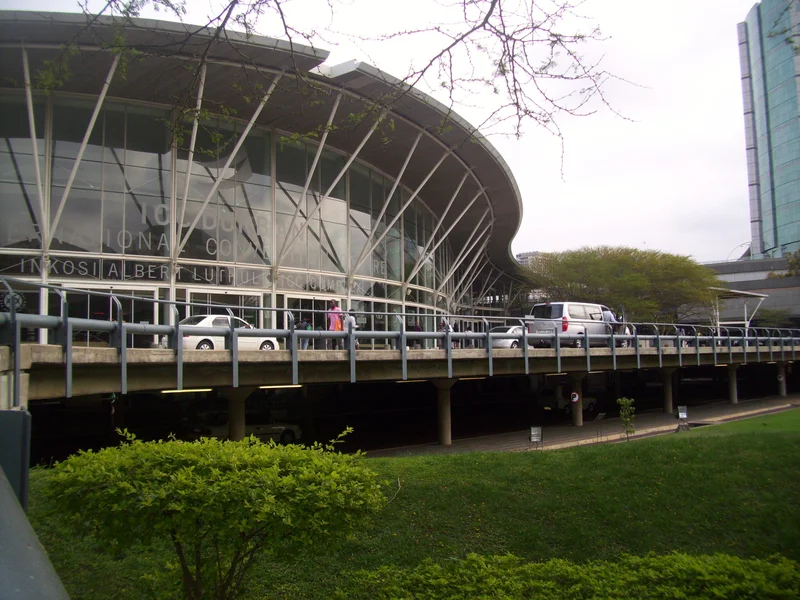
It is held on 17 August 2026 at the Durban International Convention Centre in South Africa. President Cyril Ramaphosa hosts and chairs it.
What is the theme of the SADC summit in Durban?
The theme is “Resilient, sustainable and inclusive industrialisation through Infrastructure Development, Agricultural and Critical Minerals Transformation in Pursuit of a Just World”.
Which countries belong to SADC?
Sixteen: Angola, Botswana, Comoros, the Democratic Republic of Congo, Eswatini, Lesotho, Madagascar, Malawi, Mauritius, Mozambique, Namibia, Seychelles, South Africa, Tanzania, Zambia and Zimbabwe.
How important are minerals to southern Africa?
The UN Economic Commission for Africa puts them at about 10 per cent of SADC GDP, 25 per cent of exports and 20 per cent of government revenue, but only 7 per cent of direct employment.
What is a regional minerals compact?
It is a proposal by UNECA executive secretary Claver Gatete to harmonise royalties, investment rules and local-content requirements across SADC member states, so the region negotiates as a bloc rather than country by country.
This article was produced by The Rio Times’ automated newsroom system. How we use AI · Report an error
LatAm Markets: Live Signals → — real-time movers, turnover leaders and FX across Latin America.