Dangote Refinery IPO Is Aimed at Nigerian Savers, Not London
NIGERIA · MARKETS
What the Dangote refinery IPO is actually offering
The plan is a domestic listing, in naira, on a single exchange. Bird was explicit that the company wants ordinary Nigerians on the register, not just institutions.
That framing matters more than it sounds. Nigeria’s largest industrial asset is being handed to the local savings market first, at a moment when most African champions look abroad for a deeper pool of capital.
What has not been said is almost as striking. Bird declined to give a target amount, a valuation or a free float, and no prospectus figure has been published.
Aliko Dangote, the group’s chairman, has spoken about the float in the past and his own numbers have moved, from “five to 10 per cent” in October 2025 to “approximately 10 per cent” in April 2026. Neither has been confirmed as the figure for this offer.
The July placement that set the tone
In July the company completed a US$2.5 billion private placement that was 3.7 times subscribed. The Africa Finance Corporation, which led a group of strategic investors into the deal, described the plant in its own release as a roughly US$20 billion complex.
An oversubscribed institutional round is a useful signal, but it is not a price. It tells you there was appetite at the terms offered in July, not what the public market will pay in October.
The regulatory track is further along than the commercial one. Securities and Exchange Commission director-general Emomotimi Agama said publicly in late July that the application had been filed, which is a firmer confirmation than the anonymous sourcing that usually surrounds deals of this size.
Why the refinery matters beyond Nigeria
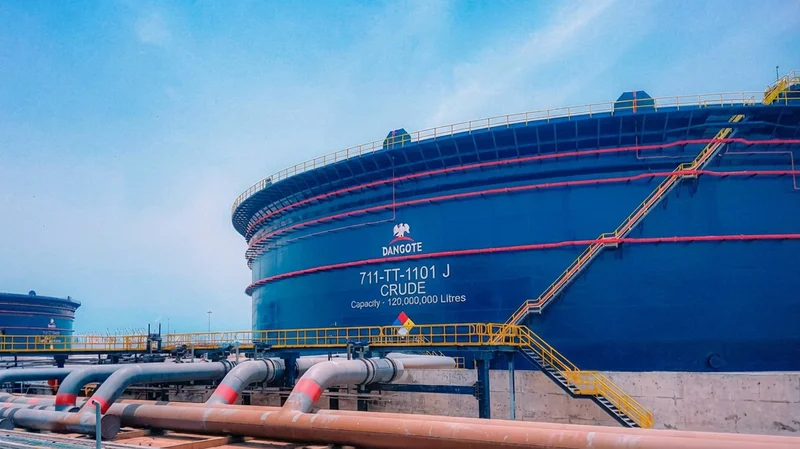
The plant runs at a nameplate 650,000 barrels a day and was tested at 700,000 barrels a day in June. Bird says capacity should more than double, to 1.4 million barrels a day, within three years, while the Africa Finance Corporation’s written release dates that to 2028.
Its reach is already continental and then some. In June and July the refinery was the largest single supplier of imported jet fuel to Europe, shipping more than 400,000 tonnes in July, or about a fifth of European jet-fuel imports, on Kpler tanker-tracking data reported by Arise News.
That position owes a great deal to circumstances. Reuters attributes the pull to supply disruption linked to the Iran war, with European buyers hunting for alternative barrels, and July’s volume arrived despite a fault at the plant.
It is a reminder that the refinery’s current advantage is partly a function of a broken market. A calmer Gulf would change the arithmetic.
What a naira listing asks of foreign money
For an investor outside Nigeria, the questions are less about the plant than about the plumbing. A naira-denominated listing means currency exposure, and the ability to take money out matters as much as the entry price.
Nigeria’s external position is unusually comfortable at the moment, which softens that concern. External reserves reached a 17-year high of US$52.5 billion, the central bank said on 5 August and the naira closed the week of 14 August near ₦1,358 to the dollar.
Liquidity is the second question. A small free float on a frontier exchange can make a large company hard to trade, and the float has not been disclosed.
Bird’s three-year condition is the honest part of the pitch. He is asking investors to buy a production record that does not yet exist, and saying so.
What to watch between now and October
Three things will decide whether this becomes the landmark it is being sold as. The first is the prospectus, which will finally attach a number to the raise and the float.
The second is pricing against the July placement. If the public offer clears near the level institutions paid, the private round becomes a genuine reference point rather than a marketing line.
The third is what the Nigerian Exchange does under the weight. The market has been strong, with the All-Share Index up more than 55 per cent so far this year, but it shed ₦3.8 trillion in the week to 14 August as investors took profits.
A retail-heavy offer of this scale is a test of a domestic savings market as much as of a company. That is the part worth watching.
Frequently Asked Questions
What is the Dangote refinery IPO?
It is a planned share sale by Dangote Petroleum Refinery and Petrochemicals, targeted for October on the Nigerian Exchange. Chief executive David Bird has described it as a “people’s IPO” aimed at Nigerian retail investors.
How much is Dangote raising?
No figure has been published. Bird declined to comment on the size of the raise, the valuation or the free float when he spoke to Reuters on 14 August.
Will Dangote list in London or Johannesburg?
Not for now. Bird said a foreign listing would only be considered after about three years of proven production and financial performance, London has been mentioned as a possible venue for that later listing, though Bird did not name it himself.
How big is the Dangote refinery?
Its nameplate capacity is 650,000 barrels a day and it was tested at 700,000 barrels a day in June. Bird says capacity should reach 1.4 million barrels a day within three years, which the Africa Finance Corporation dates to 2028.
Why is a Nigerian refinery supplying Europe?
It was the largest single supplier of imported jet fuel to Europe in June and July, shipping more than 400,000 tonnes in July. Reuters links the demand to supply disruption from the Iran war rather than to a permanent shift.
This article was produced by The Rio Times’ automated newsroom system. How we use AI · Report an error
LatAm Markets: Live Signals → — real-time movers, turnover leaders and FX across Latin America.