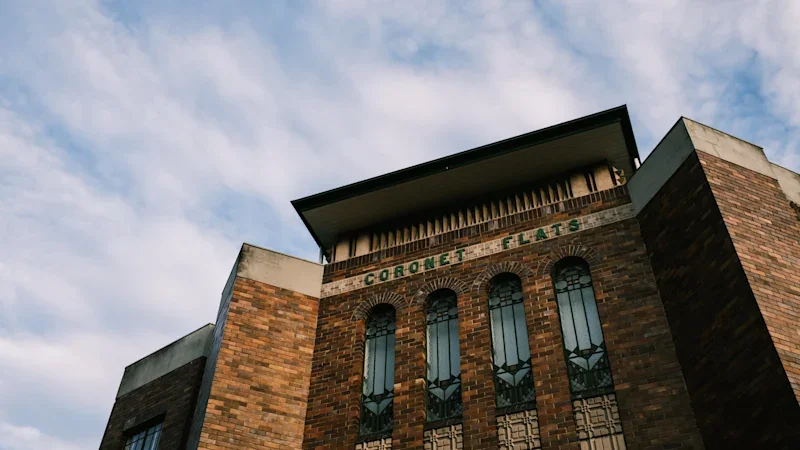
In the late 1990s I lived in a top-floor apartment on New Farm’s Moray Street, aka Brisbane’s Most Liveable Street in 1993. I had a view of the Story Bridge, and lived just across the road from Wilson Outlook Reserve, while only paying $150 a week in rent.
Mind you, the grass of that reserve was routinely covered in discarded syringes from local junkies, so it’s swings and roundabouts.
All Brisbane suburbs change over time, but some change more rapidly than others, and nowhere is that truer than in New Farm.
An area originally known as “Binkin-ba” (meaning “place of the land tortoises”), it was converted into a literal new farm in 1827 by notorious flog-happy British officer Captain Patrick Logan, later killed by Aboriginal people for doing some non-consensual exploring in their backyard.
The farm didn’t last that long, and neither did other features of the suburb over the years: the horse-drawn tram, for instance, which personally I’d love to see make a comeback; or the racecourse which later turned into New Farm Park; or the power station, which still exists in the form of Brisbane Powerhouse; or the deserted quarry at the bottom of New Farm cliffs, which is now the site of the Howard Smith Wharves.
New Farm is always evolving. At one stage it was predominantly a low-rent area, providing accommodation for those who worked in the factories, wharves and submarine bases (no kidding) of Teneriffe. It was also a long-standing sanctuary for underdogs, oddballs and outsiders, such as immigrants, artists, drunks, derelicts and the LGBTIQ+ community.
Now it’s very much a high-rent area, infested with botox clinics, $8 soy lattes, real estate agents and nepo babies, while many of the old inhabitants can no longer afford to live here. A house sold for $25 million in November, and New Farm topped the list of most expensive Brisbane homes last time I looked.
Yet for all New Farm’s flaws, the suburb retains a magic about it, for me at least. Hemmed in on three sides by the “much prettier at night” Brisbane River, it’s close to the CBD, but feels far away.
It’s one of the best suburbs to walk or jog around, being full of different mini-neighbourhoods: the raffish charms of Brunswick Street with its vape stores and e-scooters; the Noosa-esque chic of James Street, with its designer brands and Range Rovers; the view of the city skyline and Story Bridge from the Riverwalk; the jacaranda-clad New Farm Park, the “lungs” of the suburb; the cocktails and pirate-ship playground of Howard Smith Wharves; the laurel trees of Abbott Street; the zen calm of New Farm Library, with its endlessly patient librarians; the bustle of Merthyr Village, particularly on pension day.
The suburb always feels humming and alive, even on sleepy afternoons, and every time we lose something of the past (RIP Gertie’s Bar), something else seems to pop up instead (hello, Junk Bar).
New Farm also has a genuine sense of community. For instance, in 2024 a French restaurant, À la Bonne Franquette, started up on Brunswick Street, run by a young married couple with a cute baby. They worked so hard (even the baby) and the food was so great, the whole neighbourhood was willing them to succeed – I certainly bought more of their beef bourguignon than I could afford at the time. And eventually they did succeed, and all of New Farm (well, the bit near me) cheered, because it’s nice to see a business that’s not a real estate agency do well.
The New Farm spirit is demonstrated in other ways, such as the Neighbourhood Centre, The Village Voice, and the way most locals stick up for the homeless whenever some bigot bags them on the New Farm Community Facebook page. This spirit is constantly under attack from things like the cost-of-living crisis and the real estate/botox/pearl-clutching brigade determined to turn us into a Queensland outpost of Sydney’s Mosman, but it’s still hanging in there, and as long as New Farm retains some sort of sympathy for the outsider and the underdog it will always be special.
My director wife Louise Alston and I recently made a feature film, All My Friends Are Back in Brisbane, about a woman who returns home from overseas and moves to New Farm, as we did during COVID. More than half the picture was set and shot in New Farm. We filmed in our apartment and other places I love in the suburb, such as Death Before Decaf, Hey Mr. Cafe, Wilson Outlook, Merthyr Park and near the sign on Moray Street that still proudly declares it was Brisbane’s most liveable street in 1993.
The cash budget was $13,000, so we didn’t have an official production designer – but we had an unofficial one, and that was the suburb of New Farm.
The movie made its Brisbane theatrical debut at Five Star Cinemas New Farm, across the road from our place, and had a 10-week run there. We tried to introduce every screening personally, and are constantly delighted at the love and passion New Farmians have for their suburb.
But then again why shouldn’t they? To us, it’s the best place in Brisbane, warts and all (botox and all, rather – the warts here tend to be surgically removed).