You can find previous issues of Inbox here.
⭐️ Starred
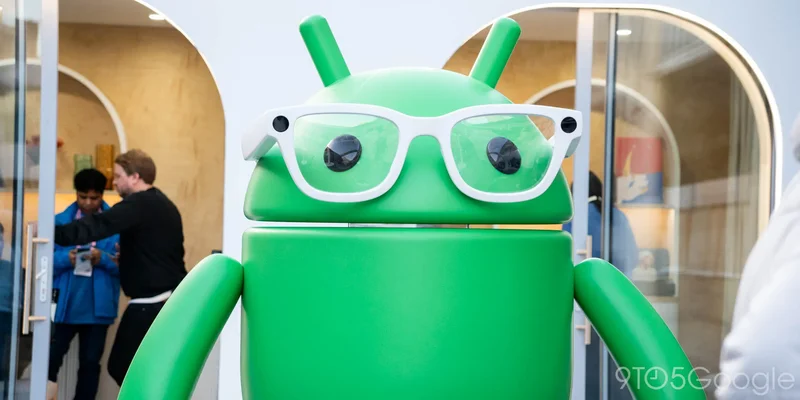
Samsung’s Unpacked event was, um, packed with announcements, from the wider Galaxy Z Fold 8 to a skinnier Galaxy Watch 9. But as companies are wont to do at keynotes like this, Samsung saved its “one more thing” for the end: a first good look at its upcoming smart glasses, made in collaboration with Google, Qualcomm, Warby Parker, and Gentle Monster.
At first glance the glasses, particularly the more traditional Warby Parker design, appear conspicuously similar to the Meta Ray-Bans that have been available for three years now and gone through a few hardware — and culture — cycles.
I own a first-gen pair of Meta Ray-Ban sunglasses and they’re great for taking photos and videos of my kids when I’m holding two water bottles in one hand and a couple of dripping popsicles in the other. I’ve taken them on vacation to capture the streets of Paris and to national parks to see the flora. But while most people’s use cases for these glasses are honorable and innocuous, a thriving grey market has made a tidy business modifying the glasses to disable their recording light, leading Meta this month to issue a mandatory update that bricks the recording capabilities completely when hardware modifications are detected.
Advertisement – scroll for more content
The problem is so bad that celebrities like Lorde are calling them out during concerts — “Don’t get the glasses – not sexy!” — while others have taken to calling them “pervert glasses” in an attempt to bring attention to the less scrupulous use cases for face cameras.
Samsung and Google are diving head-first into this cultural quagmire, and while neither company has Meta’s reputation for flamboyantly disregarding user privacy — and Samsung promises that it has accounted for tampering and abuse — by releasing these products they’re subject to the same scrutiny.
After seeing a demo at Unpacked yesterday, I’m encouraged by the various software integrations Samsung and Google are working on. You’ll be able to use the cameras for live demonstrations over Google Meet, or have Gemini parse the details of what the camera captures, like writing on a poster or identifying a plant. A core use case, and one that I trust Google with far more than Meta, is talking directly with an AI model; Gemini Live is a proven and reliable product at this point, and I suspect it will be a major differentiator when comparing the products. Plus, it sounds like Samsung and Google have the privacy light functionality correct out of the gate.
With nine hours of battery life and seven additional charges in the carrying case, we’re not quite at all-day usage like we are with phones and smartwatches, but we’re slowly getting there, and I think these will be a pretty big hit when they’re released later this year. Buyers should just expect a little side-eye while wearing them.
✉️ Inbox
- Here’s everything new on Samsung’s Galaxy Z Fold 8 series, Flip, and new Galaxy Watch. Next to Apple, Samsung’s product launches are the most important for seeing where the future of mobile computing is headed, and this year it’s about new form factors, price increases, and more agentic AI.
- Alphabet’s Q2 results make profit look as easy as 1,2,3. Google’s parent company made nearly $120 billion in revenue over the past three months and over $40b in operating income. There’s also nearly $100b of additional income in “equity securities” — money that the company has made from skyrocketing investments in AI companies like SpaceX and OpenAI.
- The Galaxy Z Fold 8 series is the first to support Google’s improved on-device AI models. Gemini Nano 4, the on-device AI model based on Gemma 4 E2B, is debuting on the Galaxy Z Fold 8 series and will presumably expand to the Pixel 11 series next month.
- Color me shocked, the Pixel 11 series leaked again. We’ve got three weeks or so until the Pixel 11 debuts, but once again Google hasn’t been able to plug the leaks. We now have every color of every model and here’s my hot take: this is the best color lineup Google’s ever put together.
- Pixel Watch 5 specs leak with no chip upgrade, but more RAM. Despite Samsung’s newest wearables debuting Qualcomm’s more powerful and efficient Snapdragon Wear Elite chip, we’re about to enter year four of Google’s Pixel Watch using the same last-gen Qualcomm chip. At least we’ll have 50% more RAM for all those on-device AI commands.
- Gemini 3.6 Flash is Google’s newest and best coding model. Google has released three new AI models including the much-improved and more efficient Gemini 3.6 Flash, cheap-and-fast Gemini 3.5 Flash-Lite, and Gemini 3.5 Flash Cyber for finding and fixing security vulnerabilities. None of these are the oft-delayed frontier Gemini 3.5 Pro model announced in May, but Google assures us that it’s currently in partner testing and is coming soon.
- A flip phone for the next generation of masochists. There’s something deeply funny about watching people tie themselves in knots trying to spend less time on their smartphones, but the Light Phone is at least an intriguing option if you’re going to jump in headfirst. At $299 and sporting honest-to-goodness physical number buttons (T9 forever) and a trackpad, this is about as close to an updated 2004 Motorola RAZR as you’ll find in 2026.
- Samsung’s newest cash grab? A credit card. Samsung, in partnership with Barclays and Visa, is launching a cash-back credit card. Buyers will get 5% on all Samsung product purchases, 3% when using Samsung Wallet, and 2% on select streaming services.
- Google Zero isn’t coming — it’s already here. Despite telling us that it’s sending more traffic to websites than ever, Google’s ubiquitous AI Mode has fundamentally changed how people search — and it’s sending less traffic to news publishers as a result. (NYTimes gift link)
- Substack is adding a Pangram-powered AI detector tool. In an article titled “Against Claudefishing,” Substack co-founder Chris Best says that while he’s not against AI writing on the platform, “people should know what they’re getting [and] you should have a choice in the matter.” (Substack Post)
- The plot of a superhero movie just played out in the AI space. Last week, Hugging Face, a popular repository of open-weight AI models, said that it detected and stopped a complex attack performed by a set of rogue AI agents by using open-weight Chinese model GLM 5.2 because Fable and GPT 5.6 Sol were too restrictive. Turns out those rogue agents were acting on behalf of two OpenAI models, one of which is unreleased. The companies now say they’re working together to improve security on both sides and ensure this doesn’t happen again. To them. (OpenAI Blog)
🤑 Action items
Over the past few days, I’ve been using a new phone mount from the folks at Statik. This is the company that makes ultra-durable, magnetic, modular USB-C cables and orange battery packs that plug in like little feet.
The HyperMount (Gen 3) is a pretty beefy product because it tries to do a lot of things at the same time. Its base features a so-called Nanosuction Vaculock, which is a fancy way of saying it employs a combination of reusable adhesive and a manually locking suction to more confidently stick to things like glass. This was a major criticism of the first two models, particularly in hot cars, but Statik promises a much more solid experience on a variety of surfaces this time around.
The really fun part about using the HyperMount is its articulating magnetic mount. Because it can move both vertically and laterally, you can achieve practically any angle. Over the past few days I’ve been using it to watch YouTube while I make dinner, and it’s remarkable how useful it is to be able to manipulate the placement of your device as it hovers mid-air several inches in front of you.
The magnets are particularly strong, keeping up with heavy phones like my Samsung Galaxy S26 Ultra (in a MagSafe-compatible case) and Pixel 9 Pro Fold (with a MagSafe adapter glued on back). It also comes with two adapters in the box for devices that aren’t called Pixel or iPhone.
At $35, I think this is pretty good value, and you can save some money by buying a 3-pack, too.
🙃 FWD:
This section has some of our favorite stuff from around the internet. Great videos, weird memes, fun reads, recommended apps, whatever.Send us your recommendations!
For over fifty years, from ARPANET to the eve of ChatGPT, the internet was built the old-fashioned way: by human beings working with nothing but other human beings’ work to build on. No co-pilots. No synthetic minds. Just vision, stubbornness, and the trembling hand of a species figuring it out in real time.
That era is ending now. Not because the web is dying, but because how we make things is fundamentally changing. Creation is becoming a collaboration with machines. Which makes the things in this collection, the artifacts, the documents, the failures, the breakthroughs, into something new: relics of the last time we did this alone.
Thus begins the manifesto of the Museum of the Human Web, a website and curated gallery of the many artifacts — odd, beautiful, audacious — people produced in parallel to the digital world over the past 50 years or so.
From Eudora email to Gateway’s ubiquitous beige towers to Google’s first server hardware (above) to the T-Mobile Sidekick, there is something for everyone here. Just make sure to check out this one, too — you won’t regret it.
🗑️ Trash
VIDEO
Samsung kept things pretty low-key during its Galaxy Unpacked keynote yesterday, but it didn’t always approach its device announcements with such restraint.
Back in 2013, Samsung booked out Radio City Music Hall to showcase the Galaxy S4 and its bevy of gimmicks, including Air View, Air Gesture, Group Play, and others. But the phone itself was barely shown during the hour-long performance, which featured Broadway dancers, a full orchestra, and acrobatics.
A perfect example of how not to announce a product, the Galaxy S4 keynote stands as a low point for Samsung and the industry as a whole. Thirteen years later, Samsung has sharpened up its presenting skills, but it’s also replacing cringe with another unfortunate c-word: crypto.
Like what you just read? Subscribe to Inbox today and get it in your email every Tuesday and Thursday morning. Got feedback? Send us an email.
You can also support us by becoming a 9to5Google Pro member, starting at just $5/month. You get bonus podcast episodes, access to our members-only Discord server, and lots more.
Thanks for reading, and have a great weekend. See you on Tuesday.