I have no intention of preaching morality here. But when it comes to justice, human beings instinctively look to the heavens. I believe that, regardless of their religions or beliefs, people share the conviction that divine justice is the most perfect justice of all, and that those who escape human justice will ultimately stand before God and answer for what they have done.
But why does a criminal escape punishment? Because human justice is imperfect, and injustice is sometimes stronger than what the law is capable of overcoming. But escaping punishment or denying one’s crimes does not make a criminal innocent.
I am referring here to the trial held in Damascus last week of several henchmen of the Assad regime. What struck me most was the denial: Atef Najib, a senior official in Syria’s notorious intelligence apparatus, denies having killed, imprisoned or tortured anyone. His position within that apparatus makes his denial all the more appalling. He was not merely aware of the terror inflicted on Syrians, but he was entrusted with carrying it out. Killing was, if I may put it this way, part of his “responsibilities.”
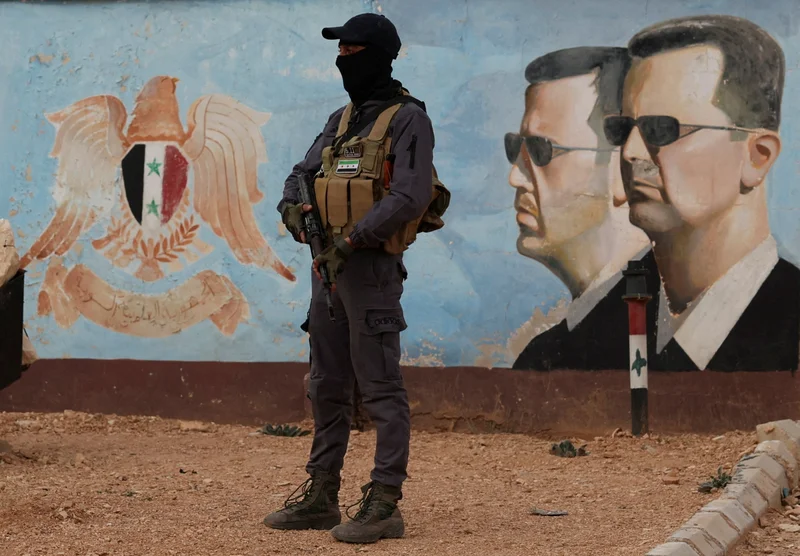
Yet he was too cowardly to face his crimes. His denial has stirred among Syrians anger, fury and disgust, not merely because he refused to acknowledge what he did, but because it reflects the attitude of the entire Assadist apparatus, which denied its crimes wholesale and to the very end. Until his final day in power, former regime leader Bashar Assad himself denied the atrocities unfolding in Syria, appearing on television with his foolish smile and blaming a “global conspiracy.” To this day, not a single figure from the Assadist machinery of repression has acknowledged what they did.
Acknowledging one’s crimes brings some relief to the hearts of victims and the families of the martyrs. This brings us to the question of transitional justice and civil peace, which Syrians, faced with the cynicism and despair that had led them to give up on the prospect of peace, had come to doubt could be anything more than a pipe dream.
They must therefore strive to become peacemakers and consider how they can help build a lasting peace here on earth, across every sphere of society in which it can take root. This is a shared responsibility of the government and society.
Yet civil peace in Syria faces complex challenges stemming from the confessional and political nature of the conflict, the widespread use of violence, international interference, and the weight of collective memory. It remains inseparable from transitional justice, which rests in particular on recognition of crimes and violations, and accountability.
Take the Tadamon massacre, where 288 civilians were killed, as another example. What was equally striking was the reaction of the first defendant’s family, who loudly proclaimed his innocence, insisting that he was merely a powerless soldier who had only been following orders. The reaction of the perpetrator’s sisters provoked among Syrians an anger that, in many cases, exceeded their outrage over intelligence officer Amjad Youssef’s crime itself. And Syrians have every right to ask: How can you deny what is as clear as daylight? How can you place the lives of your own families above all the other Syrians? How can we talk about building a Syria for everyone if you deny the blood that you shed?
To return to Atef Najib, I personally felt a genuine sense of joy, and tears welled up in my eyes when I heard the news. But I will be even happier when Syria has forgotten the faces of the criminals, and happier still when future generations can live safe from ever repeating the same experience.
Najib was merely one element of a vast sectarian apparatus of repression. Many “criminals” remain at large, sheltered by their families and communities, or protected by Israel, as in Suwayda. The reactions of Assad regime supporters to the court’s ruling concerning Bashar Assad reveal the depth of the rift within Syrian society and how far some segments have become disconnected from reality. Some question the court’s legitimacy, others reject its decisions because they reject the current Syrian authorities, while still labeling them an “extremist” government in an absurd attempt to win Western sympathy. The road to rebuilding relations among Syria’s different communities based on respect, coexistence and mutual recognition remains long.
If we look at the experience of other peoples, we understand that the end of a war is not enough, in itself, to establish civil peace. It depends on how the wounds and consequences of the conflict are addressed, and on how new relations are built among the different components of society.
In South Africa, civil peace after apartheid was built around the Truth and Reconciliation Commission, which was based on the principle of “amnesty in exchange for acknowledgement.” It did not, however, place the victim and the perpetrator on an equal footing. Rather, it established a national narrative based on acknowledging wrongdoing and restoring dignity to the victims.
Lebanon took a different path: civil peace there remains fragile despite the official end of the war under the Taif Agreement, because the country adopted an approach based on a general amnesty without accountability, allowing the warlords to retain their positions in the state and society. Civil peace in Lebanon is therefore superficial, while social and political tensions remain, ready to erupt at any moment and in different forms.
In Türkiye, one of the most significant advances in the civil peace process has been the Parliament’s recent adoption of the law on “Strengthening National Solidarity and Social Integration,” as part of the terror-free Türkiye process, with the support of 468 lawmakers, including the political party that has connections to the PKK. Kurdish politicians in Türkiye have freed themselves from Qandil’s grip. The myth of terrorist leader Abdullah Öcalan, whom they had elevated to the status of an idol, has collapsed, and they have chosen the homeland. Will we see the same national vision in Syria?
It is therefore no surprise that Bashar Assad, before him his uncle Rifaat, and today his cousin Atef, deny what they did to Syria and its people: repression, forced displacement and killing. Criminals will deny their deeds until the day of judgment. But until that day comes, we will be consoled to see that justice delivers its verdict against them.
Let us hold them fully accountable, put them behind bars, and turn those prisons into a living reminder of the evil they committed, where future generations can learn so that such atrocities may never happen again. Let them look into the eyes from which noble tears have fallen and confront the reflection of what they have done.