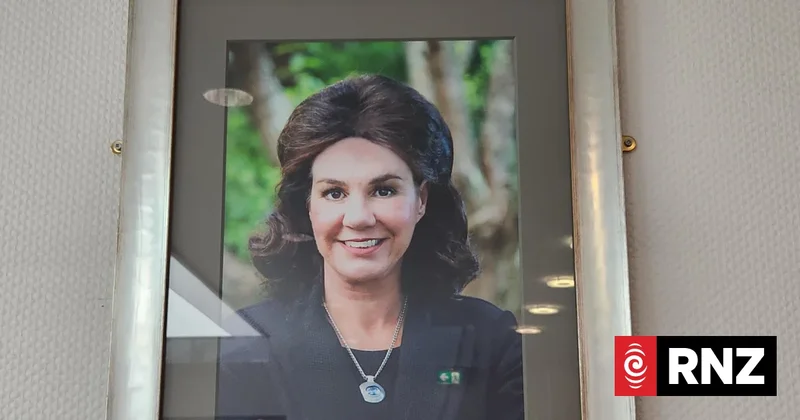
Pauline Hanna 'impaired but not incapacitated' - pharmacologist
A pharmacologist has suggested Auckland health manager Pauline Hanna was impaired, but not incapacitated or unconscious, the night before she was found dead in her Remuera home.
Now a coronial inquest is underway, with Coroner Tania Tetitaha attempting to determine how Hanna died and the circumstances surrounding her death.
At the Coroner's Court in Auckland on Monday, Emeritus Professor Macdonald Christie said Hanna's blood alcohol level at or close to the time of her death was well below the legal driving limit for an adult.
But the pharmacologist said her urine alcohol concentration was higher, suggesting she was intoxicated in the hours prior to her death.
Polkinghorne has previously said Hanna went to her bedroom alone after 10pm on 4 April 2021, and that was the last time he saw her alive.
Giving evidence at the inquest last week, he told the coroner his wife drank one-and-a-half bottles of wine that night.
Zopiclone, a sleeping medication, which she was not prescribed, was also found in her system. Christie said it was very likely she took more than one zopiclone tablet that night, but it was hard to say exactly when.
During her cross-examination, Police Counsel Alysha McClintock asked what Hanna's state might have been if she did consume that amount of alcohol, along with zopiclone.
Christie said he would expect her to experience issues with "balance and gait", "thinking coherently" and "difficulty rousing from sleep". But he said Hanna was not at the point where she could not be woken.
He clarified to Polkinghorne's lawyer, Ron Mansfield, during his cross-examination that she would still respond to a "strong physical stimulus".
"Certainly, if she was touched or shaken, that would be sufficient to wake her, correct?" Mansfield said.
"Yes, that's likely," Christie responded.
"[Zopiclone] hastens and prolongs sleep. The goal of the drug, which it largely succeeds in doing, is to produce as normal as possible a 'sleep state', of which normally we are rousable."
Mansfield asked if Hanna would be coherent enough to fight back if an argument occurred, as McClintock had suggested earlier in the inquest.
"Certainly around the time of death, she could engage in a physical altercation and/or seek to defend herself?" Mansfield asked.
"I would believe so, yes, in some manner," said Christie.
Christie said it was hard to determine exactly how impaired Hanna was as this would depend on how much tolerance she had to both alcohol and zopiclone.
But he said that because of Hanna's low blood alcohol level when she died, if she did drink more than a bottle of wine that night, it was extremely unlikely she died before 1am on 5 April.
He said levels of phentermine - a weight-loss drug - and amoxapine, an antidepressant which she was prescribed, also found in her system were within therapeutic levels.
But he confirmed, when asked by McClintock, no methamphetamine was found in her system at the time of her death.
Polkinghorne has denied throughout the inquest that traces of meth found by police in his wife's bathroom were his.
Much of what was discussed at the inquest on Monday was relating to a possible cause of Hanna's death, which cannot be reported on.
On Tuesday the court was expected to hear evidence from Polkinghorne's sister Ruth Hughes, as well as a forensic pathologist.