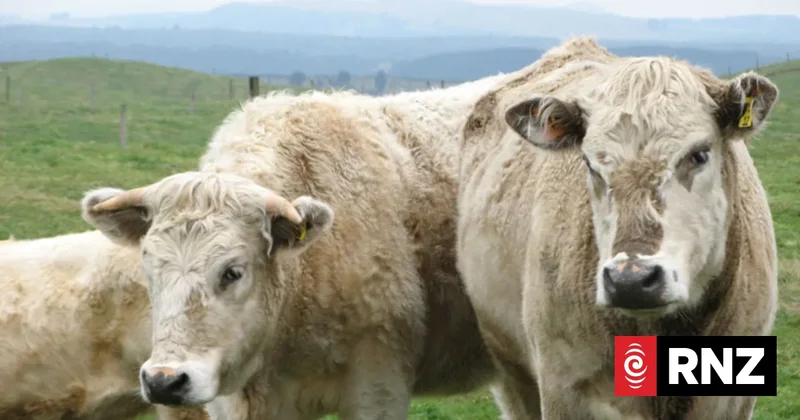
Beef boom pushes up NZ cattle numbers, while sheep flock continues to shrink - new survey
The number of farmed sheep in New Zealand continues to decline, while a global boom for beef is driving up cattle numbers.
It was estimated that Aotearoa had more than 22.7 million sheep and 3.96 million beef cattle, according to Beef and Lamb New Zealand's latest stock numbers survey.
In the year to June, sheep numbers fell an estimated 2 percent, while beef cattle numbers rose 3.3 percent.
The industry group's long-running survey combined livestock numbers from StatsNZ with a representative sample of livestock estimates from around 500 commercial sheep and beef farms.
Chairperson and farmer Kate Acland said the 2025-2026 season was generally favourable for sheep and beef farmers.
** Sheep and beef farmers, how was your 2025-26? Let us know** monique.steele@rnz.co.nz
There were strong livestock prices across beef particularly but also lamb, improved returns for wool, and good feed available for most, she said.
"Good summer and autumn pasture growth supported stock condition, while stronger farm-gate returns enabled some farmers to increase fertiliser use, reduce debt, and strengthen their financial position.
"However, conditions were more challenging in some areas, and high store livestock and input costs continued to pressure margins," Acland said.
Fewer sheep again, at 22.7 million
The North Island's sheep flock fell 3 percent to 11.14 million head in the year to June, driven by a 6.3 percent drop in the Northland-Waikato-Bay of Plenty regions, considered as a whole.
The flock in Taranaki-Manawatū fell 2.5 percent, while the East Coast's was down 1.6 percent.
To the South Island, its flock fell 1.1 percent to 11.64 million sheep.
Numbers were relatively stable in Marlborough-Canterbury, down 0.5 percent, as an increase in hoggets offset part of the decline in breeding ewes.
Sheep numbers in Southland dropped 2.4 percent, while Otago's fell 0.8 percent.
Breeding ewe numbers fell nationwide by 1.9 percent or 268,000 head to 14.15 million, with hoggets down even further at 4.5 percent to 7.67 million head.
The declining number of breeding ewes available could affect the next season's lamb crop; however, it was forecast to be broadly stable at 19.75 million head, down just 0.3 percent, due to an estimated ewe lambing percentage of 132.3 percent.
The outlook for lambing and calving in spring was based on changes in breeding stock numbers, livestock condition and pregnancy scans.
Beef estimates near 4-million mark again
Beef numbers increased across both islands last year, the survey found.
Nationally, it was the third consecutive year of increased beef numbers, reaching the latest peak of 3.96 million head in 2021, which was the highest level in the past decade.
The survey showed there was a 3.2 percent increase in the North Island beef herd to 2.71 million head, in the year to June.
Taranaki-Manawatū recorded the largest North Island increase, up 6 percent, followed by East Coast, which grew 2.9 percent.
The South Island beef cattle herd rose 3.6 percent to 1.25 million head, with a 6.7 percent increase in Southland believed to be driven by more weaners and trading cattle on finishing farms.
Acland said beef cattle rises were supported by strong returns, feed availability and farmers' preference for trading and finishing cattle.
"The world has an insatiable appetite for New Zealand beef, and these results show farmers are responding to strong market signals while continuing to produce high-quality red meat for discerning consumers around the globe."
She said the changes in livestock numbers reflected a longer-term structural shift in the livestock mix and land use.
"Total sheep numbers have fallen 46 percent since 2000-01, from 42.26 million, while beef cattle were 5.6 percent below 2000-01 levels despite increasing in each of the past three years.
"The long-term decline in sheep numbers reflects cumulative land-use change and changing farm policies, including dairy conversion, forestry and native planting, retirement of grazed land, urban development, and farmer decisions around labour, succession, and relative livestock returns."
Previous research by B+LNZ and the Meat Industry Association showed the red meat sector generated $48.7 billion in spending across the economy and supported one in every 20 jobs. It earned $12.8b in exports each year.