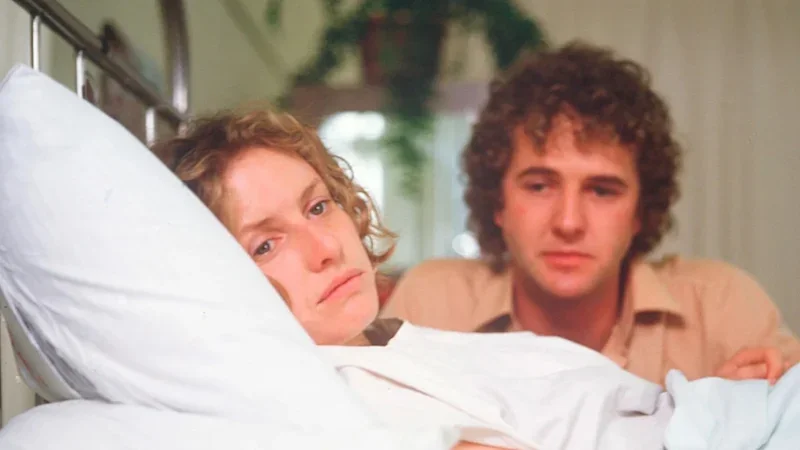
A Country Practice has always been more than a television show to me. Sometimes I think of it as my third parent.
In the world of television discourse, the Golden Age of Television always begins with The Sopranos and “prestige TV”. Australia’s Golden Age of Television was 1981-1993, while A Country Practice screened on Channel 7 (the less said about the “final” season on Channel 10, after the Channel 7 axing of the show, the better!).
A Country Practice, which was inducted into the TV Week Logie Awards Hall of Fame on Sunday night, nearly didn’t happen. Creator James Davern had entered his script In General Practice into a Channel 10 drama competition, where it won third prize and was promptly put on a shelf. Davern, by then an experienced writer and producer on shows such as Bellbird and Rush, knew he had something special and managed to convince Channel 7 to give it a 14-episode order.
The first season of A Country Practice went to air in a non-ratings period, and it didn’t take long for Australia to fall in love with its mix of fresh-faced young stars and industry stalwarts populating Wandin Valley, the fictional town in which it was set.
Channel 7 knew they were on a winner – indeed, the show’s young stars Anne Tenney, Penny Cook, Grand Dodwell and Shane Withington were known as the “fab four” – and quickly increased the show’s order to two hours a week, for most weeks of the year.
JNP Productions would make more than 90 episodes a year of A Country Practice until 1993. Two hours a week for Australia’s producers, writers, directors, designers, set-dressers, props makers, animal-trainers, camerapeople, lighting designers and actors to get really good at making television.
Shot mostly in the outer then-rural suburbs of Sydney, the show settled into a format revolving around the doctor’s practice, the hospital, the vet surgery and the club. What gave the show such longevity and lodged it in the hearts of generations of Australians is that the show – for that bucolic locale – was never comfortable.
The late Davern wanted to make a show the whole family could watch together, and somehow he succeeded. The excellent writers (including Judith Colquhoun, Sheila Sibley, Leon Ford and many, many others) managed to make something that included children and adults, but didn’t go easy on either. The other genius thing Davern did to appeal to the widest audience was having a comedy writer in the story room, and no matter how dark the episode gets, you can be sure there will be a laugh in there somewhere.
For those of us who were children watching it, A Country Practice started out as a show we loved because there was an eccentric wombat called Fatso, a drunk pig called Doris and a lady called Molly who dressed like she was in the circus and was always trying to stop trees being cut down.
As we grew older, it became so much more.
The characters were the adults we wished were in our own lives, and even the blueprints for the adults we aspired to be: Dr Terence Elliot (Shane Porteous), who cared deeply about his patients and his community; Shirley Gilroy (Lorrae Desmond), whether sitting under a pyramid or making a cup of tea for a runaway teen, always had the cheeky, loving advice we needed; Frank Gilroy (Brian Wenzel), the country cop who wanted to help people out of scrapes rather than lock them up; Vicky Dean (Cook), the vet who can be saving a horse’s life one minute and off to marry her doctor beau the next; Esme Watson (Joyce Jacobs), the town’s gossipy spinster with a heart of gold.
And then there were the kids – often foster kids who, with the love of the Wandin Valley community, were able to become upright rabble-rousers fighting for the things they believed in, such as Jo Loveday (Josephine Mitchell) and Luke Ross (Matt Day).
The storylines were kept fresh weekly by a roster of the who’s who of Australian television and film coming on set, often in their first television role, sometimes in their last, often playing several characters across the life of the series. Pre-Dead Calm Nicole Kidman appears in an episode carrying a warning about “sniffing” aerosols, Toni Colette’s first screen role is as a pregnant teenager, Davern liked Georgie Parker so much in a guestie as a violinist that he hired her to play a nurse as a series regular, and Sir Robert Helpmann’s last on-screen role was on A Country Practice, playing an international ballet dancer returning home to Wandin Valley to die.
Oh, and there was that time sitting prime minister Bob Hawke guest-starred as himself, after students at Wandin Valley High School wrote to him asking that he stand up for nuclear disarmament.
It was the storylines that taught us the most.
From 2020 to 2023, podcaster Kim Lester and I made A Country Podcast, initially as something to do while we were locked down, which morphed into a fascinating history of A Country Practice, what went into making it and how it reflected Australia at the time. We both remembered vaguely that we’d learnt about a bunch of things on the show as kids (drugs, cancer, homosexuality, HIV/AIDs, dementia etc) and wanted to find out whether those memories were correct, and how deliberate the show was in educating us.
They were, and it was.
The story team and writers of A Country Practice took the responsibility to communicate with their vast audience seriously. The storylines corresponded to what was happening in society at the time, and stakeholders were brought in to consult on the storylines, to make sure they were treated respectfully and truthfully. Often, they were pitched public health storylines by NGOs and government departments.
A great example of this is when the show took on AIDS in 1988 (episodes I remember vividly, that kept me away from drugs all through my teens).
The AIDS panic was in full force, with the Grim Reaper ads having screened in 1987, and gay men were being shunned and vilified throughout the country. Though Australia’s response to AIDS had been the best in the world, our cultural response was to sensationalise it. Writers had been pitching AIDS storylines, which Davern had been reticent to commission until being convinced by “three female feminist story editors”.
Sophie Eps 1-4 taught Australia that HIV/AIDS was everyone’s problem. A Country Practice gave Dr Terence’s middle class, journalist daughter (Katrina Sedgwick) AIDS – and she’d acquired it via her own hand as a party drug user without a gay man in sight to blame. The episodes took us through the prejudice she copped as an AIDS patient, the facts of the disease and its transmission, and ultimately the effects such a death has on a family and a community.
These episodes also do what the series does in every episode dealing with a contentious illness or issue facing people, and what we could do with today more of: it explores all viewpoints. In an ACP episode, we’ll always hear from the character who has judgments against another, and even though the episode might find that character unchanged, we as the audience are changed by the humanity we’ve seen play out.
A Country Practice is ultimately a show that teaches us to be better human beings: to listen to the facts, to acknowledge each person is trying to do the best they can, and to do what you can to help the people around you be a bit safer and feel a bit more loved.
See? Third parent stuff.
Playwright Melanie Tait’s most recent play, How to Plot a Hit in Two Days (Ensemble Theatre), imagined A Country Practice writers killing Molly Jones, starring Georgie Parker.
Want more TV? We’ve got you.
- Newsletter:Find out the next TV, streaming series and movies to add to your must-sees. Get The Watchlist delivered every Thursday.
- August streaming guide:All the exciting new shows to watch this month.
- Robert Irwin- :He’s nominated for a Gold Logie, and he’s hosting the awards, but can the 22-year-old make the Logies cool again?
- Exit interviews:The winners of- Race Around the Worldand- MasterChef Australiatalk about their biggest challenges and their favourite judges.
- 120 movies to watch right now:Don’t miss our guides to all the best movies to watch on Netflix, HBO Max, Amazon Prime Video and Stan (which is owned by Nine, publisher of this masthead).
- Watch:Deputy TV editor Meg Watson on what’s worth adding to your list right now.