Iran, Kazakhstan advance agricultural ties with focus on extraterritorial cultivation
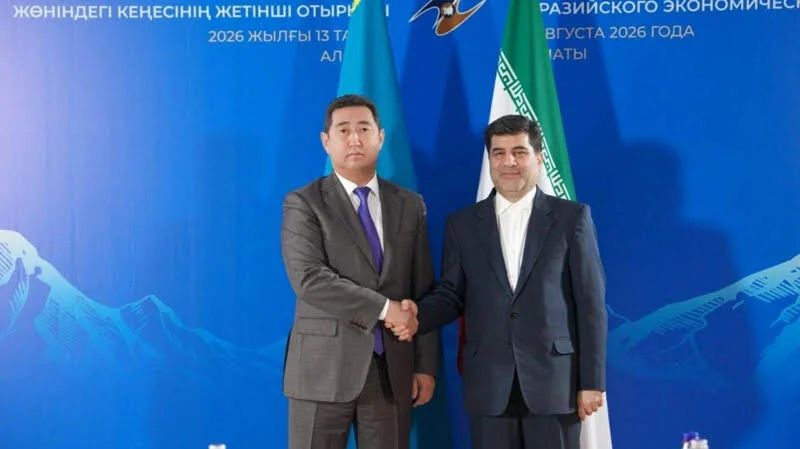
TEHRAN – Iran and Kazakhstan have taken concrete steps to deepen agricultural cooperation, with both sides emphasizing extraterritorial cultivation, joint investment, and expanded trade in agricultural products during a high-level meeting on the sidelines of the seventh meeting of the Eurasian Economic Union's Agricultural Policy Council in Almaty.
The recent meeting between the Iranian Ministry of Agriculture delegation and their Kazakh counterparts comes as bilateral agricultural trade has surged, with Kazakhstan reporting a 55.8 percent increase in agrifood trade with Iran in 2025, accounting for 79 percent of total bilateral trade. Kazakh agricultural exports to Iran rose by an impressive 97 percent during the same period.
Kazakh Agriculture Minister Aidarbek Saparov described Iran as "one of the most promising markets for expanding Kazakhstan's agrifood exports," emphasizing his country's commitment to stable supply volumes and expanded product range.
Iranian Deputy Agriculture Minister Akbar Fathi, leading the Iranian delegation, confirmed Tehran's interest in increasing imports of Kazakh agrifood products and expanding practical cooperation in priority areas.
- Extraterritorial cultivation takes center stage
A key focus of the discussions was extraterritorial cultivation, with both sides emphasizing Kazakhstan's fertile lands and suitable rainfall as ideal for producing grains, oilseeds, and corn.
This aligns with Iran's broader strategy to secure food supplies through overseas farming. Under the Seventh National Development Plan (2023-2027), Iran has targeted two million hectares of extraterritorial cultivation to ensure food security, with Kazakhstan identified as a priority destination. The plan calls for approximately 400,000 hectares of extraterritorial cultivation this year alone.
Iranian officials have previously described Kazakhstan as one of Iran's top priorities for extraterritorial cultivation, citing the country's abundant arable land and favorable climatic conditions. The approach is designed to address Iran's limited water and soil resources, climate change challenges, and growing population pressures.
The discussions also covered expanding exports of Iranian fruits, dried fruits, and greenhouse products to Kazakhstan, creating new market opportunities for Iranian agricultural producers. Fathi emphasized that developing agricultural cooperation among EAEU member states could pave the way for increasing trade exchanges, developing joint investments, and creating new markets for agricultural products.
- Private sector momentum and trade targets
The Almaty meeting follows significant bilateral momentum established during Iranian President Masoud Pezeshkian's December 2025 visit to Kazakhstan. During that visit, the two countries signed 14 bilateral agreements covering transportation, transit, logistics, cultural exchanges, and healthcare, alongside a joint statement committing to deeper collaboration.
A roadmap aiming to boost bilateral trade to $3 billion was prepared during the presidential visit, with both sides emphasizing mobilization of private sector capacities. Current bilateral trade stands at approximately $350-430 million, with significant growth potential identified across multiple sectors.
The private sector has responded positively. During the December 2025 visit, Iranian and Kazakh private-sector representatives signed nine cooperation agreements, including three memorandums of understanding between chambers of commerce and six company-level deals spanning agriculture, mining, copper production, and food processing. One of the agreements is valued at more than $1 billion.
Speaking at the Iran-Kazakhstan business conference in Astana, President Pezeshkian described Kazakhstan as a "strategic partner" and emphasized Iran's commitment to building a sustainable network of cooperation and mutual investment between private sectors of both nations.
- Transport corridors and logistics infrastructure
Beyond agriculture, both sides are working to strengthen transport and logistics links that underpin trade expansion. The International North–South Transit Corridor (INSTC) has emerged as a critical priority, with freight volume along the corridor rising 12 percent to 3.5 million tons in 2025, while rail freight between the two countries grew by 69 percent.
In June 2026 talks, Kazakhstan's Deputy Prime Minister Serik Zhumangarin proposed developing a joint roadmap for modernizing transport infrastructure to increase the corridor's annual capacity to 20 million tons. Kazakhstan is also considering providing Iranian companies with port capacity in Aktau and Kuryk on the Caspian Sea to expand logistics operations.
The China–Kazakhstan–Turkmenistan corridor, which connects to Iran's rail network at the Incheh Borun border crossing, has been identified as another route with strong commercial potential if transport costs can be reduced and incentives expanded.
- Halal food and market access
The discussions also addressed the halal food market, with Iranian officials highlighting that all agricultural and food products in Iran are produced and supplied in halal form, with global demand for halal-certified products increasing significantly. Recognition of halal food within the EAEU framework could provide access to the union's 180-million-plus consumer market, as well as markets in Southeast Asia and West Asia.
Both sides agreed to intensify practical cooperation on seed production, modern agricultural technologies, and advanced farming solutions. Investment cooperation remains another key focus, with both sides interested in joint projects that could create new production and logistics chains in the agrifood sector.
The meetings and specialized programs conducted in Almaty reflect both countries' commitment to strengthening agricultural diplomacy, developing export markets, increasing agricultural trade, and utilizing the joint capacities of the Islamic Republic of Iran and the Republic of Kazakhstan.
Photo: Kazakh Agriculture Minister Aidarbek Saparov meets with Iran's Deputy Agriculture Minister Akbar Fathi, on the sidelines of the seventh meeting of the Eurasian Economic Union's Agricultural Policy Council in Almaty.