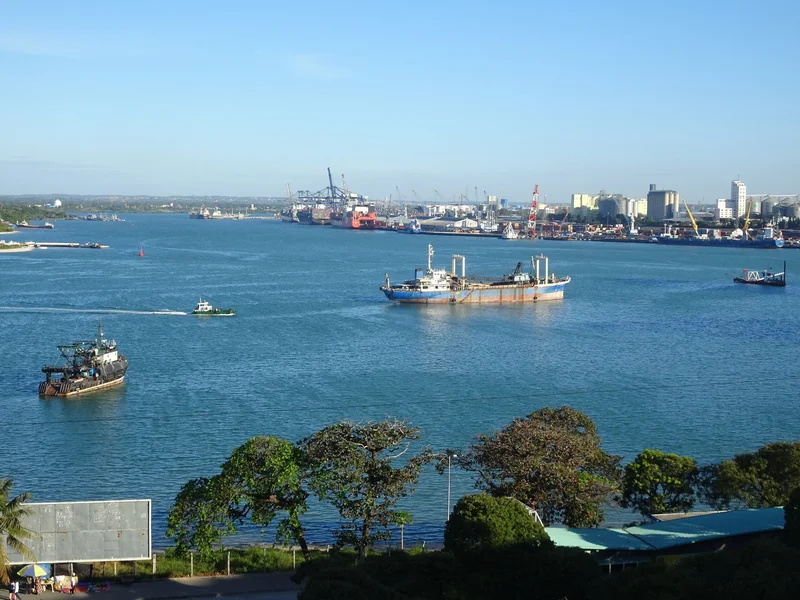
MV Liemba Returns to Lake Tanganyika After US$12.9m Refit
Tanzania · INFRASTRUCTURE
The MV Liemba relaunch timeline and final trials
The ship’s horn sounded over Lake Tanganyika over the weekend of 15 and 16 August 2026 for the first time in more than eight years. Transport Minister Makame Mbarawa was aboard for the phase-one trials.
A final, comprehensive sea-trial phase is scheduled for 19 to 21 August 2026 to ensure compliance with international safety standards. The Citizen reported the rehabilitation as 97 percent complete as of mid-August 2026.
Earlier in June 2026, Kigoma Regional Administrative Secretary Hassan Rugwa said trials would start in July and operations would begin in August 2026. The 1 September date slips about a month against that projection.
Rehabilitation began on 13 July 2024 on an 18 to 24 month schedule. It has run past several targets, delayed by late arrival of components including the shaft and propeller, and by high lake levels that hindered dry-docking.
Who is paying for the MV Liemba relaunch
The Sh34 billion rehabilitation (about US$12.9 million at 2,644.3 Tanzanian shillings to the dollar on 17 August 2026) is fully funded by the government of Tanzania. This marks a departure from earlier overhauls that relied on external donors.
The ship was overhauled between 1976 and 1979, when diesel engines replaced her original steam plant. In 1993 the ship was rebuilt under Danish shipyard OSK ShipTech A/S with Danish International Development Agency sponsorship.
She received new MAN engines and a conversion that raised passenger capacity to 600. The current project sits within a broader stated Sh48 billion package (about US$18.2 million) covering three lake vessels.
That package includes Sh32 billion for Liemba, Sh6 billion for MT Ukerewe and Sh8 billion for MT Nyangumi, totalling Sh46 billion. The Sh2 billion difference from the stated Sh48 billion is not explained; the figure is not an audited total.
Contractors and technical scope of the rebuild
Croatian shipyard M/S Brodosplit JSC is carrying out the overhaul in partnership with Dar es Salaam Merchant Group. DMG director Rayton Kwembe described a complete replacement of propulsion machinery, including engines and generators.
Passenger areas have been fully refurbished with new seating, bedding, and modernised dining facilities. The project is characterised as a rebuild from hull to bridge while preserving the vessel’s historic character and lines.
Once operational, the ship will carry up to 600 passengers and 200 tonnes of cargo per trip. She will run scheduled routes to Bujumbura in Burundi, Kalemie and Uvira in the Democratic Republic of Congo, and Mpulungu in Zambia.
The ship is run by Tanzania Shipping Company Limited, TASHICO, renamed from Marine Services Company Limited on 18 November 2024. Kigoma Port is undergoing a separate US$20 million upgrade, deepening the basin and adding a 150-metre berth so two ships can dock, due in October 2027.
From German gunboat to Tanzanian state asset
The vessel was originally built in 1913 by Meyer-Werft in Papenburg, Germany, as SS Graf von Götzen. She was designed to operate in conjunction with the Ostafrikanische Eisenbahngesellschaft, and was named after Gustav Adolf Graf von Goetzen, a former governor of German East Africa.
During the First World War the Germans converted her into the auxiliary warship SMS Goetzen. They fitted a 10.5 cm gun salvaged from the light cruiser SMS Koenigsberg, an 8.8 cm gun and two 37 mm Hotchkiss revolver guns.
German forces scuttled the vessel in July 1916 rather than surrender it to British forces. The Belgians salvaged her in 1918 and 1919, but she re-sank in a storm in early 1920, and the British raised her on 16 March 1924.
She was relaunched as Liemba on 16 May 1927. The name is recorded as meaning lake in the dialect spoken around Kasanga at the southern end of Lake Tanganyika, probably from the Fipa language.
Regional trade and the Great Lakes logistics race
Lake Tanganyika borders Tanzania, DR Congo, Burundi, and Zambia, making ferry services inherently transnational. Maize moving by truck and small boat costs Sh200,000 a tonne (about US$76) over three days, and a sick passenger travelling to Kigoma hospital pays Sh80,000 (about US$30) by small boat.
In 1997 the UN refugee agency used Liemba alongside MV Mwongozo to repatriate more than 75,000 people who had fled Zaire. Liemba made 22 crossings between Kigoma and Uvira over five months.
In May 2015 the UN hired her to evacuate refugees fleeing Burundi. A theme explored in Africa: The New Scramble.
What to watch after the MV Liemba relaunch
The immediate milestone is the final sea-trial phase from 19 to 21 August 2026. Successful trials would clear the way for the 1 September 2026 commercial relaunch.
Beyond the relaunch, attention will turn to whether the vessel meets its 600-passenger and 200-tonne cargo targets. The broader stated Sh48 billion lake-transport package remains in progress, with MT Ukerewe and MT Nyangumi on Lake Victoria still to be completed.
Those projects will test whether the Liemba model can be replicated across Tanzania’s inland waterways.
Frequently Asked Questions
When will the MV Liemba resume commercial service?
Commercial operations on Lake Tanganyika will resume on 1 September 2026, following final sea trials scheduled for 19 to 21 August 2026.
How much did the MV Liemba overhaul cost?
The rehabilitation totals Sh34 billion (about US$12.9 million at 2,644.3 Tanzanian shillings to the dollar on 17 August 2026), fully funded by the government of Tanzania, according to The Citizen.
Who is carrying out the MV Liemba refurbishment?
Croatian shipyard M/S Brodosplit JSC is carrying out the work in partnership with Dar es Salaam Merchant Group.
Sources
This article was produced by The Rio Times’ automated newsroom system. How we use AI · Report an error
LatAm Markets: Live Signals → — real-time movers, turnover leaders and FX across Latin America.