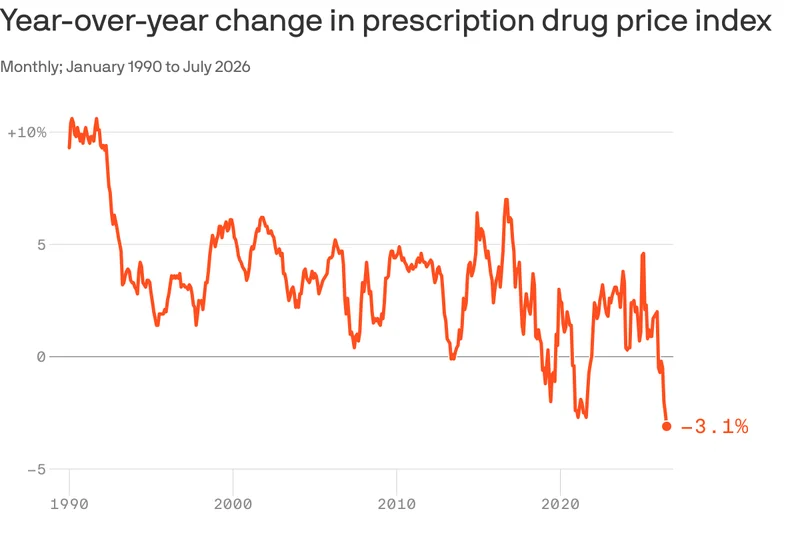
Data: Bureau of Labor Statistics; Chart: Courtenay Brown/AxiosAmerica is experiencing its biggest prescription drug price deflation in generations. Why it matters: By one important measure, there is a striking reversal underway for one of health care's most stubbornly expensive necessities amid a major Washington push to lower drug costs.By the numbers: Prescription drug prices fell 0.8% in July and are down 3.1% from a year ago — the steepest annual decline in more than six decades, according to the recent Consumer Price Index. Prices haven't risen in any month this year, an unusually persistent stretch of flat or falling drug prices.The downward trend comes as costs for hospital and physician services continue to rise.The intrigue: Trump administration officials are taking a victory lap for the price drop, although TrumpRx — the administration's website connecting patients with discounted cash prices for certain drugs — likely only accounts for part of the decline.Eli Lilly and Novo Nordisk also struck deals with the administration that cut cash prices for blockbuster GLP-1 drugs and expanded Medicare access.Those cuts may have added to broader downward pressure on drug prices, though other forces were already at work.Another potential factor: Medicare negotiations established under the Inflation Reduction Act took effect in January for 10 of the program's costliest drugs, with negotiated prices as much as 79% below their list prices.Zoom in: Changes in what Medicare pays pharmacies can show up in the prescription drug CPI.The government tracks the prices that pharmacies receive from patients and insurers, including Medicare, not just what consumers pay out of pocket.Manufacturer rebates paid after the transaction are not captured in the index, the Bureau of Labor Statistics told Axios.What they're saying: Geoffrey Joyce, a USC health economist, said that TrumpRx makes discounts easier to find but often points consumers to prices that already exist."If you were going to give policy credit, you'd have to say the IRA," Joyce said. Still, he added, much of the decline is being driven by market forces.The big picture: As blockbuster drugs lose patent protection, cheaper generics enter the market, a shift the government's inflation gauge is designed to capture.Heated competition in the market for GLP-1 drugs is pushing down cash-pay prices.The other side: White House spokesperson Kush Desai called attributing the decline to the IRA "idiotic and unfounded," arguing that its negotiated prices failed to deliver meaningful savings beyond existing insurer discounts.Desai pointed instead to Trump's most-favored-nation deals, aimed at aligning U.S. drug prices with lower prices overseas, and discounts available through TrumpRx.What we're watching: Falling prices in the aggregate do not necessarily translate into relief for consumers, given the complexity of drug pricing and payments. Six in 10 Americans this spring said they were worried about affording their medications, according to KFF — the largest share since the group began tracking the question in 2018.Four in 10 said that in the past year they hadn't taken medication as prescribed because of cost."People don't care about what the true cost of the drug is," Joyce said. "They just say, 'What's my copay?' or 'What's my cost sharing at the pharmacy counter?'"Caitlin Owens and Adriel Bettelheim contributed reporting.
Why prescription drug prices are plunging