- See more Daily Mail on Google - save us as a Preferred Source
The housing minister today admitted it is 'looking really tough' for the Government to meet its goal of building 1.5million new homes across England over five years.
Matthew Pennycook cast fresh doubt over Labour being able to achieve its key manifesto pledge as he acknowledged it was a 'stretching' mark to reach.
In the nearly two years between Labour's landslide general election victory in July 2024 and June this year, just 392,400 new homes were built across the country.
The Government needs to be building an average of 300,000 new homes each year in order to meet its goal of 1.5million new homes by the end of the current Parliament.
Mr Pennycook insisted that he and his fellow ministers always knew that housebuilding rates would be low in the early years of Labour's time in power.
But he appeared gloomy about construction rates picking up over the coming years, despite him sticking by Labour's manifesto 'ambition'.
He said it was currently a 'really tough' time for housebuilders due to the Iran war pushing up prices and mortgage rates leading to 'sluggish' demand for new properties.
It came as the Government published new measures to try and boost housebuilding in England.
Matthew Pennycook admitted it is 'looking really tough' for the Government to meet its goal of building 1.5million new homes across England over five years
In the nearly two years between Labour's landslide general election victory in July 2024 and June this year, just 392,400 new homes were built across the country
Under the new National Planning Policy Framework (NPPF) published on Monday there will be default approval for homes built within 'reasonable walking distance of well-connected stations'.
The Government also published plans to protect pubs by making it harder for developers to turn them into flats or shops, while the planning system will be streamlined under the new NPPF.
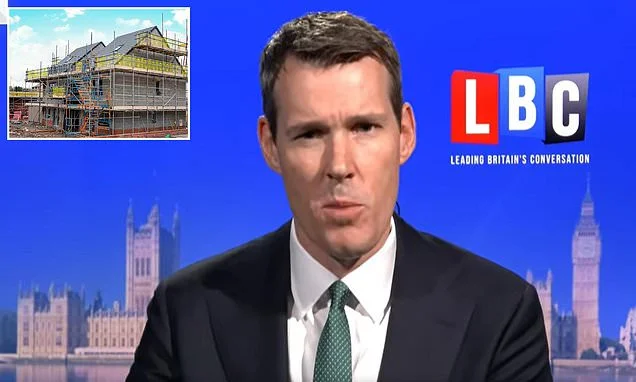
Asked on LBC radio about Labour's target of building 1.5million new homes by 2029, Mr Pennycook said: 'The position of the Government remains the same.
'Look, we didn't set - very deliberately - an annual target of 300,000 homes per year. We set this whole of Parliament target of 1.5 million. We knew in the early years of the Parliament net additional completions would be low.
'We were in a downturn when we came into office. We had to undo some of those changes made by the previous government. The abolition of housing targets has really fed through the development pipeline.
'I've been really honest about this, that target is looking really tough. It was always stretching.
'I think if we'd have set a lower target, say the one million homes target the previous government set, and it didn't manage to hit, albeit not by much, we would have been, I think, castigated for not stepping up to the scale of the housing crisis we face in this country.'
The housing minister added: 'Tackling the housing crisis is nationally imperative. It's a priority for this Prime Minister. But we always knew things were tough, and things are really tough for house builders at the moment.
'Not least given the conflict in the Middle East; materials prices are going up, demand for new homes is really sluggish not least because of mortgage rates. So it's a very, very challenging time for the housing market.'
Pressed on whether Labour was sticking to its manifesto promise, Mr Pennycook said: 'We stick by that ambition that's in our manifesto because I think anything less wouldn't galvanise the sector in the way that we need to push up house building rates to the high and sustainable levels that we need to see them going forward.
'And this planning framework that we're announcing today is a foundational part of what will ensure we've got those high and sustainable rates in the years to come by ensuring that we've got, as I say, a clearer, more certain, more rules-based system for developers to navigate.'
Housing Secretary Angela Rayner said the shift to a 'default yes' to developments around stations in England would help 'tackle the housing crisis and raise living standards'.