Anyone who lives in an estate or complex in South Africa probably knows what a busy WhatsApp group looks like. A dog has been barking for hours. Someone's cat is making noise at night. The neighbours are having a party late into the night. A car is parked where it shouldn't be. Before long, someone has tagged security or asked for something to be done.
But what if the noise coming from next door is a scream? What if what you hear is more than an argument? I think about this often because there was a night when I was the woman somebody heard screaming.
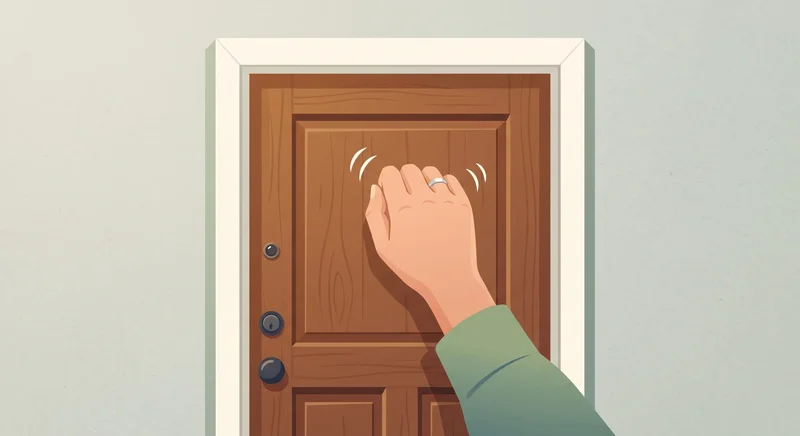
A neighbour heard screams coming from my room. Without knowing exactly what was going on, she could have decided it was none of her business or assumed it was simply a couple arguing. Instead, she recorded the screams and went out to get help. When she saw my son on the balcony, she asked him to check whether everything was okay in my room.
I don't know what would have happened if nobody had checked on me that night but something in me tells me I would not be here to tell this story. I was in danger and I will always be grateful that she heard me and chose to do something about it. What she did was not dramatic. She did not confront the person who was harming me or put herself in danger. She simply made sure that someone came to check. That mattered.
When it comes to other people's relationships, most of us are reluctant to get involved. Couples argue. Families argue. People get angry with each other. I am not suggesting that every raised voice means abuse or that neighbours should interfere every time they hear an argument through the wall.
But I do think we need to question the point at which "none of my business" becomes an excuse not to check if someone is okay.
This is especially worth thinking about in the way many of us live now. In townhouses, complexes, suburbs and estates, we often live very close to other people. Sometimes we share a wall. Sometimes there is only a fence between one house and another. We hear most things happening next door: dogs barking, children playing, doors slamming, music, TV and people talking.
We hear arguments too. Sometimes we hear more than an argument. And yet when we know it involves a couple, we seem to become much more hesitant.
We are quick to raise concerns about everyday disturbances in our communities. But when we hear someone screaming, suddenly we worry about interfering.
Why?
Maybe part of the hesitation is that none of us wants to be the nosy neighbour. We associate that with gossiping, watching what other people are doing or getting involved where we are not wanted. But there is a difference between wanting to know the details of someone else's relationship and wanting to know whether they are safe. If something you hear genuinely frightens you, perhaps worrying about being seen as nosy should not be the thing that stops you from checking.
I understand that people may be afraid of getting it wrong. What if I knock and everything is fine? What if they are embarrassed? What if they tell me to mind my own business? All of those are fair questions.
But I think we also need to ask the other ones. What if someone is not fine? What if the person behind that door is hoping someone can hear? What if all that is needed in that moment is an interruption?
Checking does not have to mean putting yourself in danger. In fact, nobody should do that.
If you know the person, you can call or message them. You can ask another neighbour to help. In an estate or complex, you can contact security. If you genuinely believe someone is in immediate danger, you can even call the police.
The same applies when we are away from home. If you are in a hotel and hear screams or an argument from another room that sounds frightening, alert reception or security and let someone check. You do not have to know the people or know exactly what is happening to raise a concern.
Someone may not be ready or able to ask for help, but that does not mean they do not need someone to notice. We already raise concerns when something affects our homes, our sleep or our security. I wish we could become just as comfortable showing concern when what we hear sounds frightening.
I know what that can mean because somebody did it for me.
Maybe the question is not whether what happens in someone else's relationship is our business. Maybe the question is much simpler.
Is someone okay?
And if you are not sure, check.
**Neliswa Mnukwana is a Johannesburg-based IT analyst, UCT Graduate School of Business MBA Candidate and a writer currently working on a memoir. **