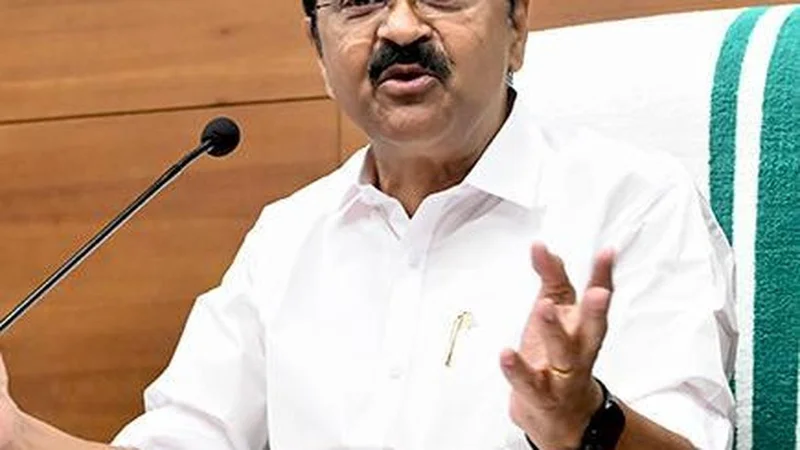
Keralam Chief Minister V.D. Satheesan has written to Prime Minister Narendra Modi urging a relook at the provisions of the Mines and Minerals (Development and Regulation) Amendment Bill, 2026, that “restrict the taxation powers of States over mineral rights and mineral-bearing lands.”
The amendments, the Chief Minister, wrote, have far-reaching implications for the constitutional and fiscal powers of States, particularly their authority to levy taxes and other imposts on mineral rights and mineral-bearing lands.
Section 9D of the Bill, passed recently by Parliament, restricts the ability of State governments to impose any tax, cess or other levy on mineral rights and mineral-bearing lands, except within parameters prescribed by the Union government. The amendments also seek to bring mineral-bearing lands within the ambit of Union government regulation and invalidate certain past State levies that remain uncollected or unpaid. These provisions raise serious concerns regarding the federal distribution of legislative and fiscal powers under the Constitution., he said.
Implications for Keralam
“The amendments will have particular implications for Keralam. The State possesses significant mineral-bearing areas, including the mineral-rich coastal belt around Chavara in Kollam district containing deposits of ilmenite, rutile, zircon, sillimanite, garnet and monazite. Restricting the State’s fiscal authority over mineral-bearing lands could adversely affect State revenues and may also have consequences for levies and revenues accruing at the local-government level,” Mr. Satheesan said in the letter.
The Supreme Court in 2024 had held that royalty payable under the MMDR Act is not a tax and affirmed the legislative competence of States to tax mineral rights under Entry 50 of List II. It also recognised the competence of States under Entry 49 of List II to levy tax on mineral-bearing lands, including on the basis of mineral yield or value, the Chief Minister pointed out.
“The issue goes beyond the immediate question of mineral taxation. Fiscal autonomy of States within their constitutionally assigned fields is integral to cooperative federalism. Any substantial curtailment of the revenue-raising powers expressly assigned to States under List II has implications for the larger federal balance envisaged by the Constitution. A framework under which the extent of a State’s taxation power is effectively determined through parameters subsequently prescribed by the Union government also merits careful reconsideration from the standpoint of constitutional federalism,” he said.
The State government, he wrote, fully appreciated the need for a nationally coherent policy for sustainable mineral development, prevention of excessive or arbitrary levies, and creation of a predictable environment for investment. These objectives, however, should be pursued through consultation and consensus with the States without substantially impairing their constitutionally assigned fiscal powers, Mr. Satheesan said, urging the Prime Minister’s intervention in the matter.
Published - August 17, 2026 08:58 pm IST