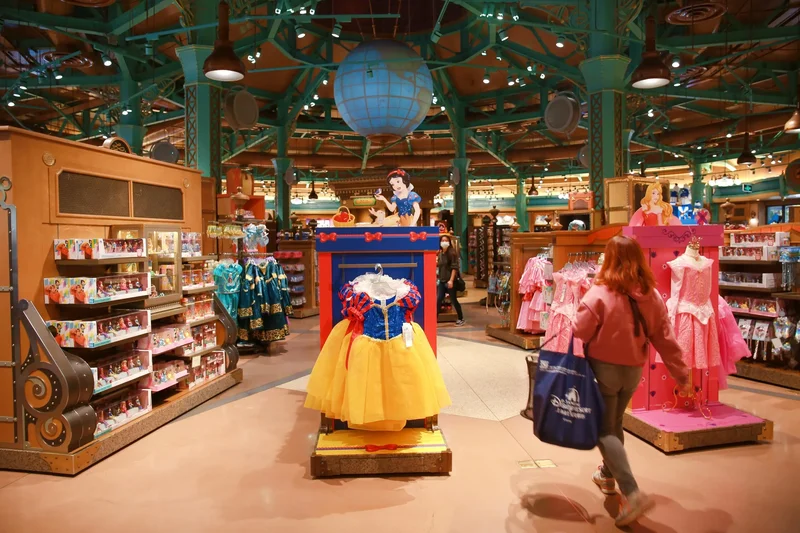
Walk down any toy aisle, and you’ll likely see a plethora of merchandise and products branded to Disney Princess. From classic dolls and play dresses to huggable plush toys and more, Disney Consumer Products’ line of Princess items has captivated minds and emptied wallets for decades. But gone are the days of Disney Princess being exclusive to little girls who wish to star in their own fairytale. Today, Disney Princess has global reach with a merchandise pipeline for children all the way to adults.
When the Disney Princess brand was formed in 2000, it featured eight princesses (Ariel, Belle, Cinderella, Jasmine, Mulan, Pocahontas, Sleeping Beauty and Snow White), and today it has grown to showcase 13 princesses (the original eight, plus Moana, Rapunzel, Tiana, Merida, and Raya). During the initial formation of the brand, $300 million of individual Princess merchandise was sold. Then just five years after the larger brand umbrella was formed, Disney Princess passed $3 billion in worldwide product retail sales.
“Disney Princess has grown into a global lifestyle brand that connects with consumers across generations. Through products and experiences that extend Disney storytelling beyond our films and parks, we’re creating new, meaningful ways for fans and families to connect with beloved Princess characters in their everyday lives,” says Paul Gitter, Executive Vice President of Brand Commercialization, Disney Consumer Products.
Disney Princess products range in style from play, fashion and beauty to home, accessories and collectibles, making the brand accessible for nearly anyone at any stage of life. And since the brand is an evergreen franchise, the Princess-themed products are relevant year-round, whether they are for children or adults.
In recent years, the brand has morphed into a massive money maker for Disney Consumer Products, which is also the world’s top licensor. In fact, in 2025, Disney Princess generated more than $1 billion in retail sales globally, Gitter shares. While this is a small portion of Disney Consumer Products’ $63 billion in 2025 retail sales, it still shows the enduring power of a princess. Sales have peaked around 100 million in recent years. “Put another way, recent sales could place a Disney doll in the hands of nearly every child in the U.S.,” says Gitter.
Creating Lifetime Consumers
Over the past few years, Disney has continued to expand its Disney Princess products for adults through branded collaborations with companies like Pandora, Little Words Project and Bath & Body Works, along with collector items like dolls made in partnership with American Girl and fashion house Viktor&Rolf.
“Our strategy is to continue serving the core audience of young kids, while building more relevant product expressions for older fans and adults through fashion, beauty and more,” says Gitter.
These strategic collaborations not only bring thoughtful products to the marketplace, but may also bring adults who drifted away from the brand back to Disney Princess thanks to a sense of nostalgia for a favorite movie or character. The collaborations also bring meaningful Disney-branded touch points for those who may already be fully interacting with the company. Disney is essentially meeting fans where they already spend a majority of their time, at work or at home.
The adult-centric products are often limited-edition or available for a short time, making the urge to purchase strong for those who already have an affinity for Disney. For instance, when Disney Princess released its first collaboration with Bath & Body Works in 2025, the products instantly went viral. The initial line of 85 products, inspired by six princesses, included candles, soaps, decor and more. This caused plenty of online buzz, translating to lines out the door at brick-and-mortar stores and a sold-out online store within hours.
Outside of sales, the longevity of Disney Princess for a single consumer can be pointed back to the brand’s ability to grow naturally with its audience. Parents may buy dolls and play sets themed around Disney Princess for their children. Those same children may then go on to buy royal-themed accessories as tweens and teens, and continue to purchase home goods and luxury products as adults, making them lifetime consumers of the brand.