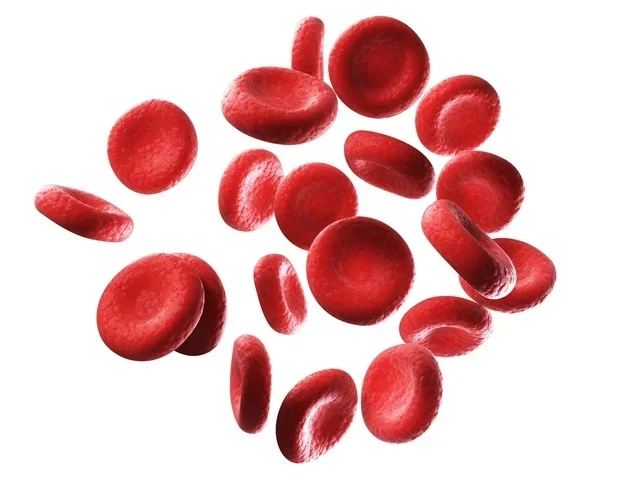
Red blood cells serve as the foundation for nanocarriers that show promise in a new study as effective and efficient vehicles for gene therapy, tumor targeting and other medical treatments.
Scientists at The Ohio State University showed that the engineered extracellular vesicles could evade immune cells and target cancer cells, two capabilities that could improve the delivery of future therapies.
The technology offers exceptional flexibility: By assembling the vesicles from red blood cell lipids using microfluidics, researchers were able to package cargo ranging from genetic material and proteins to whole viruses used in gene therapy.
In mice, the engineered vesicles remained in circulation and were distributed to multiple organs in patterns similar to those of naturally occurring extracellular vesicles, with notable accumulation in the lungs.
Though researchers started with the idea of making delivery devices out of natural extracellular vesicles generated by red blood cells, they encountered limitations in efforts to scale up production and cargo loading flexibility – so they turned to engineering techniques to improve upon what nature had to offer.
In terms of lipid composition, they basically match very closely with what the natural extracellular vesicles from red blood cells would have. We are keeping some of the great biological advantages that these particles have by themselves because they are very biocompatible."
Eduardo Reátegui, senior author, professor of chemical and biomolecular engineering at Ohio State
The source cells for the lipids are expired red blood cells – or RBCs – obtained from the lab of co-author Andre Palmer, professor of chemical and biomolecular engineering and an Ohio Eminent Scholar at Ohio State.
"We're always purifying hemoglobin from expired red blood cells," said Palmer, whose lab uses the hemoglobin as a building block for making red blood cell substitutes. "The approach here is very sustainable because these expired red blood cells otherwise would be thrown out since they cannot be transfused into patients."
Reátegui, Palmer and colleagues described the platform in a study published recently in the journal Advanced Healthcare Materials.
Extracellular vesicles (EVs) are tiny cargo-containing particles that emerge from cells to transport signals to other cells. EVs are known to contribute to both health and disease, and the Ohio State team has been investigating how engineered EVs can be used in a variety of medical applications.
Beyond the biocompatibility provided by red blood cell lipids, microfluidics enables therapeutic cargo to be incorporated as the vesicles form, eliminating the need for separate cargo-loading steps afterward.
"We're not saying our process is better. We're claiming that we have a lot more controllability in terms of what we want the composition of this engineered vesicle to look like," said Reátegui, also a member of the Cancer Biology Program in The Ohio State University Comprehensive Cancer Center.
Experiments showed that attaching a CD47 peptide to the carriers' outer surface protected them from being mistaken for pathogens and eaten by macrophages.
The team also showed that the vesicles could be engineered for tumor targeting by adding PD-L1-recognition molecules, including anti-PD-L1 nanobodies developed in the lab of co-author Blaise Kimmel, and by demonstrating preferential uptake of anti-PD-L1-tagged vesicles in PD-L1-positive breast cancer tumors that are often targeted by immunotherapy.
In fact, researchers said these engineered EVs could function similarly to cancer CAR T-cell therapies that are made from a patient's own immune system T cells.
"It could be a unique way of using a person's own red blood cell lipids to then encapsulate therapeutic materials that could be delivered back to that patient to potentially cure a disease," Palmer said.
The microfluidics method also enables inclusion of comparatively large molecules, such as whole proteins or even an adeno-associated virus (AAV) – the established delivery system for many gene therapies. Encasing a therapeutic AAV inside an engineered red blood cell extracellular vesicle tagged with the CD47 peptide could reduce the chances of triggering an immune response, Reátegui said.
"Our thought was to take these AAV particles and encapsulate them inside engineered RBC extracellular vesicles. We tested if the gene therapy would still work and be delivered into cells, and we show that it would. And we also demonstrated that the AAVs would be protected from neutralizing antibodies," he said.
With the platform in place, the researchers aim to narrow their focus to gene therapy and delivery of select therapeutics, particularly those that capitalize on the EVs' affinity for the lungs.
This research was supported by the National Center for Advancing Translational Sciences, and Ohio State's William G. Lowrie Department of Chemical and Biomolecular Engineering and Comprehensive Cancer Center.
Co-authors include Chiranth Nagaraj, Xilal Rima, Kim Nguyen, Courtney Culkins, Nana Boateng, Jacob Doon-Ralls, Alejandro Bresolin, Xin Huang, Vahedi Amid, Ajeet Pal Singh, Dharti Shantaram, Anastasiia Amari, Nicholas Merriam, Zachary Schultz, Willa Hsueh, Rachel Kopec of Ohio State; and Hong Li, Scott Harper, Nizar Saad and Setty Magaña of Nationwide Children's Hospital.
Source:
Journal reference:
Nagaraj, C. K., et al. (2026). Microfluidic Nano‐Assembly of Red‐Blood‐Cell (RBC) Lipids and Components for Engineering Extracellular Vesicles. Advanced Healthcare Materials. DOI: 10.1002/adhm.202504351. https://advanced.onlinelibrary.wiley.com/doi/10.1002/adhm.202504351