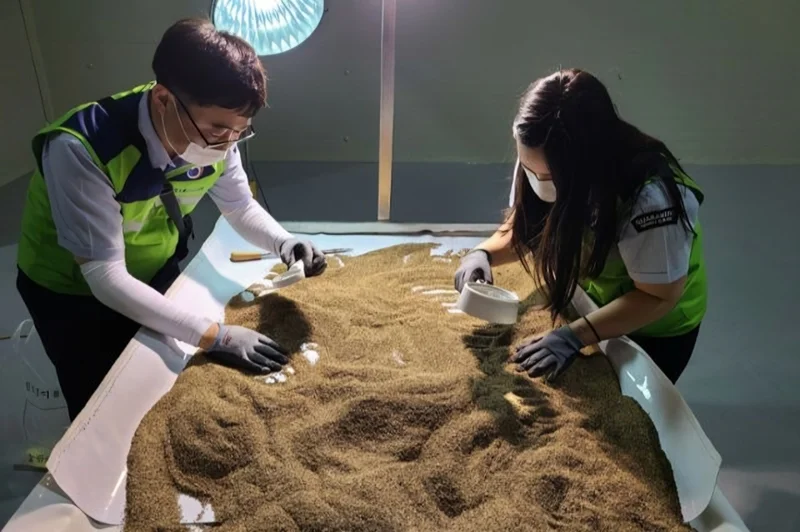
As climate change accelerates the spread of crop-destroying pests across sub-Saharan Africa, Korea is stepping in with scientific expertise to help secure the continent’s fragile food supply.
The Rural Development Administration (RDA), Korea’s national agricultural research agency, said Tuesday that it signed a memorandum of understanding with the Nairobi-based International Centre of Insect Physiology and Ecology (icipe) to expand joint research into insect science and pest management.
Under the agreement signed in Seoul by RDA Administrator Lee Seung-don and icipe Director General Abdou Tenkuano, the two organizations will collaborate on developing innovative pest monitoring techniques, biological control agents and eco-friendly pesticides. The partnership will also extend beyond pest eradication to encompass beneficial insects, focusing on apiculture, crop pollination and high-value research into insects used for food, livestock feed and fertilizers.
The collaboration comes as rapidly shifting climate patterns exacerbate pest outbreaks across Africa, threatening crop yields in regions already grappling with food insecurity. Founded in 1970, icipe is widely recognized as a global leader in insect physiology and ecology, acting as a vital research hub connecting local institutes across Africa with international partners.
By linking RDA’s extensive experience in developing and disseminating practical farming technology with icipe’s vast African network, Korea aims to strengthen its international development initiatives. In particular, the partnership is expected to bolster field inspections and provide technical advisory services for pest management projects across member nations of the Korea-Africa Food & Agriculture Cooperation Initiative.
Korea hopes the joint venture will serve as a sustainable blueprint for international agricultural aid — moving away from simple food relief toward building long-term technological resilience against environmental threats, according to the RDA.
“This agreement holds profound significance as it establishes a strategic foundation for joint insect research in Africa,” said the administrator of the RDA. “By sharing our research capabilities and technical expertise, we intend to expand scientist exchanges and continuous joint projects to generate meaningful synergies in global insect science.”
This article was published with the assistance of generative AI and edited by The Korea Times.