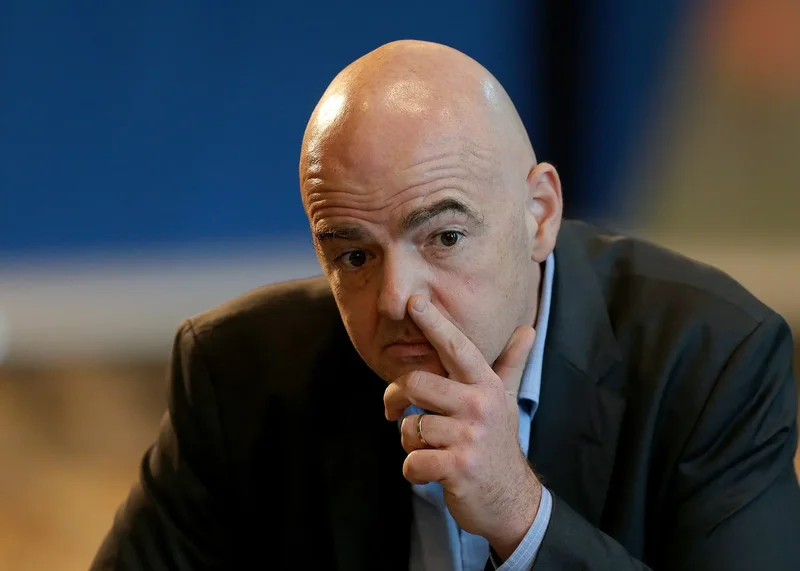
Football’s premier global spectacle, the FIFA World Cup, has undergone significant transformation over the last few years. After expanding from 32 to 48 teams for the 2026 edition in North America, FIFA President Gianni Infantino has signaled that a further jump to 64 teams for the 2030 tournament, marking the centenary of the first World Cup in Uruguay which featured 13 invited teams in 1930, is under serious consideration. This proposal, heavily championed by CONMEBOL, would result in 128 matches and dramatically reshape qualification, logistics and the tournament’s character.
The 2030 event is already groundbreaking, spanning six countries across three continents. Primary hosts Spain, Portugal and Morocco, with centenary opening matches in Argentina, Paraguay and Uruguay. A 64-team format could allow South American nations to host full groups, amplifying the celebratory spirit. Infantino has praised the 48-team 2026 tournament as a “huge success,” noting strong performances from smaller nations and arguing that “every nation should be allowed to dream.” He emphasised making the World Cup “for the whole world, not just Europe and South America”.
In the pros of expansion, proponents highlight inclusivity and development. More teams provide opportunities for emerging football nations, boosting investment in grassroots programs, infrastructure and youth development. African teams, for instance, thrived in 2026, with nine out of 10 advancing from groups, demonstrating narrowing global gaps.
Economically, additional matches generate substantial revenue through broadcasting, sponsorships and tourism, which FIFA can redistribute to member associations. For smaller confederations like OFC and parts of CAF, AFC and CONCACAF, extra slots create tangible pathways to glory, fostering national pride and unity. A 64-team format could ensure broader representation, turning the tournament into a true global festival, especially fitting for the 100th anniversary.
However, the cons of expansion invite critics to strongly argue that quantity dilutes quality. More teams risk uncompetitive matches, reducing excitement and prestige. Player welfare is a major concern. Expanded schedules strain calendars already packed with club football, leading to fatigue, injuries and diminished performance. These are issues already voiced with the 48-team format. Logistically, cramming 128 games into a similar time-frame poses challenges for travel, recovery and venue demands. Qualifiers lose credibility, particularly in stronger confederations, potentially devaluing the path to the finals. Commercial risks include audience fatigue from too many games and the format could prioritize volume over elite competition, shifting focus from sporting merit to commercial expansion.
The views of the continental confederations also paint a dynamic picture. CONMEBOL (South America) is strongly supportive. President Alejandro Domínguez has called a 64-team tournament his “dream,” * framing it as a one-time centenary celebration to unite the world. * “I dream of a World Cup with 64 teams. I believe it’s a great opportunity to do something that unites the world, to bring football to more people, and to have a completely different kind of celebration
.”The proposal aligns with giving South America more hosting prominence.
UEFA (Europe) is firmly opposed. President Aleksander Čeferin labeled it a “bad idea,” warning it would damage the tournament’s quality and devalue qualifiers. “It’s not a good idea for the World Cup itself and it’s not a good idea for our qualifiers as well.” UEFA prioritizes maintaining high standards and competitive integrity.
From the African continent, CAF is generally positive toward expansion, as it promises more slots and builds on strong 2026 showings. While specific quotes on 64 teams are limited, CAF benefits from greater representation and aligns with Infantino’s global inclusion push, viewing it as a chance to showcase African talent and development.
AFC (Asia and Australia) is cautious and opposed to rapid change. President Sheikh Salman bin Ibrahim Al Khalifa warned against opening the door to endless growth: “If the issue remains open to change, then the door will not only be open to expanding the tournament to 64 teams… It would become chaos.” AFC values stability after securing a strong 2026 allocation.
CONCACAF (North, Central America, Caribbean), opposed. President Victor Montagliani stated, “I don’t believe expanding the men’s World Cup to 64 teams is the right move for the tournament itself and the broader football ecosystem, from national teams to club competitions, leagues, and players.” He advocated assessing the 48-team format first.
OFC (Oceania) is likely supportive, as additional slots would provide more automatic qualification opportunities for nations like New Zealand, enhancing visibility and development in a smaller confederation.
These positions reflect a divide: developing regions favor growth for opportunity, while traditional powerhouses emphasize quality and sustainability.
In my view, a World Cup should consist of fewer teams, not more, to preserve its elite status. Expanding dilutes the pinnacle nature of the competition, where only the very best compete. Players deserve fresher legs on game days. The current packed calendars already risk burnout and further matches exacerbate this. Authentic football principles should be restored, focus on merit, skill and endurance without excessive commercialization. Hydration breaks and extended halftime shows, which interrupt the flow and spectacle, should be done away with to honour the game’s pure rhythm and intensity. Video Assistant Referee (VAR) use must be minimised and standardised to balance justice and fairness. Football thrives on rarity and excellence, not ubiquity.
The debate over 2030 will test FIFA’s balance between global reach and sporting integrity. Whether 64 teams materialize or not, the conversation underscores football’s evolving identity in a connected yet competitive world. As Infantino notes, the tournament belongs to everyone but its magic lies in the challenge of earning a place among the few.