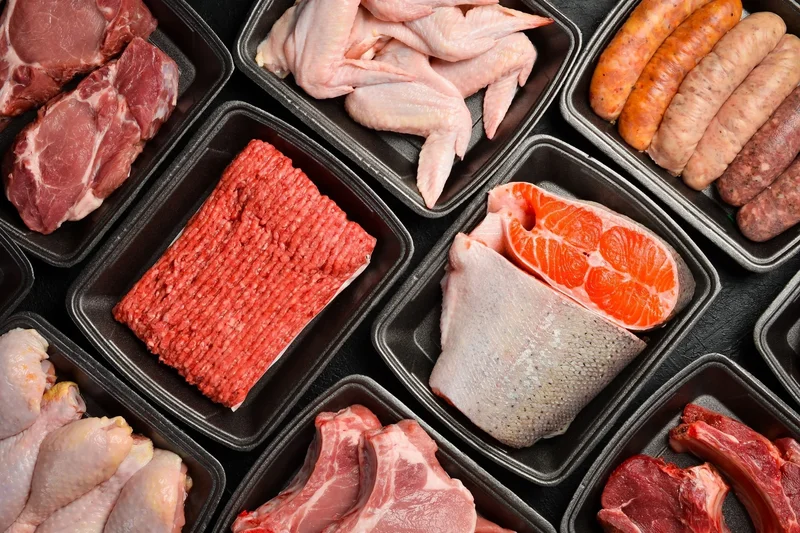
Decades of follow-up suggest that cutting back on red and processed meat may offer modest longevity benefits, while completely excluding these foods showed more selective and less consistent advantages.
*Study: Associations between White Meat-Only and Vegetarian Diets with Mortality from All Causes, Heart Diseases, Cancers, and Stroke in the American Cancer Society’s Cancer Prevention Study-II. Image Credit: YARUNIV Studio / Shutterstock *
In a recent study published in the journal Current Developments in Nutrition, a group of researchers in the United States examined associations between different levels of red and processed meat intake, white-meat-only diets, and vegetarian diets and mortality from all causes, cancers, heart disease, and stroke.
Background
What is the effect on health when red and processed meats are reduced or removed from the diet? Dietary guidance encourages limiting these foods. Higher intake has been associated with mortality from all causes, cardiovascular diseases, stroke, and cancers.
The International Agency for Research on Cancer classifies processed meat as carcinogenic and red meat as probably carcinogenic for humans. However, associations between mortality and diets consisting only of white meat (poultry or fish) or no meat remain uncertain.
Past studies present conflicting results, especially regarding heart diseases, cancer, or stroke. More research is needed to clarify these associations.
About the study
The American Cancer Society (ACS) Cancer Prevention Study-II (CPS-II) was a prospective cohort including 1.2 million participants from all 50 states, the District of Columbia, and Puerto Rico.
Participants aged 30 and older filled out questionnaires in 1982 about their demographics, tobacco and alcohol usage, dietary habits, various lifestyle factors, their medical history, and their environment.
The analytic cohort excluded participants with incomplete dietary reporting, implausible weight or height or body mass index (BMI) below 18.5 or at least 60 kg/m2, incomplete smoking information, or ages outside the specified follow-up range. Diet was assessed using a 28-item questionnaire.
Participants were classified as no-meat/vegetarian, white-meat-only, or red/processed-meat consumers, with low, moderate, or high intake. These were questionnaire-based categories: the no-meat/vegetarian group could include participants reporting one or two flesh-food items only occasionally, once a month or less, while the white-meat-only group could include those reporting one or two red/processed meat items at this frequency.
Deaths through December 31, 2020, were identified through personal inquiries, death certificates, and linkage with the National Death Index (NDI). Mortality outcomes included all causes, heart diseases, cancers, and stroke, classified using International Classification of Diseases (ICD) codes.
Researchers used statistical models to compare mortality risk across dietary groups, with high red/processed meat intake as the reference group. The analyses accounted for demographic, lifestyle, health, and BMI factors and examined whether associations differed across major population subgroups. Sensitivity analyses assessed the consistency of the findings across different analytical conditions.
Study results
Among 988,378 participants, 45% were male, while the median baseline age was 56 years, and the average follow-up was 27.5 years. Most participants consumed red and processed meat, with 37%, 31%, and 31% classified as high, moderate, and low consumers, respectively. Only 0.9% consumed white meat only and 0.4% were classified as no meat/vegetarian. Nearly two-thirds of white meat-only and vegetarian participants had a healthy weight.
During follow-up, 626,017 deaths occurred. Heart diseases and cancers were the leading causes of mortality. Age-adjusted analyses initially showed a dose-response pattern, but most associations weakened after adjusting for demographic, lifestyle, health, and BMI factors. After full adjustment, low red/processed meat intake was the only dietary category that remained significantly associated with each mortality outcome in the overall analyses.
Compared with high red/processed meat intake, low intake was associated with lower mortality from all causes, heart disease, cancer, and stroke in several subgroups. Overall, low red/processed meat intake was associated with a 4% lower risk of death from stroke.
The associations with all-cause mortality varied according to sex, BMI category, smoking status, age group, and age reached during follow-up. Moderate and low red/processed meat intake were associated with lower all-cause mortality among males and females, those with healthy weight, former smokers, those aged 50-64 or at least 65 years, and participants attaining either below 80 or at least 80 years.
Compared with high red/processed meat intake, white-meat-only intake was associated with a 7% lower risk of all-cause mortality among males, a 5% lower risk among those with healthy weight, and a 6% lower risk among both those aged 50-64 years and those who reached at least age 80 during follow-up.
A vegetarian diet was associated with a 6% lower risk of all-cause mortality among participants aged 50-64 years; other associations with vegetarianism were not significant.
For heart disease mortality, moderate or low red/processed meat intake was associated with lower risk in several subgroups, including participants with healthy weight, older age groups, and those attaining age at least 80 during follow-up.
Low intake was associated with higher heart disease mortality among participants younger than 50 years. White-meat-only and vegetarian diets were not significantly associated with heart disease mortality. For cancer mortality, low red/processed meat intake was associated with a 2%-5% lower risk across several subgroups.
White-meat-only intake was associated with a 9% lower risk of cancer mortality among participants who reached at least age 80 during follow-up, whereas vegetarian diets were not associated with cancer mortality.
Sensitivity analyses were broadly consistent with, but did not uniformly reproduce, the main findings. Excluding the first 2 years of follow-up produced largely similar results, although vegetarian diets became associated with higher all-cause mortality among former smokers and higher cancer mortality among participants younger than 50 years.
Among long-term nonsmokers, some associations became nonsignificant, while a vegetarian diet was associated with a 20% lower risk of all-cause mortality among participants with obesity.
Conclusions
In the CPS-II cohort, limiting red and processed meat intake was associated with small but significant reductions in mortality from all causes, heart diseases, and cancers, while low intake was associated with lower stroke mortality.
White-meat-only diets were associated with lower all-cause mortality in some subgroups and lower cancer mortality among those attaining age at least 80 during follow-up. Vegetarian diets showed few significant associations.
Excluding red and processed meat was associated with possible additional mortality benefits in some groups, but the findings do not establish causation. However, the small number of participants on white-meat-only and vegetarian diets, limited dietary detail, possible dietary misclassification, residual confounding, and reliance on a single baseline dietary assessment in 1982 support the need for large studies with repeated, more detailed measures of diet quality.
Journal reference:
- Kelly, C. C., Sabaté, J., Hartman, T. J., Patel, A. V., Um, C. Y., & Shams-White, M. M. (2026). Associations between white meat-only and vegetarian diets with mortality from all causes, heart diseases, cancers, and stroke in the American Cancer Society’s Cancer Prevention Study-II. Current Developments in Nutrition. 10.DOI: 10.1016/j.cdnut.2026.109438, https://cdn.nutrition.org/article/S2475-2991(26)01803-2/fulltext