Australians who don’t want to see gambling ads online will be able to opt out with a new “AdStop” regime but the government will be scrambling to design a workable scheme and deal with privacy concerns as its wagering laws become mired in complexity.
Last-minute amendments will not block freebies for punters as former addicts and their families had hoped. A new rule stopping inducements for problem gamblers still needs a definition of high-risk customers to give it teeth, setting up a fresh fight with the gambling industry.
The amendments were introduced on Tuesday in a compromise deal between Prime Minister Anthony Albanese and Angus Taylor. The opposition leader also signed off on Labor’s National Disability Insurance Scheme overhaul, which was due to pass the Senate on Tuesday night, in exchange for the government expediting moves to rid a “widow’s tax” from tax changes.
Labor was forced to amend its gambling legislation after a Senate inquiry into the laws this month heard alarming testimony about addicts, including former NRL player Luke Bateman, being lured into wagering with drugs, escorts and thousands of dollars in free bets.
More than three years after the late Labor MP Peta Murphy’s bipartisan report recommended a total ban on gambling ads and inducements, the Labor caucus signed off on the changes.
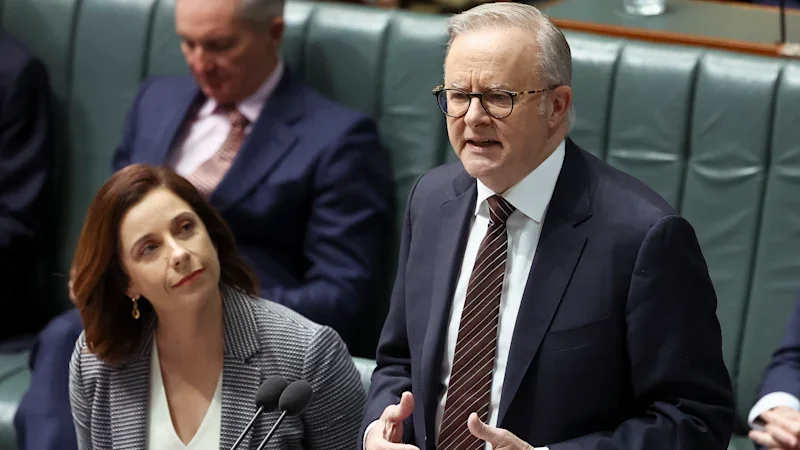
Albanese told MPs the government had struck a balance between protecting children and permitting Australia’s betting culture, and told parliament that the revised package was “the most significant gambling advertising reform by any Australian government ever”.
Some Labor MPs said the changes were a good start and could be strengthened over time, but several were downhearted. Others said the government’s late changes made the package so complex as to be unworkable.
In a sign of discontent about the final bill and the fractious process leading up to it, some Liberal MPs yelled complaints in question time as the prime minister talked up the reform. Cook MP Simon Kennedy heckled Albanese about having been embarrassed into strengthening the bill.
All the independent crossbenchers, many of whom have campaigned for stronger gambling action, voted against the bill when it came to the House of Representatives on Tuesday night. “Only three hours of debate after three long years of waiting,” said Curtin MP Kate Chaney.
“Trust in politics is eroded when the major parties do deals like this on legislation that are made for political convenience, not based on evidence.”
They were joined by the Greens, Nationals MP Pat Conaghan and Liberal MP Andrew Wallace, who crossed the floor against Coalition policy for the first time in his 10-year parliamentary career, saying the amendments “don’t go anywhere near” fixing problem gambling.
“I can’t in good conscience vote for [the bill],” Wallace said.
Under the original package announced in April, viewers will see no more than three gambling ads per hour on television. There will also be a phased-in ad ban for stadiums and jerseys, a ban on sports stars promoting wagering, and tighter limits on radio ads in school pick-up hours. Online platforms will have to offer registered adult users the option of opting out of digital ads.
A further amendment applies the same hourly ad limit to television and online streaming services, after the Coalition pushed Labor to reverse its plans to give streaming services carte blanche if registered users didn’t opt out of watching gabling ads.
Viewers won’t see gambling ads for 15 minutes before a game – an extension from the previously planned five minutes – and hourly ad limit will start an hour earlier, at 5am.
The laws will have to be reviewed in three years and betting companies will be levied to pay for compliance of the online advertising opt-out regime.
Betting inducements
Opposition communication spokeswoman Sarah Henderson said the Coalition was “very pleased to have prosecuted these amendments in the best interests of all Australians”.
“We heard some damning evidence, including from the likes of Mr Bateman, so this, for the first time, combats predatory inducements,” she said.
But the new rules for betting inducements – which include free bonus bets and the services of VIP agents – dismayed advocates who wanted an all-out ban, recommended by the late Labor MP Peta Murphy’s 2023 report.
In addition to banning inducements for risky gamblers, gambling companies will have to wait 14 days after someone opens an account to offer them any promotions. There will be a 90-day wait time for people attempting to move off the self-exclusion platform BetStop.
Reform advocates argue the industry cannot be trusted, given evidence to the Senate inquiry about problem gamblers lured with free bets. One person was offered $50,000 in free bets despite losing about $500,000 in a month.
The government will move to define high-risk gamblers in law, sources said. But the threshold has not been determined. It could gauge someone’s betting frequency, for example, or how much money had been drained from their bank account.
Given promotions represent about 30 per cent of turnover for the racing industry, this will set up a fresh fight between the government and gambling sector, which will push officials to adopt existing thresholds already used in some states and territories.
Independent MP Allegra Spender said either way the law would not intervene until people had already become problem gamblers.
“We are literally providing the pathway ... for people’s lives to be ruined by gambling, and then say: ‘Oh, by the time that you get there, we’ll see if we can do anything to make this a little bit easier for you’,” she said.
“The government has an option. The opposition has an option. It could just go out there and ban inducements altogether ... It is deeply disappointing to all the people who came and gave their time and effort to all the inquiries.
“Because we could be making Australians safer right now, and we have chosen not to, and that is a decision that has been made by the major parties.”
Advertising opt-out
The other amendment that will create a technical headache for the government is the opt-out regime. This was another push from the Coalition, concerned that people would be reluctant to opt out of advertising across all their online accounts.
The “AdStop” scheme will be administered by the Australian Communications and Media Authority, using funding from a levy to be imposed on gambling companies.
Government sources said it could involve people nominating either their email address or mobile phone number to the ACMA register. Online platforms would then have to reconcile their customer details with the register and would not be allowed to show gambling ads to registered accounts.
This would apply to online streaming services as well as social media accounts.
But the register won’t be ready when the new advertising rules come into force on January 1, given it will require time to work out and likely raise privacy concerns.
The peak body representing firms such as Sportsbet, Responsible Wagering Australia, said the AdStop proposal was unwieldy.
“Betstop, which is a simpler concept, took more than four years from inception to implementation,” the outfit’s chief executive, Kai Cantwell, said.
If you or anyone you know needs support, call Lifeline on 13 11 14, or Beyond Blue on 1300 22 4636.